

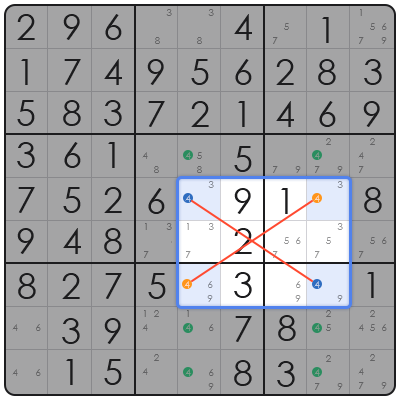
In the realm of computational logic and recreational mathematics, understanding how to check if sudoku is valid stands as a fundamental exercise in algorithmic design and constraint satisfaction. This process involves verifying that a given 9×9 grid adheres to the precise set of rules that define a correct Sudoku puzzle solution, ensuring both integrity and solvability within its framework. The significance of robust Sudoku validation extends beyond mere game verification; it serves as a foundational component in the development of Sudoku generators, solvers, and various AI-driven puzzle applications. Based on structural analysis, an accurate validation mechanism is critical for ensuring that generated puzzles are solvable, user inputs are compliant, and algorithmic solutions are indeed correct, preventing the propagation of invalid states throughout a system. The primary problem that comprehensive Sudoku validation solves is the enforcement of game rules, transforming an arbitrary 9×9 grid into a structure governed by strict mathematical principles. Without a rigorous method to confirm validity, any system dealing with Sudoku grids risks operating on flawed data, leading to incorrect solutions, unsolvable puzzles, or a breakdown in logic within sophisticated software applications. This article delves into the precise mechanics of validating Sudoku grids, offering insights crucial for software developers and algorithm designers.
The Structural Imperatives of a Valid Sudoku Grid
Validating a Sudoku grid involves systematically checking three fundamental rules: unique numbers (1-9) within each row, each column, and each of the nine distinct 3×3 subgrids. From a framework perspective, these three constraints collectively define the complete integrity of a solved or partially solved Sudoku puzzle, establishing a baseline for logical coherence.
The first imperative dictates that every row must contain the numbers 1 through 9 exactly once, with no repetitions. This means that if we iterate across any given row, each non-empty cell must hold a unique digit not present elsewhere in that same row. This check is crucial for horizontal consistency and is often the most straightforward to implement programmatically.
Concurrently, the second rule mandates that every column must also contain the numbers 1 through 9 exactly once. Similar to rows, a vertical scan of any column should reveal distinct digits in its non-empty cells. These two orthogonal checks form the basis of grid validity, ensuring that numbers are distributed correctly across both primary dimensions.
The third, and often most complex, rule involves the nine 3×3 subgrids (also referred to as ‘boxes’ or ‘blocks’). Each of these smaller grids, forming a distinct region within the larger 9×9 matrix, must individually contain the numbers 1 through 9 without repetition. Identifying and correctly iterating through these subgrids—typically indexed by `(row / 3, col / 3)`—is a common area where implementation errors can occur. Based on structural analysis, ensuring these three conditions are met simultaneously is paramount for a truly valid Sudoku grid.
Implementing a Robust Sudoku Validation Algorithm
Implementing a robust Sudoku validation algorithm typically involves iterating through the grid and employing data structures like hash sets or boolean arrays to efficiently track the presence of numbers within each constraint scope. In practical application, this approach allows for constant-time average lookups, significantly optimizing performance compared to brute-force methods.
The process begins with initializing three sets of tracking structures: one for rows, one for columns, and one for 3×3 subgrids. For a 9×9 grid, this would mean nine sets for rows (e.g., `rows[0]…rows[8]`), nine for columns (`cols[0]…cols[8]`), and nine for subgrids (`blocks[0]…blocks[8]`). Each set within these arrays will store numbers encountered within its respective row, column, or block.
Subsequently, the algorithm iterates through each cell of the 9×9 grid, typically from `(0,0)` to `(8,8)`. For each cell `(r, c)`: first, it checks if the cell is empty (e.g., contains 0 or a placeholder character); if so, it skips to the next cell as empty cells do not violate validity rules. If the cell contains a number `num` (1-9), the algorithm attempts to add `num` to `rows[r]`, `cols[c]`, and `blocks[(r / 3) * 3 + (c / 3)]`. If adding `num` to any of these sets fails (meaning `num` is already present), it immediately indicates a duplicate, and the grid is deemed invalid. This early exit mechanism is a critical efficiency feature.
If the algorithm successfully processes all cells without encountering any duplicates or invalid numbers (i.e., numbers outside the 1-9 range in filled cells), then the grid is considered valid. This methodical, cell-by-cell verification, combined with efficient duplicate detection, forms the core of an effective Sudoku validation routine. From a framework perspective, this systematic approach ensures comprehensive rule enforcement across the entire grid.
Comparative Analysis: Sudoku Validation vs. Related Grid Operations
Sudoku validation, from a framework perspective, is distinct from operations like Sudoku generation or solving primarily in its computational goal, which is verification rather than construction or discovery. While all three involve interacting with Sudoku grids, their underlying algorithms and complexity profiles vary significantly, reflecting their differing objectives.
Sudoku validation is an analytical task: it takes an existing grid state and confirms its adherence to rules. Sudoku generation, conversely, is a constructive task, building a new valid and often solvable puzzle from scratch. Sudoku solving is a discovery task, finding the unique (or multiple) solutions for a given partial puzzle. Each operation requires different algorithmic paradigms, from simple iterative checks to complex backtracking or constraint propagation methods. In practical application, understanding these distinctions helps in selecting the most appropriate tools and techniques for a given problem within Sudoku-related software.
The following comparative analysis highlights key differences across several dimensions:
| Feature | Sudoku Validation | Sudoku Generation | Sudoku Solving |
| :————— | :———————————– | :———————————– | :———————————– |
| **Complexity** | O(N^2) for N x N grid | Varies; often exponential for difficult puzzles | Exponential (backtracking), often heuristic-driven |
| **Efficiency** | Highly efficient, single pass with optimal data structures | Can be time-consuming, especially for unique solutions | Can be very slow for complex puzzles, but optimized via constraint propagation |
| **Primary Goal** | Verify correctness of a given grid state | Create new valid puzzles, often with a unique solution | Find the solution(s) for a partial grid |
| **Data Structure** | Hash sets or boolean arrays for checks | Backtracking stack, grid modification, candidate lists | Backtracking stack, constraint propagation data, candidate lists |
This table underscores that while validation is computationally light and deterministic, generation and solving are often characterized by higher complexity due to the combinatorial explosion of possibilities inherent in searching for solutions or constructing puzzles with specific properties. Based on structural analysis, validation provides a quick ‘gatekeeper’ function before engaging more intensive operations.
Common Pitfalls and Professional Solutions in Sudoku Validation Logic
When implementing Sudoku validation algorithms, common pitfalls often arise from incorrect subgrid indexing, mismanaging empty cells, or inefficient duplicate detection, each addressable with structured logical approaches. Recognizing these frequently encountered issues is crucial for developing robust and error-free validation routines.
A frequent mistake involves the logic for identifying the correct 3×3 subgrid for a given cell `(row, col)`. An incorrect formula can lead to numbers being checked against the wrong subgrid, resulting in false positives or negatives. The professional solution involves using integer division: the block’s row index is `row / 3`, and its column index is `col / 3`. The overall block identifier can then be calculated as `(row / 3) * 3 + (col / 3)`, ensuring each cell maps to its unique 3×3 area. Based on structural analysis, this consistent indexing is paramount.
Another pitfall is mishandling empty cells, which are typically represented by 0 or a dot. Some implementations mistakenly treat these as numbers that must be unique, or fail to skip them entirely, leading to incorrect validation. The correct approach is to ignore empty cells during uniqueness checks; only filled cells (1-9) contribute to potential rule violations. In practical application, explicitly checking `if (num == 0)` and skipping ensures that empty spaces do not trigger false validation errors.
Finally, inefficient duplicate detection can significantly degrade performance, especially for hypothetical larger grids. Using nested loops to search for duplicates within rows, columns, or subgrids is a common but sub-optimal approach. The professional solution is to leverage data structures that offer O(1) average-time lookups, such as boolean arrays (e.g., `boolean[] seen = new boolean[10]`) or hash sets. By attempting to add a number to these structures and checking the return value, duplicates can be identified instantly, preventing unnecessary computational overhead and maintaining high efficiency.
FAQ: Critical Insights on Sudoku Grid Validity
Addressing frequently asked questions about Sudoku validity provides concise, targeted information essential for quick reference and clarifies common misconceptions about grid integrity. These insights are vital for anyone engaging with Sudoku puzzles, from casual players to software developers.
**Q: What is the most critical rule for a valid Sudoku?**
**A:** The most critical rule is that each number from 1 to 9 must appear exactly once in each row, each column, and each of the nine 3×3 subgrids. This triplet of constraints forms the immutable core of Sudoku validation.
**Q: Does an empty cell invalidate a Sudoku?**
**A:** No, an empty cell (often represented as 0 or a dot) does not invalidate a Sudoku. Validation checks only the filled cells against the uniqueness rules within their respective rows, columns, and 3×3 blocks.
**Q: Why is efficient validation important in Sudoku applications?**
**A:** Efficient validation is crucial for performance, especially in Sudoku generators, solvers, and online platforms. It ensures quick feedback on grid correctness, prevents processing invalid states, and maintains a smooth user experience.
**Q: Can a Sudoku have multiple solutions and still be valid?**
**A:** Yes, a valid *completed* Sudoku grid is one where all rules are met. A *puzzle* can have multiple solutions. However, a ‘well-posed’ Sudoku *puzzle* typically has only one unique solution, although it’s still valid if it meets the structural rules.
**Q: Is validating a partially filled Sudoku different?**
**A:** Partially filled Sudoku validation checks that existing numbers adhere to the rules. It doesn’t assess solvability or uniqueness of solutions, only the current adherence of non-empty cells to row, column, and block constraints. It ensures no rule is broken *yet*.
Performance Considerations for Large-Scale Sudoku Validation
Optimizing performance for Sudoku validation, particularly for hypothetical larger grids (e.g., 16×16, 25×25), involves minimizing redundant checks and selecting appropriate data structures to maintain constant-time lookups. While standard 9×9 Sudoku validation is inherently efficient with an O(N^2) complexity, scalability concerns emerge for larger implementations.
The choice between boolean arrays and hash sets becomes more pronounced for varying grid sizes. Boolean arrays offer excellent fixed-size performance with minimal overhead but require `N` arrays of `N+1` booleans (for numbers 1-N). Hash sets provide more flexibility for dynamic ranges or non-contiguous numbers but might incur a slight overhead for hashing. From a framework perspective, pre-allocating boolean arrays is generally faster for fixed-size grids, whereas hash sets adapt better to more abstract constraint satisfaction problems where the ‘numbers’ might not be simple integers.
Furthermore, employing early-exit conditions is a critical optimization. The moment a single rule violation is detected (a duplicate number in a row, column, or block), the validation process should immediately terminate and return ‘invalid’. Continuing to check the rest of the grid is computationally wasteful. This early-fail mechanism is fundamental to efficient algorithm design and significantly reduces average-case execution time, especially for grids with errors towards the beginning.
The Enduring Value of Precise Validation in Algorithm Design
Understanding how to check if sudoku is valid is more than a mere logical exercise; it embodies fundamental principles of algorithm design, data structure optimization, and constraint satisfaction vital for robust software development. Based on structural analysis, the systematic verification of rows, columns, and 3×3 blocks, coupled with efficient duplicate detection, forms a powerful paradigm for ensuring data integrity. The insights gained from mastering Sudoku validation extend far beyond this specific puzzle, serving as a transferable skillset for tackling complex problems in areas ranging from resource allocation to bioinformatics, where the precise adherence to rules is paramount for the reliability and efficacy of computational systems. From a framework perspective, the enduring strategic value lies in its demonstration of how concise, efficient validation forms the bedrock of dependable algorithmic architecture.
In practical application, the meticulous attention to detail required for valid Sudoku checks mirrors the rigor needed for quality assurance in any data-driven system. As technology continues to evolve, the demand for precise and efficient validation mechanisms will only grow, making the principles discussed here not just relevant for today’s challenges but foundational for tomorrow’s innovations. From a framework perspective, establishing robust validation protocols is an investment in the long-term integrity and performance of any software solution.
The ability to accurately and efficiently validate Sudoku grids represents a micro-cosmic view into the broader world of computational verification. As industries increasingly rely on automated systems to process and manage vast amounts of structured data, the lessons learned from ensuring a Sudoku grid’s integrity become directly applicable. This analytical approach, rooted in meticulous rule-checking and optimized data handling, reinforces the importance of foundational algorithmic knowledge in constructing reliable and high-performing software architectures across diverse fields.
In conclusion, the meticulous process of validating a Sudoku grid offers invaluable lessons in algorithmic design, data structure optimization, and the critical importance of constraint satisfaction. By systematically verifying the uniqueness of numbers within rows, columns, and 3×3 subgrids, and by strategically utilizing efficient data structures, developers can build robust systems that uphold the integrity of logical puzzles. The principles illuminated by understanding how to check if a Sudoku is valid are highly transferable, forming a foundational element for ensuring data quality and operational reliability across a vast spectrum of complex computational challenges. This expertise not only enhances problem-solving capabilities but also reinforces the strategic value of precise validation in building resilient and high-performing software architectures for the future.