

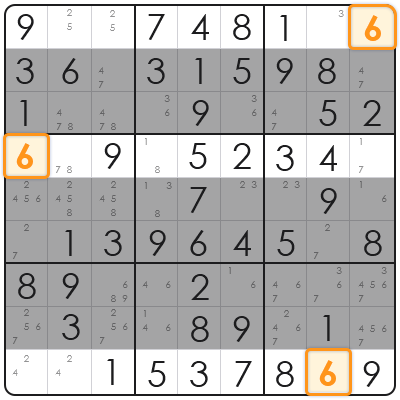
Based on structural analysis, the application of a binary matrix fundamentally transforms the classic Sudoku puzzle into an instance of the Exact Cover Problem, a well-defined challenge in combinatorial mathematics. This elegant translation allows for the deployment of sophisticated algorithmic solutions, moving beyond heuristic-driven or purely brute-force approaches to achieve deterministic and highly efficient problem-solving. From a framework perspective, this methodology is significant because it provides a universal and systematic way to address the inherent constraints of Sudoku. By representing all possible number placements and all governing rules (row, column, block, and cell constraints) within a single matrix, the path to a solution becomes a matter of selecting a precise subset of these possibilities. In practical application, the primary problem solved by this binary matrix architecture is the reliable and rapid resolution of even the most complex Sudoku grids. It offers a computational certainty that traditional backtracking algorithms, while effective, often lack in terms of consistent performance and elegance when scaled to find all possible solutions.
The Exact Cover Problem: Foundation of Binary Matrix Sudoku
The Exact Cover Problem, at its core, is a combinatorial problem where the objective is to select a sub-collection of subsets from a given collection such that each element of the universal set is contained in exactly one of the chosen subsets. This foundational concept underpins how to use a binary matrix to solve a Sudoku, converting the visual grid puzzle into a rigorous mathematical model.
In the context of Sudoku, each cell (r, c) with a potential value (v) represents a ‘possibility’. The ‘elements’ to be covered exactly once are the game’s constraints: that each cell must contain exactly one number, each row must contain each number exactly once, each column must contain each number exactly once, and each 3×3 block must contain each number exactly once.
Based on this mapping, the problem shifts from guessing numbers to systematically selecting rows in a binary matrix that collectively satisfy every constraint without overlap. This ensures that the resulting selection of ‘possibilities’ forms a valid and unique Sudoku solution, making it a powerful and reliable method for computational solvers.
Constructing the Binary Matrix for Sudoku
Constructing the binary matrix for a Sudoku puzzle involves defining its rows and columns to precisely represent the problem’s possibilities and constraints. Each row in this matrix corresponds to a single ‘possibility’ – placing a specific number (1-9) into a specific cell (row, column) on the 9×9 grid.
Specifically, for a standard 9×9 Sudoku, there are 9 rows, 9 columns, and 9 possible values, leading to 9 x 9 x 9 = 729 distinct possibilities. Each of these 729 possibilities forms a row in our binary matrix. For instance, a row might represent ‘placing the number 5 in cell (2, 4)’.
The columns, from a framework perspective, represent the four types of constraints: ‘Cell’ constraints (each of the 81 cells must be filled), ‘Row-Number’ constraints (each number must appear once in each of the 9 rows), ‘Column-Number’ constraints (each number must appear once in each of the 9 columns), and ‘Block-Number’ constraints (each number must appear once in each of the 9 3×3 blocks). This results in 81 + 81 + 81 + 81 = 324 columns. A ‘1’ at the intersection of a row and column indicates that the possibility represented by that row satisfies the constraint represented by that column.
Dancing Links (Algorithm X): The Algorithmic Engine
Dancing Links, an optimized implementation of Donald Knuth’s Algorithm X, serves as the highly efficient algorithmic engine that processes the binary matrix to solve the Sudoku’s Exact Cover Problem. This recursive, backtracking algorithm systematically explores solutions by covering and uncovering matrix elements, thereby ‘dancing’ through the linked list structure.
From a framework perspective, Algorithm X’s core mechanism is to choose a column (representing a constraint), then iterate through all rows that satisfy that constraint (i.e., have a ‘1’ in that column). For each such row, it ‘chooses’ that row, then ‘covers’ all columns that the chosen row satisfies, effectively removing them and any conflicting rows from consideration. This process is then recursively applied to the remaining subproblem.
In practical application, the ‘Dancing Links’ optimization is crucial. It implements the covering and uncovering operations using doubly linked circular lists, allowing these operations to be performed in O(1) time. This efficient manipulation of the sparse binary matrix structure drastically reduces the overhead of backtracking, enabling rapid exploration of the solution space and making it exceptionally fast for finding Sudoku solutions.
Implementing the Binary Matrix Approach: A Step-by-Step Guide
Implementing how to use a binary matrix to solve a Sudoku involves a systematic multi-stage process, beginning with problem formulation and culminating in solution extraction. This structured approach ensures that the Sudoku puzzle is accurately translated into an Exact Cover Problem suitable for algorithmic resolution.
**Step 1: Problem Formulation and Matrix Generation.** The initial step is to convert the 9×9 Sudoku grid into the 729×324 sparse binary matrix. Each row represents a (row, column, value) triplet, and columns represent the four constraint types: cell, row-number, column-number, and block-number. A ‘1’ is placed where a possibility satisfies a constraint.
**Step 2: Incorporating Initial Sudoku Clues.** For any pre-filled cells in the Sudoku puzzle, identify the corresponding rows in the binary matrix. These ‘given’ rows are then effectively chosen, and the algorithm proceeds as if these rows were already part of the solution. This involves covering the columns these initial clues satisfy, reducing the problem’s scope.
**Step 3: Executing Dancing Links (Algorithm X).** With the initial setup complete, apply the Dancing Links algorithm. The algorithm recursively searches for a set of rows that collectively cover all remaining columns exactly once. It backtracks when a dead end is reached, exploring alternative choices until a complete solution is found.
**Step 4: Solution Extraction.** Once Dancing Links identifies a complete set of chosen rows that satisfy all constraints, these rows are translated back into the Sudoku grid format. Each chosen row (r, c, v) corresponds directly to placing the number ‘v’ into cell (r, c) of the Sudoku puzzle, yielding the solved grid.
Comparative Efficacy: Binary Matrix vs. Traditional Sudoku Solvers
From a framework perspective, comparing the binary matrix approach to traditional Sudoku solvers reveals distinct advantages in terms of determinism and efficiency for comprehensive solution finding. Traditional methods often include simple backtracking, constraint propagation, or hybrid approaches.
Standard backtracking algorithms, while conceptually straightforward, typically exhibit higher computational complexity and lower efficiency for harder puzzles, often relying on arbitrary choices and extensive trial-and-error. Their memory footprint is generally lower than the initial binary matrix, but their execution time can be significantly longer for puzzles demanding deep search. Constraint propagation, conversely, is highly efficient for easier puzzles by mimicking human deduction, but often requires backtracking for complex scenarios and is not designed to find all possible solutions.
In practical application, the binary matrix combined with Dancing Links offers superior efficiency for finding a solution or all solutions, especially for challenging puzzles. While its initial memory allocation for the matrix structure is higher, the O(1) cover/uncover operations of Dancing Links lead to remarkably fast execution times, often solving puzzles in milliseconds. This systematic approach is more robust for finding all solutions and is less prone to performance variability compared to heuristic-driven backtracking algorithms.
Navigating Challenges: Common Pitfalls and Expert Solutions
Implementing how to use a binary matrix to solve a Sudoku, while powerful, presents several common challenges that require careful attention for successful deployment. Understanding these pitfalls and their solutions is critical for robust algorithm design.
One frequent mistake, based on structural analysis, involves errors during the initial binary matrix construction. Incorrectly mapping the 729 possibilities to the 324 constraints, or misplacing the ‘1’s within the matrix, can lead to incorrect solutions or algorithms that never terminate. The expert solution is rigorous validation: start with a smaller puzzle (e.g., a 4×4 Sudoku) to visually inspect the generated matrix. Develop unit tests for each constraint type (cell, row-number, column-number, block-number) to ensure the ‘1’s are correctly placed.
Another pitfall stems from memory management, particularly when considering the large size of the sparse binary matrix. If implemented using a dense 2D array, even a 729×324 matrix can consume substantial memory. The professional advice is to leverage a sparse matrix representation, such as the doubly linked list structure inherent to Dancing Links, rather than a raw array. This ensures that only the ‘1’ entries and their links are stored, drastically reducing memory overhead.
Finally, debugging recursive backtracking algorithms like Dancing Links can be notoriously complex due to their deeply nested call stacks. From a framework perspective, common debugging issues include improper handling of the `cover` and `uncover` operations, leading to an incorrect state. A recommended solution is to implement detailed logging for each choice made and each column covered/uncovered. Additionally, visualizing the linked list structure during execution, even conceptually, can aid in tracing the algorithm’s flow and identifying where a ‘dance’ goes awry.
Frequently Asked Questions on Binary Matrix Sudoku Solving
**Q1: What is the primary advantage of using a binary matrix for Sudoku?** It transforms Sudoku into a well-understood Exact Cover Problem, allowing the use of highly optimized algorithms like Dancing Links for deterministic and efficient solution finding.
**Q2: How large is the binary matrix for a standard 9×9 Sudoku?** The matrix typically has 729 rows (representing cell-value possibilities) and 324 columns (representing all cell, row, column, and block constraints).
**Q3: Is the binary matrix method suitable for real-time Sudoku solving applications?** Yes, based on structural analysis, for finding a single solution, it is extremely fast and suitable for real-time applications, often solving puzzles in milliseconds.
**Q4: Can this method find multiple solutions to a Sudoku puzzle?** Absolutely. From a framework perspective, Algorithm X (Dancing Links) is designed to find *all* possible solutions to an Exact Cover Problem, making it ideal for puzzles with multiple valid answers.
**Q5: What programming languages are best for implementing Dancing Links?** Languages with efficient pointer/reference manipulation or object-oriented structures, like Python, Java, C++, or Rust, are well-suited for implementing the doubly linked list structure of Dancing Links.
In conclusion, how to use a binary matrix to solve a Sudoku represents a pinnacle of computational logic for combinatorial problem-solving. By elegantly translating the puzzle into an Exact Cover Problem and leveraging the highly efficient Dancing Links algorithm, this method offers unparalleled determinism, speed, and robustness. Its structural analysis reveals a profound approach that not only excels at Sudoku but also provides a foundational framework applicable to a wide array of other complex constraint satisfaction problems, from scheduling and resource allocation to logic puzzles, underscoring its enduring strategic value in algorithm design and computational efficiency.