

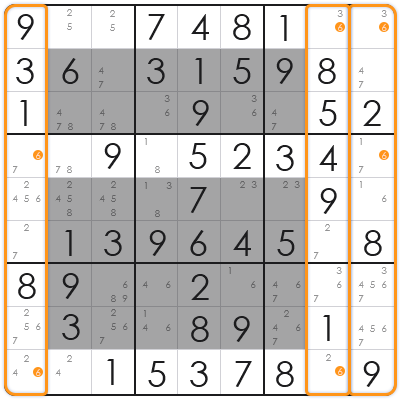
Solving a Sudoku puzzle quickly is fundamentally a mastery of logical deduction and pattern recognition, transitioning from a leisurely pastime to a test of analytical prowess. This methodology transcends simple number placement, instead focusing on systematic scanning and the application of advanced logical rules to rapidly reduce the pool of possible candidates for each cell. It represents a structured approach to problem-solving, where efficiency is paramount. The significance of developing swift Sudoku-solving skills extends beyond recreational enjoyment, serving as a robust exercise in cognitive problem-solving and critical thinking. In an era where data overload is common, the ability to quickly filter information, identify relevant patterns, and deduce solutions under implicit constraints is an invaluable asset. This approach sharpens mental acuity and enhances decision-making capabilities. The primary problem it solves in the current landscape of Sudoku engagement is the common frustration associated with slow, haphazard, or trial-and-error methods. Many solvers find themselves stuck, relying on guessing rather than systematic deduction. By adopting a ‘how to solve a sudoku puzzle quickly’ framework, individuals can overcome these plateaus, transforming their solving experience into one of consistent progress and satisfying breakthroughs.
The Foundational Mechanics of Rapid Sudoku Resolution
The foundational mechanics of rapid Sudoku resolution hinge upon a hierarchical application of logical techniques designed to systematically eliminate candidate numbers. Based on structural analysis, the most basic yet crucial technique involves identifying ‘naked singles,’ where a cell can only hold one possible number due to existing numbers in its row, column, and 3×3 block. This immediate identification is the first step in creating a cascade of deductions, and missing these early opportunities can significantly impede speed.
Beyond singles, a ‘how to solve a sudoku puzzle quickly’ methodology progresses to identifying ‘hidden singles,’ which occur when a number can only fit in one specific cell within a row, column, or block, despite other candidates being present in that cell. From a framework perspective, advanced techniques like ‘naked pairs/triples’ (where two or three cells in a unit share the same two or three candidate numbers, eliminating them from other cells in that unit) and ‘hidden pairs/triples’ further refine the candidate lists. These require a broader scan and a more integrated view of the grid, moving beyond individual cells to focus on the relationships between multiple cells.
In practical application, techniques such as ‘pointing pairs/triples’ (where candidates for a number are confined to a row or column within a 3×3 block, allowing elimination of that number from the rest of that row or column outside the block) and ‘box-line reduction’ (the inverse of pointing) are critical. These methods capitalize on the interconnectedness of the Sudoku grid’s three primary units: rows, columns, and 3×3 blocks. Mastering these structural relationships is key to unlocking significant speed gains, as they often reveal hidden singles or narrow down possibilities dramatically.
Algorithmic Application: A Phased Approach to Accelerate Sudoku Solving
A phased, algorithmic application is essential for accelerating Sudoku solving, providing a structured pathway to uncover hidden numbers efficiently. The first phase always begins with a comprehensive grid scan to identify all ‘naked singles’ and ‘hidden singles.’ This involves systematically checking each empty cell against its row, column, and 3×3 block to determine if it can only contain one number, marking these confidently as they appear.
Once initial singles are exhausted, the second phase focuses on identifying ‘pairs’ and ‘triples’ within rows, columns, and 3×3 blocks. This includes both ‘naked pairs/triples’ (where the same 2-3 candidates are exclusive to 2-3 cells in a unit) and ‘hidden pairs/triples’ (where 2-3 candidates for a number are confined to 2-3 cells within a unit). By eliminating these candidates from other cells in that unit, the pool of possibilities for remaining cells significantly shrinks, often revealing new singles.
The third phase involves applying intersection techniques, such as ‘pointing pairs/triples’ and ‘box-line reduction.’ This entails looking for instances where candidates for a specific number are restricted to a single row or column within a 3×3 block, or vice-versa. Successful application of these techniques allows for the elimination of those candidates from the respective intersecting rows, columns, or blocks, even if they are outside the initial 3×3 block, leading to further deductions.
The final phase, employed when basic and intermediate techniques yield no further direct deductions, involves advanced pattern recognition like ‘X-Wing’ and ‘Swordfish.’ These complex patterns involve identifying numbers that form specific rectangular or triangular formations across multiple rows and columns, allowing for significant candidate eliminations. Only when truly stuck should systematic trial and error with backtracking be considered, ideally on puzzles explicitly designed for such methods.
Strategic Methodologies: Comparing Quick Sudoku Solving Techniques
Comparing strategic methodologies for Sudoku solving highlights the distinct advantages of a rapid approach over less structured alternatives. The goal of ‘how to solve a sudoku puzzle quickly’ is to maximize efficiency and minimize reliance on guessing, a stark contrast to basic pencil marking or brute-force trial-and-error.
From a framework perspective, a comprehensive rapid solving strategy involves a deep understanding of logical deductions and pattern recognition, whereas simpler methods often lack this systematic depth. The table below illustrates this comparative analysis across key dimensions, demonstrating why an optimized approach is superior for consistent, high-speed performance.
| Dimension | How to Solve a Sudoku Puzzle Quickly (Comprehensive Strategy) | Brute Force/Trial-and-Error | Basic Pencil Marking (Candidates) |
|—————-|—————————————————————|—————————–|———————————–|
| **Efficiency** | Very High (Systematic eliminations, rapid deductions) | Very Low (Relies on guesses, time-consuming) | Moderate (Aids visualization, but slow without advanced logic) |
| **Complexity** | High (Requires mastery of multiple advanced techniques) | Low (Minimal skill required beyond basic number placement) | Low-Medium (Requires careful tracking, prone to errors) |
| **Learning Curve** | Steep (Initial investment in understanding patterns) | Flat (No real learning beyond basic rules) | Moderate (Practice needed for neatness and accuracy) |
Navigating Obstacles: Common Mistakes and Expert Solutions in Sudoku Speed-Solving
Navigating obstacles in Sudoku speed-solving requires an acute awareness of common pitfalls that can derail even experienced players. One frequent mistake is over-reliance on pencil marks, which, while useful, can lead to cluttered grids and mental paralysis if not managed efficiently. Expert solution: Prioritize confident, direct deductions first. Only use pencil marks for cells with 2-3 candidates, and regularly clean up your marks as numbers are placed.
Another significant error is failing to adopt a systematic scanning pattern, leading to missed opportunities for simple deductions. Many solvers jump around the grid haphazardly, overlooking ‘naked singles’ or ‘hidden singles’ that would unlock further progress. Professional advice: Develop and consistently adhere to a scanning routine. For instance, scan rows 1-9, then columns 1-9, then each of the nine 3×3 blocks in sequence. This ensures no cell or unit is overlooked.
A third common pitfall is attempting to apply advanced techniques like X-Wing or Swordfish prematurely, before thoroughly exhausting simpler methods. This not only wastes time but can also lead to misapplication, introducing errors. Based on structural analysis, the solution is to master foundational techniques (singles, pairs, triples, pointing/box-line reduction) first. Advanced strategies should only be employed when simpler deductions have demonstrably stalled, ensuring a robust and reliable solving process.
Cultivating Intuition: The Synergy of Practice and Pattern Recognition
Cultivating intuition in ‘how to solve a sudoku puzzle quickly’ is a direct result of the synergy between consistent practice and enhanced pattern recognition. While explicit logical techniques form the backbone of rapid solving, true speed emerges when these techniques become second nature, almost instinctive. This allows solvers to perceive entire patterns (like naked pairs or pointing triples) at a glance, rather than having to consciously enumerate possibilities for each cell.
From a framework perspective, every solved puzzle reinforces the neural pathways associated with successful deduction. Over time, the brain begins to ‘chunk’ information, recognizing common configurations that indicate the applicability of a specific technique. This reduces cognitive load, allowing for faster processing and decision-making, which is paramount when aiming for speed.
In practical application, this means that merely knowing the rules of Sudoku or even a list of advanced techniques is insufficient for true speed. It is the repeated exposure to various puzzle layouts and the conscious effort to apply learned strategies that transforms theoretical knowledge into intuitive action. This process refines the solver’s mental ‘map’ of the grid, enabling them to anticipate solutions and bypass lengthy explicit calculations, ultimately making the solving process significantly quicker and more fluid.
Quick Answers: Essential FAQs for Rapid Sudoku Solvers
**Q: What is the fastest way to start a Sudoku?** A: Begin by thoroughly scanning for ‘naked singles’ and ‘hidden singles’ across all rows, columns, and 3×3 blocks to fill immediate, confident cells. This establishes a strong foundation quickly.
**Q: How do advanced solvers think differently?** A: Advanced solvers prioritize identifying patterns (like ‘naked pairs’ or ‘pointing triples’) that affect multiple cells simultaneously, rather than solely focusing on individual cell candidates. This broader perspective enables more efficient eliminations.
**Q: Is speed crucial for all Sudoku levels?** A: While fundamental logic is universally key, speed becomes particularly crucial for higher-difficulty Sudoku puzzles. It’s a measure of your mastery and the efficiency of applying advanced techniques under pressure.
**Q: Can digital tools help improve speed?** A: Yes, using Sudoku apps with hint features can help identify missed patterns or test strategies. However, over-reliance can hinder the organic development of intuitive problem-solving skills.
**Q: What role does ‘Direct Answer Syntax’ play in solving Sudoku?** A: In Sudoku, ‘Direct Answer Syntax’ refers to immediately identifying the correct number for a cell through clear, unambiguous logical deduction, without needing to list multiple possibilities. It’s about direct certainty, which is key for speed.
In conclusion, mastering ‘how to solve a sudoku puzzle quickly’ is more than just a parlour trick; it’s a testament to the power of structured analytical reasoning and persistent practice. This methodology instills a systematic approach to complex problems, where identifying patterns, applying hierarchical logic, and avoiding common pitfalls leads to consistent success. The long-term strategic value lies in enhancing cognitive flexibility and problem-solving efficiency, skills that are highly transferable across diverse fields. As the landscape of analytical challenges evolves, the principles honed through rapid Sudoku solving will undoubtedly remain a crucial asset for any individual seeking to sharpen their mental edge and approach intricate problems with confidence and speed.