

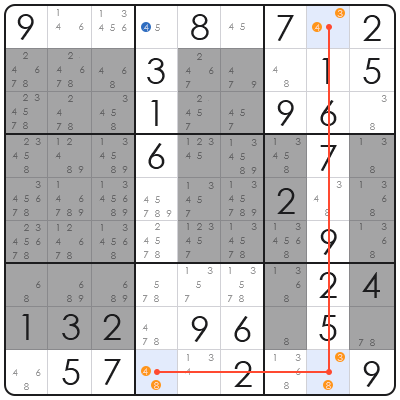
The phrase ‘don’t even know how to start sudoku how’ encapsulates a pervasive initial barrier for countless individuals approaching the popular logic puzzle. This feeling of being overwhelmed at a blank or partially filled grid is not uncommon; it represents a fundamental challenge in recreational logic: how to transition from perceived complexity to actionable first steps. From a framework perspective, this initial mental block often stems from a lack of systematic approach rather than an absence of inherent logical ability. Sudoku, at its core, is a test of deductive reasoning and pattern recognition, offering significant cognitive benefits, including enhanced memory, concentration, and problem-solving skills. Yet, the inability to discern an entry point can deter aspiring solvers, preventing them from experiencing these advantages and the inherent satisfaction of completing a puzzle. This phenomenon is a critical juncture where many abandon the game before truly engaging with its strategic depth. This article aims to dismantle that initial ‘don’t even know how to start sudoku how’ quandary by providing a structured, expert-driven methodology for initiating any Sudoku puzzle. Based on structural analysis of common beginner hurdles, we will systematically break down the grid, illuminate foundational rules, and equip you with practical, implementable strategies to confidently place your first numbers and navigate towards a successful solve, transforming initial confusion into clear, logical action.
The Foundational Logic of Sudoku: Unpacking the Grid Mechanics
The foundational logic of Sudoku revolves around a simple yet powerful set of rules dictating number placement within a 9×9 grid, which is further subdivided into nine 3×3 smaller blocks. To master the initial approach, it’s paramount to internalize these constraints: every row, every column, and every 3×3 block must contain all digits from 1 to 9, with no repetitions. This seemingly straightforward principle forms the bedrock for all deductive strategies.
Understanding these fixed constraints immediately limits the possibilities for any given empty cell. For instance, if a ‘7’ already exists in a specific row, that ‘7’ cannot appear anywhere else in that same row. This principle extends uniformly across columns and blocks. From an analytical perspective, this creates a finite set of potential candidates for each cell, which is the primary data point for initiating the puzzle.
In practical application, the initial phase involves recognizing that every number’s placement is determined not by guesswork, but by the absence of alternatives. By meticulously observing existing numbers, one can systematically eliminate potential candidates for empty cells. This systematic elimination is the intellectual currency of Sudoku, allowing solvers to transition from a state of ‘don’t even know how to start’ to a clear identification of where numbers *must* go.
Initial Scan and Obvious Placements: Your First Steps into a Sudoku Grid
Your first steps into a Sudoku grid involve systematic scanning to identify obvious placements, often referred to as ‘singles’ or ‘forced cells’, which are cells where only one number can logically fit. This initial sweep is a crucial phase, establishing momentum and providing critical fixed points to build upon. The most effective method is often cross-hatching combined with ‘hidden single’ detection.
Begin by focusing on a single number, for example, the digit ‘1’. Systematically scan the entire 9×9 grid, looking for where this ‘1’ must be placed within each of the nine 3×3 blocks. If two ‘1’s already exist in adjacent rows or columns, their intersection within a 3×3 block will eliminate all but one possible cell for the third ‘1’ in that block. Repeat this process for all digits from 1 to 9, meticulously marking any ‘singles’ you find. This ‘number-first’ approach is remarkably efficient for uncovering initial placements.
Another vital strategy is the ‘cell-wise scan’ for ‘single candidates’. For any given empty cell, consider the numbers already present in its corresponding row, column, and 3×3 block. By eliminating these existing numbers from the set of 1-9, if only one number remains as a possibility for that cell, then that number is a ‘single candidate’ and can be confidently placed. While slightly more labor-intensive initially, this method guarantees that you are leveraging all available information for each potential placement.
Beyond the Basics: Employing Intermediate Techniques for Tricky Starts
Employing intermediate techniques like ‘Naked Pairs’ or ‘Hidden Pairs’ becomes crucial when obvious placements are exhausted and the grid still presents significant challenges, allowing for further candidate reduction. These strategies move beyond simple cell-by-cell analysis to identifying patterns across multiple cells within a row, column, or block. Based on structural analysis, these techniques are logical extensions of single candidate elimination.
A ‘Naked Pair’ occurs when two cells within a row, column, or 3×3 block are the *only* cells that can possibly contain a specific set of two numbers (e.g., only ‘2’ and ‘5’). Crucially, no other numbers are candidates for these two cells. Once identified, these two numbers are ‘reserved’ for those two cells, meaning you can eliminate ‘2’ and ‘5’ as candidates from all other cells within that same row, column, or block, opening up new possibilities.
Conversely, ‘Hidden Pairs’ are identified when two specific numbers (e.g., ‘3’ and ‘7’) can *only* appear in two particular cells within a row, column, or block, even if those cells also have other candidate numbers. Once a ‘Hidden Pair’ is located, all other candidates from those two cells can be eliminated, leaving only the ‘hidden pair’ numbers. From a framework perspective, these advanced strategies allow for deeper deductive leaps when direct ‘singles’ are no longer apparent, ensuring continuous progress.
Contrasting Initial Approaches: Guessing vs. Strategic Entry
Contrasting initial approaches highlights the stark difference between inefficient random guessing and the highly effective, strategic entry methods derived from logical deduction. The ‘don’t even know how to start sudoku how’ mindset often leads to impulsive number placement, a critical error that compromises the entire puzzle’s integrity.
Based on structural analysis, guessing introduces an immediate risk of error that can propagate throughout the grid, forcing extensive backtracking or rendering the puzzle unsolvable without external assistance. In contrast, strategic entry, as described through systematic scanning and candidate elimination, ensures every placement is justified by the puzzle’s rules, building a robust, verifiable solution path.
From an efficiency perspective, while guessing might seem quicker initially, it almost invariably leads to longer solve times due to errors and corrections. Strategic entry, although requiring initial patience and methodical thought, consistently yields faster and more satisfying solves, reinforcing the solver’s deductive capabilities rather than relying on chance.
Navigating Early Sudoku Challenges: Common Beginner Mistakes and Expert Fixes
Navigating early Sudoku challenges involves recognizing common pitfalls such as premature guessing or incomplete candidate tracking and applying professional fixes to maintain a logical progression. One of the most frequent mistakes made by individuals who ‘don’t even know how to start sudoku how’ is resorting to random numbers when no immediate single is apparent, which is counterproductive.
A primary pitfall is the reliance on random guessing when feeling stuck. Solution: Always seek a logical deduction. If no immediate number can be placed, pause, review the entire grid for missed singles, and systematically apply candidate elimination for cells, rows, columns, and blocks. If still stuck, revisit previously placed numbers to ensure no errors were made. The puzzle *always* has a logical path; patience is paramount.
Another common mistake is neglecting to use pencil marks or candidate lists, especially as the puzzle progresses beyond the initial obvious placements. Solution: For any empty cell, lightly write down all possible numbers (candidates) that could fit. As you place numbers, eliminate those candidates from affected cells. This organized approach reveals Naked Pairs, Hidden Singles, and other advanced patterns that are otherwise invisible. In practical application, consistent candidate tracking is a non-negotiable technique for intermediate and expert solvers.
Finally, ‘tunnel vision’—focusing exclusively on one small section of the grid—can lead to missed opportunities. Solution: Regularly switch your focus between rows, columns, and 3×3 blocks. If you’ve exhausted possibilities in one area, pivot to another. Often, a number placed in one block will unlock several new deductions in entirely different sections of the grid, necessitating a holistic scanning approach.
Quick Answers for Starting Sudoku: Essential FAQs for New Players
Essential FAQs for new players provide concise, direct answers to the most common queries about initiating a Sudoku puzzle, directly addressing the ‘don’t even know how to start sudoku how’ confusion.
Q: What’s the very first thing to do when starting a Sudoku? A: Begin by scanning the grid for numbers that appear frequently. Use the ‘cross-hatching’ method to find ‘hidden singles’ within each 3×3 block, identifying cells where only one number can logically fit.
Q: How do I avoid guessing and ensure my placements are correct? A: Avoid guessing by always seeking a logical deduction. Every number placement must be supported by the rules of Sudoku. If uncertain, mark candidates instead of committing to a number.
Q: Is it okay to use pencil marks or write down possibilities? A: Absolutely. Pencil marks (candidates) are a professional tool for complex puzzles. They help track possibilities, reveal patterns, and are crucial for applying advanced logical techniques.
Q: How long should it take to ‘start’ a Sudoku, meaning placing the first few numbers? A: The initial phase, finding obvious placements, might take 1-5 minutes for beginners on easier puzzles. Focus on accuracy and systematic scanning over speed at the start.
Q: What if I get completely stuck early on a hard puzzle, even after trying the initial strategies? A: If stuck, thoroughly re-check for all types of singles (row, column, block, hidden). Ensure your pencil marks are complete. Sometimes, a slight error earlier can block progress. Consider stepping away briefly or, for learning, consulting a solver to identify missed steps.
Transitioning from the perplexity of ‘don’t even know how to start sudoku how’ to a confident, systematic approach transforms the entire Sudoku experience. Based on structural analysis, the mastery of initial strategies—from foundational rule comprehension and systematic scanning to the judicious use of candidate marks and identification of pairs—is not merely about solving a single puzzle, but about cultivating a powerful mindset of logical deduction. In practical application, these skills extend beyond recreational logic, honing critical thinking valuable in countless real-world scenarios. The enduring strategic value lies in developing patience, precision, and analytical acumen, positioning Sudoku as more than just a game, but a fundamental exercise in strategic problem-solving that continually offers fresh intellectual challenges and rewards.