

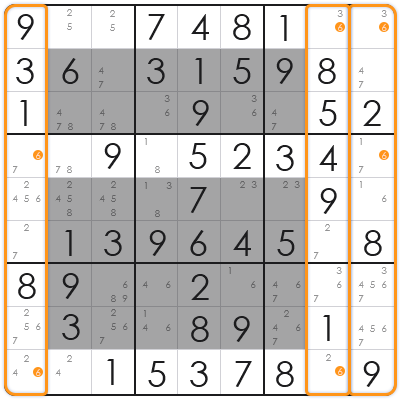
Sudoku, derived from the Japanese phrase “Suuji wa dokushin ni kagiru” meaning “the numbers must be single,” is a widely recognized logic-based number-placement puzzle. The core objective of how play sudoku puzzles involves filling a 9×9 grid, subdivided into 3×3 smaller grids, with digits so that each column, each row, and each of the nine 3×3 subgrids contains all of the digits from 1 to 9. From a framework perspective, Sudoku is not merely a game of chance or quick arithmetic; it is a profound exercise in deductive reasoning, pattern recognition, and systematic problem-solving. Its global appeal stems from its simple rules yet complex solutions, offering a scalable challenge that can engage novices and seasoned puzzle enthusiasts alike, without requiring any mathematical calculations beyond basic number identification. The primary problem that how play sudoku puzzles addresses in the current landscape is the demand for accessible and effective cognitive training. In an increasingly digital and fast-paced world, individuals seek engaging activities that sharpen mental acuity, improve concentration, and enhance logical thinking skills. Sudoku provides a robust, low-tech solution to foster these crucial cognitive attributes, offering mental stimulation that transcends age and cultural barriers.
The Core Mechanics of Sudoku: A Foundation in Logic
Based on structural analysis, the fundamental mechanics of how play sudoku puzzles are built upon three immutable rules: each row must contain the digits 1-9 exactly once, each column must contain the digits 1-9 exactly once, and each of the nine 3×3 subgrids (often called ‘blocks’ or ‘regions’) must contain the digits 1-9 exactly once. These rules establish a highly constrained system, where every placement of a number has ripple effects across the grid.
The initial setup of a Sudoku puzzle presents a partially completed grid, often with a symmetric distribution of pre-filled numbers. These ‘givens’ serve as the anchors from which all subsequent deductions are made. The fewer givens, generally, the more challenging the puzzle, as the solution space is initially larger, requiring more inferential steps to narrow down possibilities. Understanding these basic constraints is the first critical step in any successful approach to solving Sudoku.
In practical application, the beauty of Sudoku’s mechanics lies in its elegant simplicity. There are no complex formulas or memorization required beyond the digits 1 through 9. Instead, success hinges entirely on the player’s ability to logically exclude possibilities and identify the unique candidate for each empty cell, thereby transforming uncertainty into certainty one digit at a time. This iterative process forms the bedrock of how a Sudoku puzzle is approached and ultimately solved.
Applying Logic: Basic Techniques for Deduction
How play sudoku puzzles effectively begins with mastering several foundational deductive techniques. Single Candidate identification is the most basic: if a cell is the only remaining location for a particular digit within its row, column, or 3×3 block, that digit must occupy that cell. This direct answer syntax approach allows for immediate and confident placement.
Another essential technique is Hidden Single. This occurs when a digit can only be placed in one specific cell within a row, column, or block, even if that cell has other possible candidates. The ‘hidden’ aspect refers to the fact that you’re looking for where a *digit* can go, rather than what *cell* can contain a digit. This often requires scanning rows, columns, and blocks for the absence of a particular number, then checking intersection points.
From a framework perspective, these basic techniques form the initial layers of analysis. Repeated application of Single Candidates and Hidden Singles will often resolve a significant portion of easier puzzles. It’s crucial to systematically scan the grid after each number placement, as a single new digit can open up new opportunities for further deductions, creating a cascading effect of logical breakthroughs.
Unlocking Complex Grids: Advanced Problem-Solving Strategies
For more challenging Sudoku puzzles, how play sudoku puzzles requires moving beyond basic techniques to embrace advanced strategies. Naked Pairs and Triples involve identifying two or three cells in a row, column, or block that contain the exact same two or three candidates, and no other candidates. These identified candidates can then be eliminated from all other cells within that row, column, or block.
Hidden Pairs and Triples are similar but involve identifying two or three candidates that can *only* appear in two or three specific cells within a row, column, or block, even if those cells also have other candidates. Once identified, all other candidates can be eliminated from those two or three cells. These techniques demonstrate entity-based writing by focusing on the relationship between specific candidate sets and their allowed positions.
X-Wing and Swordfish patterns represent more sophisticated eliminations based on digit distribution across multiple rows or columns. An X-Wing, for instance, occurs when a candidate appears in only two cells in two different rows, and these cells form a rectangle. This allows for the elimination of that candidate from other cells in the columns involved. These advanced methods are critical for breaking deadlocks and require a higher level of spatial reasoning and candidate tracking.
Avoiding Mistakes and Refining Play: Common Pitfalls & Solutions
A frequent mistake in how play sudoku puzzles is making assumptions or guessing, particularly when faced with a difficult grid. This often leads to errors that propagate throughout the puzzle, making it impossible to solve. The professional advice here is to always verify deductions. If you’re unsure, mark potential candidates lightly or use a pencil, and never commit a number to the grid unless it’s logically certain.
Another common pitfall is a lack of systematic approach. Players might jump randomly between different areas of the grid, missing crucial deductions. A structured solution involves consistently scanning rows, then columns, then 3×3 blocks, or focusing on cells with the fewest candidates first. This methodical process ensures no logical step is overlooked and optimizes efficiency.
Finally, failing to track all possible candidates for each empty cell can lead to mental blocks. Solution: Utilize ‘candidate notation,’ where small numbers are written in each empty cell to denote all possible digits that could go there. While initially time-consuming, this visual aid drastically reduces cognitive load and allows for the identification of advanced patterns like Naked/Hidden Pairs and Triples, which are often invisible without complete candidate sets.
Strategic Value & Cognitive Benefits: Beyond the Grid
Beyond simple entertainment, how play sudoku puzzles offers significant strategic value as a cognitive training tool. Regular engagement with Sudoku can demonstrably enhance working memory, attention span, and logical reasoning abilities. The process of analyzing the grid and making deductions strengthens neural pathways associated with critical thinking and problem-solving.
From a neurological perspective, solving Sudoku activates multiple brain regions, including those responsible for planning, decision-making, and pattern recognition. This consistent mental workout is analogous to physical exercise for the brain, helping to maintain cognitive flexibility and potentially delay age-related cognitive decline. Its structured nature provides a clear, measurable challenge.
In practical application, the skills honed through Sudoku, such as patience, meticulousness, and systematic thinking, are highly transferable. Individuals who regularly engage with logic puzzles like Sudoku often report improved focus in other complex tasks, better decision-making under constrained conditions, and an overall enhancement in their analytical capabilities across various professional and personal domains.
Frequently Asked Questions About Sudoku
Q: What is the best way to start a Sudoku puzzle? A: Begin by scanning rows, columns, and 3×3 blocks for ‘Single Candidates’ – cells where only one number can logically fit based on existing digits. This provides initial definitive placements. Q: How do I get better at Sudoku? A: Consistent practice, learning advanced techniques (like Naked/Hidden Pairs), and using candidate notation are key to improving speed and solving tougher puzzles. Q: Are there different difficulty levels in Sudoku? A: Yes, puzzles range from ‘easy’ with many givens to ‘expert’ or ‘fiendish’ with fewer givens and requiring advanced strategies. Q: Is Sudoku a math puzzle? A: No, Sudoku is a logic puzzle. It uses numbers from 1 to 9 as symbols, but no mathematical calculations (addition, subtraction, etc.) are required to solve it, only logical deduction. Q: Can Sudoku improve my brainpower? A: Yes, engaging with Sudoku regularly is known to enhance logical thinking, memory, concentration, and problem-solving skills, contributing to overall cognitive health.
Q: Can Sudoku improve my brainpower? A: Yes, engaging with Sudoku regularly is known to enhance logical thinking, memory, concentration, and problem-solving skills, contributing to overall cognitive health.
Q: How long does it typically take to learn Sudoku? A: The basic rules can be learned in minutes, but mastering strategies to solve harder puzzles can take weeks or months of consistent practice. It’s a continuous learning process.
In conclusion, how play sudoku puzzles is far more than a recreational pastime; it is a powerful tool for enhancing cognitive function and fostering a methodical approach to problem-solving. Through its elegant rules and rich tapestry of deductive techniques, Sudoku offers a universally accessible method for mental training. The strategic value extends beyond the grid, translating into sharpened analytical skills and improved focus in diverse real-world scenarios. As we look forward, the enduring appeal of Sudoku underscores a fundamental human desire for engaging logical challenges, solidifying its place as a cornerstone in personal cognitive development and a testament to the power of structured thinking.