

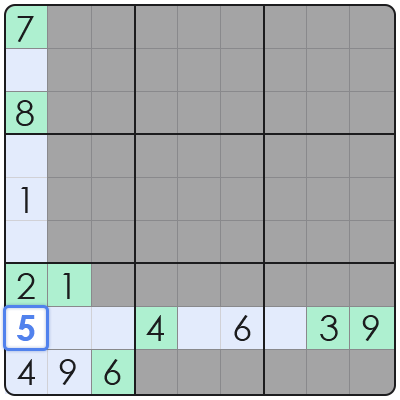
Creating your own Sudoku puzzle is the intricate process of designing a solvable 9×9 grid, typically with a unique solution, through either meticulous manual construction or sophisticated algorithmic methods. This endeavor deepens one’s understanding of combinatorial logic and finite mathematics, offering a rigorous exercise in problem-solving and constraint satisfaction. The primary problem it solves in the current landscape is the finite nature of pre-made puzzles, providing an endless supply of novel challenges for enthusiasts and a practical application for computational logic. From a framework perspective, designing a Sudoku puzzle transcends mere number placement; it is an intricate dance of mathematical constraints and logical deductions. Each 3×3 block, row, and column must contain digits 1-9 exactly once, establishing a rich landscape for structural exploration that demands both creativity and precision. In practical application, mastering this creation process enables educators to craft bespoke learning tools, game developers to generate unique content, and hobbyists to engage in a profound cognitive activity. This skill ensures the longevity and customizability of this classic intellectual pursuit, fostering a deeper appreciation for its underlying mathematical elegance.
The Core Logic: Deconstructing Sudoku Puzzle Generation
Creating your own Sudoku puzzle fundamentally involves two primary phases: generating a full, valid 9×9 grid, and subsequently ‘scooping out’ numbers to create a solvable puzzle with a unique solution. Based on structural analysis, a valid Sudoku grid is a specific type of Latin Square, where numbers 1 through 9 appear exactly once in each row, column, and 3×3 block.
The most robust method for initial grid generation is typically a backtracking algorithm, which systematically places numbers from 1-9 into empty cells while ensuring compliance with Sudoku rules at each step. If a placement leads to a dead end (no valid numbers for subsequent cells), the algorithm backtracks, removing the last number and attempting a different one until a complete, valid grid is formed. This iterative process guarantees a solid starting point for subsequent puzzle creation.
From a computational perspective, the process is akin to solving a complex constraint satisfaction problem where each cell is a variable and the Sudoku rules serve as the hard constraints. While manual generation of a full, valid grid is theoretically possible, it is exceptionally tedious and error-prone, hence the prevalence of algorithmic approaches for establishing the initial complete solution grid efficiently and accurately.
Foundational Steps: Initiating Your Sudoku Design
Initiating your Sudoku design begins with establishing a completely filled and valid 9×9 grid, which will serve as the master solution from which your puzzle will be derived. The most efficient and reliable approach involves using a programmatic method to create this full solution grid, as this immediately eliminates the immense complexity of manually ensuring its initial validity according to all Sudoku rules.
For those attempting a more hands-on approach, a common manual strategy is to fill a few cells strategically, ensuring they don’t violate any rules and provide strong anchor points for the eventual unique solution. For instance, placing 1s along the main diagonal, then 2s, and so on, can establish a valid starting pattern that is easier to expand into a full grid, though still demanding careful attention to constraints.
Regardless of the chosen method, the core objective of this foundational phase is to establish a valid, completed 9×9 grid where every row, column, and 3×3 block contains the numbers 1 through 9 exactly once. This complete grid acts as the definitive blueprint, containing all the information needed to construct the actual puzzle by selectively removing numbers.
Advanced Construction: Filling the Grid and Ensuring Uniqueness
After generating a solved Sudoku grid, the advanced construction phase focuses on strategically removing numbers from this complete grid to form a solvable puzzle with a unique solution. This critical process, often referred to as ‘clue reduction’, involves iteratively removing a number and then rigorously testing the resulting grid to ensure it still possesses only one valid solution when solved.
The key challenge inherent in this phase is maintaining the critical property of uniqueness. If removing a specific number from the grid results in a configuration that allows for multiple possible solutions, that number must be immediately restored to its cell. This necessitates the use of a robust Sudoku solver that can not only find a solution but, more importantly, can confirm its absolute singularity.
In practical application, a common strategy employed by puzzle designers is to remove numbers from pairs of symmetrically opposite cells. This technique often results in aesthetically pleasing and visually balanced puzzles, though it is not a strict mathematical requirement for ensuring uniqueness. The complexity of accurately determining puzzle uniqueness increases exponentially with the number of empty cells, making algorithmic approaches absolutely essential for creating sophisticated and reliable Sudoku puzzles.
Validation and Refinement: Testing Your Sudoku Creation
Validation and refinement involve rigorously testing your newly created Sudoku puzzle to confirm its fundamental solvability, the critical attribute of uniqueness, and to fine-tune its desired difficulty level. A puzzle is considered valid if it can be solved by following standard Sudoku rules, and uniquely solvable if there is only one specific path to its correct solution, both of which are paramount for ensuring player satisfaction.
To thoroughly test for uniqueness, a sophisticated Sudoku solver must be employed, capable of exploring all possible solution paths from the given initial clues. If the solver discovers more than one distinct valid way to fill the entire grid, the puzzle must immediately be deemed invalid for unique solutions and consequently requires additional numbers (clues) to be carefully placed back into the grid until the property of uniqueness is definitively restored.
From a user experience perspective, refining the difficulty of a puzzle involves strategically adjusting both the number and the specific placement of the initial clues provided. Fewer clues generally lead to a harder puzzle, but there exists a delicate balance; too few clues can potentially lead to multiple solutions or an excessively difficult, non-intuitive puzzle. Expert creators often playtest their puzzles extensively or utilize algorithmic difficulty metrics to precisely fine-tune the challenge level for their target audience.
Comparative Architectures: Manual vs. Algorithmic Sudoku Generation
When considering how to create your own Sudoku puzzle, two primary architectural approaches stand out: manual construction and algorithmic generation. Manual construction, while offering an unparalleled degree of artistic control and the ability to embed specific logical patterns, is inherently highly labor-intensive and prone to human error, particularly when attempting to verify uniqueness and validity across larger and more complex grids.
Algorithmic generation, conversely, leverages the immense power of computation to quickly produce numerous valid grids and to rigorously test each for unique solutions. This automated method excels dramatically in terms of efficiency, scalability, and consistency, allowing for the rapid production of a vast quantity of diverse puzzles. However, it typically requires significant upfront development time to construct robust generation and validation engines.
Based on structural analysis, for professional applications or high-volume puzzle creation, algorithmic methods are overwhelmingly preferred due to their superior scalability, speed, and their ability to consistently guarantee uniqueness and solvability. Manual methods, while offering a unique charm, are generally reserved for highly specialized, handcrafted puzzles where very specific aesthetic patterns or exceptionally complex, non-standard logical deductions are intentionally embedded, positioning them more as an intricate art form than an industrial-scale process.
Navigating Challenges: Common Pitfalls in Sudoku Design
A frequent and critical mistake when creating Sudoku puzzles is failing to ensure a truly unique solution, which invariably leads to significant player frustration and a profoundly diminished puzzle experience. This common pitfall often arises from either removing too many initial numbers (clues) or from not rigorously testing the resulting grid with a sophisticated solver capable of accurately detecting the presence of multiple valid solutions.
Another pervasive error is generating a puzzle that is either excessively easy or, conversely, impossibly difficult, thereby misaligning significantly with the intended audience’s expected skill level. An overly simple puzzle inherently lacks engagement and challenge, while an intractable one invariably leads to player abandonment and discouragement. This issue typically stems from an inadequate understanding of optimal clue density and the specific logical deductions required for solution progression.
From a framework perspective, designers sometimes neglect the crucial aspect of aesthetic balance in clue placement, resulting in unevenly distributed numbers that can look visually unappealing or inadvertently create regions of disproportionate difficulty within the grid. Professional advice consistently suggests aiming for a relatively even distribution of clues across the entire grid to promote a balanced and satisfying solve experience for the player.
Expert Insights: Frequently Asked Questions on Sudoku Creation
**Q: What is the minimum number of clues generally required for a unique Sudoku solution?** A: Based on structural analysis, while some very specific research suggests 17 clues as a theoretical minimum, this number is exceptionally rare for practically designed and widely distributed puzzles.
**Q: Can any arbitrary filled 9×9 grid automatically be turned into a unique Sudoku puzzle?** A: No, a filled grid must first be structurally valid (numbers 1-9 in each row, column, and block). Then, numbers are removed, and each removal step requires rigorous checking for a unique solution.
**Q: How do professionals ensure the absolute uniqueness of their Sudoku puzzles?** A: In practical application, professionals predominantly use specialized backtracking solvers that methodically count the number of possible solutions for a given clue set, ensuring only one exists before any puzzle is published.
**Q: Is there a universal standard for categorizing Sudoku difficulty levels?** A: While no single, universally adopted standard exists, puzzle difficulty is most often determined by the complexity of the specific logical techniques and chains of deduction required to solve it, rather than simply the raw number of initial clues.
**Q: What specific software tools are most useful for creating Sudoku puzzles?** A: Programmers frequently utilize languages like Python coupled with robust backtracking algorithms, while non-programmers can leverage various online generators and validators that simplify the entire creation and testing process.
Creating your own Sudoku puzzle is not merely an act of leisure or a simple game design; it is a profound exercise in applying combinatorial logic and constraint satisfaction, echoing fundamental principles vital in fields ranging from advanced software development to complex operations research. From a strategic perspective, mastering this intricate skill offers a unique blend of analytical rigor and creative expression, providing endless intellectual engagement and demonstrating a deep, nuanced understanding of structured problem-solving. This meticulous process underscores the enduring value of well-defined constraints in successfully generating complex yet perfectly solvable systems, a critical lesson with broad and significant implications across various industries.