

Solving easy Sudoku systematically involves applying fundamental logical deduction rules to place numbers in a 9×9 grid, ensuring each row, column, and 3×3 subgrid contains all digits from 1 to 9 without repetition. This exercise, often perceived as a simple pastime, serves as a foundational training ground for developing critical analytical and constraint-satisfaction skills applicable across numerous professional disciplines. From a framework perspective, understanding easy Sudoku offers insights into iterative problem-solving and systematic data validation. The significance of mastering even “easy” Sudoku extends beyond mere recreation; it hones cognitive functions essential for robust decision-making and efficient process optimization. In a landscape increasingly reliant on logical frameworks and data integrity, the ability to quickly identify patterns and resolve discrepancies within a constrained system mirrors challenges faced in software development, project management, and strategic planning. This foundational skill set provides a tangible, low-stakes environment to practice high-stakes analytical thinking. The primary problem that a structured approach to solving easy Sudoku addresses is the initial intimidation or inefficiency often associated with complex logical puzzles. By breaking down the task into manageable, predictable steps, individuals can build confidence and develop a methodical approach, transforming what might seem like an abstract challenge into a clear, solvable sequence. This approach is invaluable in any field where complex problems must be deconstructed and solved iteratively, reducing cognitive load and improving task completion rates.
The Fundamental Logic of Easy Sudoku: A Component Analysis
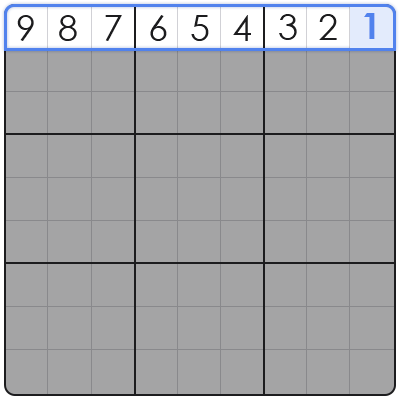
At its core, Sudoku is a constraint satisfaction problem played on a 9×9 grid, which is further divided into nine 3×3 subgrids, often referred to as “blocks” or “regions.” Based on structural analysis, the primary components are the 81 individual cells, each capable of holding a single digit from 1 to 9. The objective is to fill every empty cell such that each row, each column, and each 3×3 block contains all nine digits exactly once.
The “easy” designation typically implies a high density of pre-filled numbers, known as “givens,” which significantly limits the possibilities for the remaining empty cells. From a framework perspective, these givens act as strong initial constraints, allowing for straightforward logical deductions without requiring advanced techniques like guessing or complex branching. This abundance of initial data simplifies the search space for solutions.
The underlying mechanics rely on the principle of uniqueness: for any given cell, the number placed must be unique within its row, its column, and its 3×3 block. This triple constraint forms the bedrock of all Sudoku solving strategies, irrespective of difficulty. Understanding these basic components and their interdependencies is paramount before attempting any systematic solution.
Step-by-Step Implementation: Practical Strategies for Solving Easy Sudoku
In practical application, solving an easy Sudoku involves a systematic approach that leverages the initial constraints to quickly eliminate possibilities and confirm cell values. The key is to adopt an iterative process, repeatedly scanning the grid for obvious placements before moving to slightly more complex deductions. This methodical execution minimizes errors and maximizes efficiency.
Step 1: Single Candidate in a Cell (Naked Singles). Begin by scanning the entire grid for cells where only one number can logically fit. This often occurs when a cell’s row, column, and 3×3 block are already nearly full, leaving only one digit from 1-9 unaccounted for in that specific intersection. This direct answer syntax provides the most immediate gains.
Step 2: Single Candidate in a Row, Column, or Block (Hidden Singles). Next, identify rows, columns, or 3×3 blocks where a particular number (say, ‘5’) is missing, and there’s only one cell within that specific row, column, or block where a ‘5’ *could* possibly be placed, given the existing numbers in its intersecting rows/columns/blocks. This method requires a slightly broader scan.
Step 3: Cross-Hatching (Intersection). This involves looking at a specific number (e.g., ‘7’) and identifying where it *must* go in a 3×3 block by eliminating possibilities from the rows and columns that intersect that block. If a ‘7’ is present in two adjacent blocks, its placement in the third block of that tier might become obvious.
Step 4: Candidate Marking (Pencil Marks). For cells that aren’t immediately solvable, lightly pencil in all possible candidate numbers. As you solve other cells, eliminate candidates from adjacent cells. This systematic reduction of possibilities is crucial for puzzles that are slightly less ‘easy’ but still solvable without advanced techniques.
Comparative Analysis: Easy Sudoku vs. Advanced Logic Puzzles
Comparing how to solve easy Sudoku with more advanced logic puzzles, or even harder Sudoku variants, reveals critical distinctions in problem complexity, required analytical depth, and solution efficiency. While the core objective remains consistent, the methodology and cognitive investment diverge significantly. From a framework perspective, easy Sudoku serves as a fundamental building block, illustrating basic constraint satisfaction.
In terms of **Complexity**, easy Sudoku primarily relies on direct deduction and the identification of “naked singles” or “hidden singles” in a straightforward manner. The solution path is generally linear and requires minimal backtracking or advanced pattern recognition. Conversely, expert-level Sudoku often necessitates complex techniques like “X-Wing,” “Swordfish,” “Jellyfish,” or “Naked/Hidden Pairs/Triples/Quads,” which involve anticipating multiple moves and evaluating intricate candidate interactions across the grid.
**Efficiency** in solving easy Sudoku is high; a proficient solver can typically complete one in minutes due to the high number of givens and the directness of deductions. Advanced puzzles, however, demand significantly more time, often involving extensive candidate tracking, hypothetical scenario testing (known as “forcing chains”), and a greater propensity for dead ends or incorrect assumptions that require restarting. The cognitive load and potential for error are substantially higher in complex variants.
The “Cost,” in terms of mental energy and dedicated time, is comparatively low for easy Sudoku, making it an accessible brain exercise. For advanced puzzles, the “cost” escalates, demanding sustained focus and a higher degree of abstract reasoning, often blurring the lines between pure logic and strategic planning. This distinction highlights easy Sudoku’s role as an accessible entry point into the broader world of logical puzzles, offering a foundational understanding without the steep learning curve of its more challenging counterparts.
Common Pitfalls in Easy Sudoku and Professional Solutions
Even with easy Sudoku, certain common pitfalls can hinder progress and lead to frustration, underscoring the importance of a disciplined, methodical approach. Identifying these typical errors is the first step toward developing a more robust problem-solving strategy, mirroring the error-prevention protocols in high-stakes professional environments.
Pitfall 1: Overlooking Obvious Placements. A frequent mistake is rushing or failing to systematically scan the entire grid for straightforward “naked singles” or “hidden singles.” This oversight often leads to spending unnecessary time on more complex cells while simpler ones remain unsolved. The professional solution involves a disciplined, iterative scanning strategy: after each number is placed, immediately re-scan its associated row, column, and 3×3 block for new obvious placements.
Pitfall 2: Incorrect Candidate Marking. When using pencil marks for potential numbers, errors can arise from incorrectly writing down a candidate or failing to erase one when a number is placed elsewhere. This leads to invalid solution paths. A robust solution involves meticulousness: double-check all candidate entries and rigorously erase irrelevant candidates as soon as a cell’s value is confirmed. Consider using a distinct notation for confirmed numbers versus candidates.
Pitfall 3: Lack of Patience or Systematic Approach. Treating easy Sudoku as a race often results in impulsive number placement or a haphazard approach, leading to dead ends and the need to restart. From a framework perspective, patience and a systematic process are paramount. The professional advice is to treat each Sudoku as a project: establish a clear workflow (e.g., scan rows, then columns, then blocks; update candidates) and adhere to it without deviation. Breaks can also help reset cognitive fatigue.
Frequently Asked Questions About Easy Sudoku Solving
Q: What defines an easy Sudoku? A: Easy Sudokus typically feature a high number of pre-filled cells (givens), allowing solvers to use simple, direct deduction techniques like finding single candidates in rows, columns, or blocks without advanced strategies.
Q: What is the first step in solving any Sudoku? A: The initial step is to systematically scan the entire grid, focusing on rows, columns, and 3×3 blocks to identify cells where only one number can logically fit based on existing numbers.
Q: Can I improve my analytical skills with Sudoku? A: Yes, regular Sudoku practice demonstrably enhances logical deduction, pattern recognition, and systematic problem-solving abilities, which are valuable cognitive assets across various analytical professions.
Q: Are there specific techniques for easy puzzles? A: For easy puzzles, focus primarily on “single candidate” (naked single) identification within individual cells, rows, columns, and 3×3 blocks, along with “cross-hatching” to narrow down possibilities.
Q: How does Sudoku relate to real-world problem-solving? A: From a framework perspective, Sudoku mirrors constraint satisfaction problems prevalent in fields like software engineering, logistics, and project management, teaching methodical analysis and iterative refinement.
Beyond the Grid: Cognitive Benefits and Real-World Applications of Sudoku Logic
While ostensibly a leisure activity, the regular engagement with how to solve easy Sudoku yields significant cognitive benefits that extend far beyond the puzzle itself, contributing to enhanced mental acuity and practical problem-solving capabilities. These benefits are increasingly recognized for their transferable value in diverse professional settings.
Based on structural analysis of cognitive processes, Sudoku actively exercises and strengthens logical reasoning, enabling individuals to identify relationships between discrete pieces of information and deduce conclusions within a complex system. It also sharpens pattern recognition, a crucial skill for data analysts, strategists, and anyone involved in trend identification.
Furthermore, the iterative nature of Sudoku solving cultivates enhanced focus, patience, and attention to detail. These are invaluable attributes in any field requiring meticulous work, such as quality assurance, compliance, or scientific research, where small oversights can have significant repercussions. The game teaches the discipline of methodical progress over impulsive action.
In practical application, the core principles of Sudoku – constraint satisfaction, logical deduction, and systematic elimination – are directly transferable to real-world scenarios. Consider project management, where resource allocation must satisfy multiple constraints (budget, time, personnel); or software development, where debugging involves logically isolating and eliminating potential error sources. Sudoku provides a low-stakes environment to practice these high-value analytical skills.
In summary, mastering how to solve easy Sudoku is far more than a recreational pursuit; it represents a foundational exercise in developing essential analytical and logical deduction skills. By adhering to systematic strategies, understanding core mechanics, and avoiding common pitfalls, individuals can not only enjoy the satisfaction of completing puzzles but also cultivate cognitive abilities that are directly applicable and highly valued in today’s complex professional landscape. The iterative process of identifying, analyzing, and resolving constraints, inherent in Sudoku, serves as a powerful metaphor for effective problem-solving across industries, reinforcing the long-term strategic value of logical thinking.