

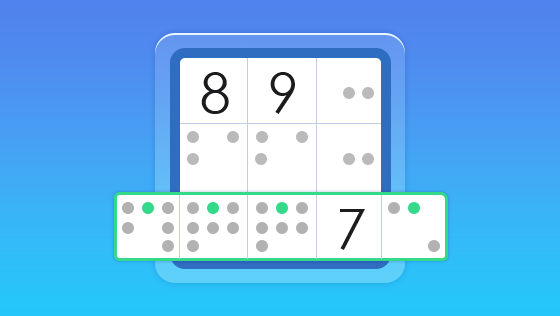
Mastering difficult Sudoku transcends mere recreational pastime; it represents a rigorous exercise in advanced cognitive strategy and logical deduction. At its core, mastering difficult Sudoku involves developing a systematic approach to identify, analyze, and apply complex logical patterns to solve grids that defy simpler techniques. This practice significantly sharpens analytical thinking, patience, and the ability to manage intricate data sets. The significance of developing proficiency in difficult Sudoku lies in its direct applicability to real-world strategic problem-solving scenarios. Based on structural analysis, the same systematic decomposition of problems, identification of constraints, and iterative application of logical rules found in complex Sudoku grids are mirrored in fields requiring precise decision-making, such as data science, engineering, and project management. The primary problem that mastering difficult Sudoku addresses is the pervasive tendency towards heuristic over-reliance or premature guessing when faced with ambiguous or high-complexity challenges. Instead of succumbing to trial-and-error, a mastery approach cultivates a disciplined methodology, fostering an intrinsic understanding of logical dependencies and the foresight to anticipate implications of each decision, thereby dramatically reducing errors and increasing solution efficiency.
Deconstructing Advanced Sudoku Logic: The Technical Framework
Deconstructing advanced Sudoku logic involves understanding the foundational techniques beyond basic singles, such as ‘naked’ and ‘hidden’ subsets, ‘pointing’ and ‘claiming’ pairs, and the more intricate ‘X-Wing’ and ‘Swordfish’ patterns. From a framework perspective, these techniques are not random tricks but systematic methods for identifying candidates that must reside in specific cells or, conversely, cannot reside in others, based on their interaction across rows, columns, and 3×3 blocks. An X-Wing, for instance, identifies four cells forming a rectangle where a specific candidate can only exist in two opposing corners of that rectangle across two rows or columns, eliminating that candidate from other cells within those rows or columns.
Further complexity is introduced by ‘forcing chains’ and ‘Nishio’ or ‘XY-Wing’ patterns, which require a deeper understanding of conditional logic. A forcing chain explores ‘what if’ scenarios, following a candidate through a series of implications to uncover a contradiction or a necessary placement. This involves speculative analysis, where a potential candidate is temporarily placed, and its consequences are tracked, demanding significant foresight and meticulous record-keeping. The technical framework necessitates a mental visualization of the grid’s state, tracking multiple possibilities simultaneously.
In practical application, these advanced techniques transform the puzzle from a simple number-placing game into a sophisticated logical matrix. Each technique serves as a distinct analytical tool, designed to break deadlocks by revealing hidden relationships between cells and candidates. Proficiency is not just about knowing these techniques but understanding their prerequisites, optimal application contexts, and their synergistic effects when combined in a difficult grid. This structural understanding is paramount for systematic advancement through the puzzle’s layers of complexity.
A Step-by-Step Approach to Solving Intricate Sudoku Grids
Solving intricate Sudoku grids requires a structured, multi-phase methodology that progresses from initial observations to the application of sophisticated logical deductions. The first step involves a comprehensive initial scan of the entire grid to fill in all obvious ‘singles’ – cells where only one candidate number is possible. This phase rapidly simplifies the grid and often reveals patterns for more advanced techniques. This foundational pass should be thorough, covering rows, columns, and 3×3 blocks for explicit single candidates, and also implicit singles derived from other cells in their respective units.
The second step focuses on identifying ‘naked’ and ‘hidden’ subsets (pairs, triples, and quadruples) within rows, columns, or blocks. A naked pair, for example, is when two cells in a unit contain only two specific candidates between them, meaning those two candidates must occupy those two cells, eliminating them from other cells in the unit. Concurrently, apply ‘pointing pairs/triples’ and ‘claiming pairs/triples’ to eliminate candidates from interacting units. This phase demands careful observation and a systematic check of each unit for these patterns, leveraging the reduced candidate sets from the initial single pass.
The third, and often most critical, step is to engage with advanced pattern recognition like X-Wings, Swordfish, and then move to more complex strategies such as XY-Wings or forcing chains. This is where many solvers falter; however, by approaching these systematically – starting with X-Wings (easy to spot rectangles of two candidates in two rows/columns), then Swordfish (three candidates in three rows/columns), and finally exploring forcing chains as a last resort for complex deadlocks – one can methodically break through the toughest grids. Forcing chains, while powerful, are time-consuming and prone to error if not meticulously tracked, necessitating clear notation or mental backtracking. Each successful application of an advanced technique opens new possibilities for simpler eliminations, reiterating the need for continuous re-evaluation of the grid after each deduction.
Comparative Analysis: Difficult Sudoku vs. Related Logic Puzzles
Understanding how to master difficult Sudoku is best appreciated when contrasted with other logic puzzles, highlighting its unique demands on cognitive faculties.
| Feature | Difficult Sudoku | KenKen | Kakuro | Killer Sudoku |
|——————-|———————————————————-|————————————————————-|————————————————————–|————————————————————–|
| **Complexity** | High: Relies on advanced pattern recognition, logical deduction, and ‘what-if’ scenarios. | Moderate: Combines arithmetic with basic Sudoku-like logic, requires number combinations. | Moderate: Similar to crosswords with arithmetic constraints and unique digit rules per cage. | High: Adds arithmetic sums to cages, requiring number combinations and Sudoku rules. |
| **Efficiency** | Demands methodical elimination; slow but precise progress with high confidence. | Faster pace due to arithmetic and smaller cages; less reliance on global patterns. | Generally quicker as solutions are often confined to cages; requires less global grid analysis. | Slower due to dual constraints (sums + unique digits + Sudoku rules), more candidate tracking. |
| **Required Skills**| Pattern recognition, deductive reasoning, conditional logic, patience, spatial awareness. | Arithmetic skills, combination logic, trial-and-error (for sums), basic Sudoku principles. | Arithmetic skills, combination logic, unique digit placement per ‘word’ or sum. | Combination logic, arithmetic, standard Sudoku techniques, extensive candidate tracking. |
| **Frequency** | Requires deep, sustained focus over fewer, more complex steps. | More frequent, smaller steps, often leading to quicker resolution of segments. | Frequent, localized deductions based on arithmetic sums and digit uniqueness. | Less frequent breakthroughs, often requiring iterative application of sum-based eliminations and traditional Sudoku. |
Based on structural analysis, while all these puzzles test logical reasoning, difficult Sudoku uniquely emphasizes non-arithmetic, pure pattern-based deduction across an entire grid. KenKen and Kakuro introduce arithmetic components, shifting the focus to number combinations within defined cages, often reducing the need for the extensive global pattern recognition critical in advanced Sudoku. Killer Sudoku integrates both, demanding a blend of arithmetic combination skills with traditional Sudoku rules, arguably requiring an even broader set of simultaneous analytical processes.
From a framework perspective, mastering difficult Sudoku equips solvers with a highly transferable skill in systemic constraint satisfaction. It teaches how to rigorously analyze a fixed set of possibilities and eliminate based on logical impossibilities, a skill that is less pronounced in puzzles heavily reliant on arithmetic permutations like KenKen, where the ‘solution space’ within a cage is often smaller and more immediately calculable. The absence of mathematical operations in classic Sudoku forces a deeper dive into the combinatorial properties of number placement, making it a distinct challenge.
Common Pitfalls and Professional Solutions in Difficult Sudoku
A frequent mistake in tackling difficult Sudoku is succumbing to premature guessing, often referred to as ‘trial and error’ without a clear logical basis. This approach, while seemingly a shortcut, almost invariably leads to errors that propagate through the grid, making the puzzle impossible to solve without restarting. The professional solution to this pitfall is absolute adherence to logical deduction: never place a number unless it can be definitively proven through an elimination process or a conclusive forcing chain. If a number cannot be logically placed, the solver must identify and apply more advanced techniques to reveal further deductions, rather than resorting to arbitrary choices. This reinforces the core principle of methodical problem-solving.
Another common pitfall is the failure to systematically re-scan the entire grid for new opportunities after each successful number placement or candidate elimination. Many solvers focus too narrowly on the area where they just made a deduction, missing the cascading effects across other rows, columns, or blocks. In practical application, the professional solution involves adopting a cyclical review process. After every major deduction, the solver should quickly re-evaluate all 3×3 blocks, rows, and columns for newly created singles (naked or hidden), pointing pairs, or even simpler advanced patterns that might have emerged. This iterative process ensures that no potential deduction is overlooked and maintains the momentum of the solution.
Finally, getting overwhelmed by the sheer number of candidates and potential patterns is a significant hurdle, especially with ‘Naked/Hidden Quadruples’ or ‘forcing chains’ that have many branches. The solution lies in developing robust notation and visual tracking methods. This could involve using pencil marks for all possible candidates in a cell, circling or highlighting candidates involved in subsets, and systematically crossing out eliminated candidates. For forcing chains, a professional approach involves meticulous mental or written tracking of branches, noting down the initial assumption and its consequences. This systematic record-keeping externalizes the cognitive load, allowing the brain to focus on logical evaluation rather than memory retention of possibilities, thereby preventing mental fatigue and errors.
FAQ: Mastering Difficult Sudoku
**Q: What fundamentally distinguishes a difficult Sudoku from an easy one?** A: Difficult Sudokus possess fewer initial clues and require the application of complex, non-obvious logical patterns (like X-Wings, forcing chains) to solve, whereas easy ones can typically be solved with basic single-candidate eliminations.
**Q: Are there specific techniques that are unique to difficult Sudoku puzzles?** A: Yes, techniques such as X-Wing, Swordfish, XY-Wing, and various forms of forcing chains are specifically designed to resolve deadlocks encountered only in difficult Sudoku puzzles.
**Q: Can practicing difficult Sudoku genuinely improve cognitive abilities?** A: Absolutely. Consistent engagement with difficult Sudoku enhances logical reasoning, pattern recognition, problem decomposition, patience, and memory, directly contributing to overall cognitive sharpening.
**Q: What is the most common mistake advanced players make?** A: Even advanced players can err by not systematically re-evaluating the entire grid after a major deduction or by failing to meticulously track complex forcing chains, leading to missed opportunities or logical inconsistencies.
**Q: How long does it typically take to ‘master’ difficult Sudoku?** A: Mastery is subjective, but with consistent practice (e.g., 30 minutes daily), significant proficiency in advanced techniques can be achieved within 3-6 months, transitioning from struggle to strategic resolution.
In conclusion, the journey to master difficult Sudoku is more than just about completing a puzzle; it is a profound exercise in enhancing strategic problem-solving capabilities. It instills a disciplined approach to breaking down complex systems, identifying intricate logical dependencies, and systematically applying advanced analytical frameworks. The skills honed, from meticulous candidate tracking to evaluating conditional ‘what-if’ scenarios, are directly transferable to professional domains requiring robust analytical prowess. From a forward-looking industry insight, individuals proficient in such cognitive disciplines are increasingly valuable in an era demanding precise, data-driven decision-making and resilience against ambiguity. Mastering difficult Sudoku, therefore, represents a strategic investment in one’s cognitive architecture, yielding long-term benefits in intellectual acuity and adaptability.