

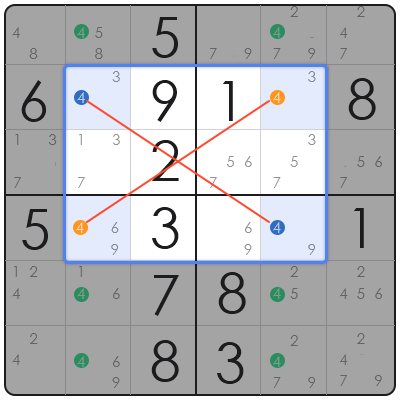
Monster Sudoku puzzles are an advanced variant of the classic number placement game, significantly expanding the grid size and incorporating multiple overlapping standard Sudoku sub-grids within a single, complex framework. This intricate puzzle format fundamentally challenges conventional Sudoku solving strategies by demanding a hierarchical and multi-grid approach, pushing the boundaries of logical deduction and pattern recognition. From a cognitive training perspective, the primary problem Monster Sudoku solves is the stagnation that can occur when seasoned Sudoku players no longer find sufficient intellectual stimulation in standard 9×9 grids. It acts as an advanced training ground, requiring players to not only master individual grid logic but also to understand the complex interdependencies and data flow between these constituent sections. In practical application, mastering Monster Sudoku translates to enhanced analytical capabilities and improved strategic planning, skills highly valued across various professional domains. The inherent complexity necessitates a robust, systematic methodology, moving beyond intuitive guesswork to a disciplined application of advanced logical principles. Based on structural analysis, these puzzles redefine what it means to ‘solve’ a Sudoku, transforming it into a multi-layered problem-solving exercise where the solution to one sub-grid directly informs and constrains the possibilities within adjacent ones.
The Structural Logic of Monster Sudoku Puzzles
Monster Sudoku puzzles, often encompassing grids like 16×16 or even larger, are defined by their composite nature, where several standard Sudoku grids (e.g., 4×4 or 9×9) are interwoven. The core logic remains consistent: each row, column, and defined sub-grid (box) must contain every number from 1 to N (where N is the size of the smaller sub-grid) exactly once. The complexity escalates due to overlapping cells, which simultaneously belong to multiple sub-grids, rows, and columns, creating a dense network of constraints.
From a framework perspective, these overlapping regions are the linchpin of Monster Sudoku, acting as critical data exchange points. A number placed in an overlapping cell satisfies the rules for every grid, row, and column it is part of, profoundly impacting the possibilities in all connected areas. This necessitates a global view rather than a localized focus, demanding that solvers track implications across the entire mega-grid.
Based on structural analysis, successful engagement requires an understanding of these shared regions as priority zones. Any deduction made within these zones has magnified consequences, often unlocking cascades of solutions in disparate parts of the puzzle. The efficient management of these shared constraints is paramount to navigating the puzzle’s daunting scale.
Applying Advanced Techniques: A Step-by-Step Guide
Playing Monster Sudoku puzzles effectively involves a systematic progression of advanced logical techniques, moving beyond simple single-candidate eliminations. Firstly, identify the largest or most constrained overlapping regions within the mega-grid. These “central” or “shared” zones often provide the most immediate deductions because cells in these areas are subject to the highest number of constraints from multiple sub-grids, rows, and columns.
Secondly, apply advanced Sudoku strategies such as “naked/hidden singles,” “pairs,” “triples,” and “quads” not just within individual 9×9 or 4×4 blocks, but specifically across the boundary lines of overlapping sub-grids. For instance, a hidden single for a number in an overlapping column can resolve candidates in two distinct 9×9 grids simultaneously. This requires meticulously tracking candidate numbers for each cell, particularly in the intersection areas.
Thirdly, employ “chaining” and “X-wing” techniques to resolve ambiguities. Chaining involves following a logical path of implications, where placing a number in one cell forces a specific number in another, and so on. X-wing, a more advanced strategy, identifies situations where a number can only appear in two specific cells across two different rows or columns, allowing for the elimination of that number from other cells in those respective columns or rows. In Monster Sudoku, these techniques are often applied in a multi-grid context, meaning an X-wing in one 9×9 block might eliminate candidates from an entirely different, but connected, 9×9 block.
Finally, in practical application, maintain a consistent system for marking candidates, often utilizing small pencil marks, to avoid errors and facilitate complex deductions. Regularly re-evaluate the entire grid after significant progress, as new numbers placed will inevitably open up new opportunities for elimination across the extensive network of overlapping constraints. This iterative process is crucial for tackling the vastness of Monster Sudoku.
Comparative Analysis: Monster Sudoku vs. Traditional Variants
Understanding how to play Monster Sudoku puzzles is significantly clarified when juxtaposed against its more common variants. While all Sudoku forms adhere to the fundamental rule of unique numbers in rows, columns, and blocks, the scale and interdependency in Monster Sudoku elevate its strategic demands. The comparison highlights not just increased difficulty but a fundamental shift in problem-solving methodology.
From a framework perspective, standard 9×9 Sudoku focuses primarily on localized pattern recognition and elimination within a single, bounded domain. Killer Sudoku adds a mathematical layer with sum constraints, while Samurai Sudoku introduces overlapping 9×9 grids. Monster Sudoku, however, scales the multi-grid concept exponentially, making the management of shared territories the central challenge, rather than an auxiliary one. This requires a much broader scope of vision and strategic planning.
In practical application, the core difference lies in the ‘data flow’ and constraint propagation. In traditional variants, deductions are largely confined. In Monster Sudoku, a single deduction in an overlapping cell can ripple through multiple sub-grids, demanding a solver’s ability to track these far-reaching implications efficiently. This makes it less about speed and more about meticulous, systemic analysis.
Here is a comparative analysis:
| Feature | Standard Sudoku (9×9) | Samurai Sudoku (5x9x9) | Monster Sudoku (e.g., 16×16 or larger with multiple overlaps) |
|—|—|—|—|
| **Complexity**| Low to Medium | Medium to High | Extremely High |
| **Efficiency**| Fast deductions often | Requires some cross-grid tracking | Demands extensive multi-grid tracking and strategic planning |
| **Challenge** | Grid-centric | Overlap-centric (limited) | Heavily overlap-dependent, global constraint propagation |
Navigating Common Pitfalls in Monster Sudoku Play
A frequent mistake when learning how to play Monster Sudoku puzzles is failing to adequately manage candidate numbers across overlapping regions. Solvers often focus intensely on one sub-grid, making deductions that, while valid for that specific 9×9, fail to account for the additional constraints imposed by its belonging to another grid. This narrow focus inevitably leads to conflicts or dead ends later in the solving process, requiring extensive backtracking.
Professional advice suggests maintaining a unified, comprehensive candidate tracking system. From a framework perspective, every cell, especially those in shared areas, should be treated as part of all relevant constraints simultaneously. Utilize robust notation, potentially with different colors or symbols for candidates stemming from different sub-grid analyses, to ensure no constraint is overlooked. Regularly pause and re-scan overlapping zones for newly revealed single candidates or pairs that might have been hidden by a singular sub-grid focus.
Another significant pitfall is premature guessing or relying on intuition instead of rigorous logical deduction. Given the sheer scale and complexity of Monster Sudoku, a single incorrect guess can contaminate a vast portion of the puzzle, making recovery exceedingly difficult. The temptation to ‘force’ a number when stuck is high, but this strategy is almost always counterproductive in these advanced puzzles.
In practical application, when faced with an apparent impasse, revert to simpler strategies applied to different parts of the grid or systematically re-verify existing placements. Often, a subtle deduction in a seemingly unrelated section can unlock progress elsewhere. Employ ‘what-if’ scenarios only as a last resort and always with a clear mental or physical mark indicating a provisional placement that must be rigorously validated.
Frequently Asked Questions About Monster Sudoku Puzzles
Q: What differentiates Monster Sudoku from other large Sudoku variants? A: Monster Sudoku distinguishes itself by the extensive number and size of overlapping sub-grids, typically involving multiple 9×9 or larger blocks, unlike Samurai Sudoku’s limited overlap.
Q: What is the best starting strategy for a Monster Sudoku? A: Based on structural analysis, begin by focusing on the most constrained cells, which are usually those within the heavily overlapping regions. These cells influence multiple grids simultaneously.
Q: Are there specific software tools to aid in Monster Sudoku? A: While many online tools exist for standard Sudoku, dedicated solvers for Monster Sudoku are rarer. Most advanced players use traditional pencil-and-paper methods with detailed candidate notation.
Q: How long does a typical Monster Sudoku puzzle take to solve? A: From a framework perspective, solving time varies greatly. Beginners might take many hours or even days, while experienced solvers can still spend several hours on a single puzzle.
Q: Is Monster Sudoku good for cognitive training? A: Yes, in practical application, the immense logical demands of Monster Sudoku significantly enhance critical thinking, pattern recognition, and sustained concentration, offering robust cognitive benefits.
In conclusion, how to play Monster Sudoku puzzles transcends mere recreational activity, evolving into a sophisticated exercise in advanced logical deduction and strategic planning. The structural complexity, driven by extensive overlapping sub-grids, demands a disciplined, multi-faceted approach that extends far beyond the techniques used for simpler variants. From a framework perspective, mastering these puzzles cultivates highly transferable analytical skills, making them a valuable tool for cognitive enhancement and a benchmark for problem-solving prowess. The long-term strategic value lies in developing a systemic mindset capable of navigating intricate, interconnected challenges, a skill set increasingly critical in today’s complex professional landscapes.