

The number of possible Sudoku combinations refers to the total distinct ways a standard 9×9 Sudoku grid can be validly completed, where ‘valid’ implies that each row, column, and 3×3 subgrid contains all digits from 1 to 9 exactly once. This colossal figure represents a profound challenge and fascinating area of inquiry in combinatorics. This immense figure is not merely a mathematical curiosity; it underpins critical aspects of algorithm design, computational complexity theory, and the rigorous study of constraint satisfaction problems within Combinatorics and Computational Science. Its precise determination marked a significant achievement. Understanding how many possible sudoku combinations provides a foundational benchmark for assessing the efficiency of search algorithms, the inherent difficulty of combinatorial puzzles, and the theoretical limits of brute-force approaches in complex systems, guiding strategic development in analytical fields.
The Fundamental Structure of a Valid Sudoku Grid
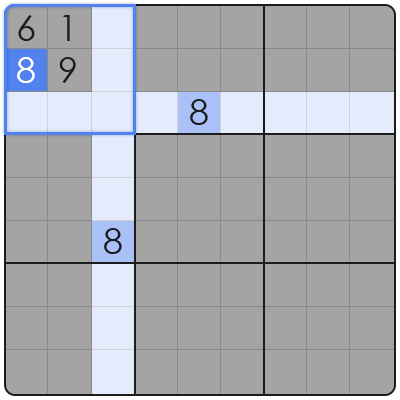
The number of possible Sudoku combinations hinges entirely on the grid’s foundational rules, which dictate that each of the nine rows, nine columns, and nine 3×3 subgrids must contain all digits from 1 through 9 exactly once. These three core constraints define the very essence of a valid Sudoku state.
Based on structural analysis, a valid Sudoku grid is a specific type of Latin Square, augmented significantly by the additional, interwoven block constraints. Detail how these local and global constraints profoundly multiply the solution space, making simple enumeration exponentially difficult.
From a framework perspective, the interaction of these constraints creates a highly interdependent system where placing a single digit can have cascading effects, severely limiting subsequent choices and making the precise enumeration of all possible configurations a non-trivial computational task.
The Combinatorial Challenge: Early Estimates and Breakthroughs
Early estimations for how many possible sudoku combinations varied widely, reflecting the sheer scale and complexity of the problem, which initially seemed intractable for precise calculation using rudimentary methods. Mathematicians and computer scientists grappled with increasingly refined upper and lower bounds.
The definitive breakthrough came in 2005 when mathematicians Bertram Felgenhauer and Frazer Jarvis, using sophisticated computational methods and rigorous logical deduction, published the precise count of valid 9×9 Sudoku grids. Their work was a landmark in computational combinatorics.
This seminal work was later independently verified by others, solidifying the number as a cornerstone in combinatorial mathematics and illustrating the capabilities of modern computational science in solving complex enumeration challenges that were once considered beyond reach.
Computational Methodology for Enumerating Sudoku Grids
The definitive calculation of how many possible sudoku combinations primarily involves a systematic backtracking algorithm coupled with extensive pruning of the search space. This methodology systematically explores potential digit placements, backing up whenever a constraint is violated, and intelligently avoids unfruitful paths.
In practical application, the enumeration process starts by determining the permutations for the top row (9! ways), then iteratively calculates the number of ways to complete subsequent rows and bands while rigorously adhering to all Sudoku constraints simultaneously. This layered approach breaks down the problem.
This process generates an astronomically large number of partial grids, each requiring meticulous constraint checks. It clearly demonstrates the necessity of significant computational power and intelligent algorithmic design to prune invalid paths efficiently and converge on the final count.
The Role of Symmetry and Equivalence Classes in Enumeration
The immense scale of how many possible sudoku combinations necessitates the exploitation of symmetry to make enumeration computationally feasible. Without accounting for these inherent equivalences, the calculation would become even more unwieldy, multiplying the effort unnecessarily.
Based on structural analysis, operations such as row/column permutations within bands/stacks, reflections across axes, rotations of the entire grid, and number re-labeling do not alter the fundamental structural validity of a grid, leading to equivalent forms that can be grouped into ‘equivalence classes’.
By calculating the number of unique Sudoku grids in a ‘canonical’ form—a representative from each equivalence class—and then multiplying by the average number of symmetries, the overall computational burden is drastically reduced, simplifying the enumeration problem to a manageable scale.
Comparative Analysis: Sudoku Complexity in Context
Comparing how many possible sudoku combinations to other famous combinatorial problems provides essential context regarding its unique place in computational mathematics and its implications for complexity theory. This helps to benchmark its difficulty against other well-known challenges.
From a framework perspective, while Sudoku’s grid is fixed, its internal constraints make its solution space highly dense yet challenging to navigate, as illustrated in the following comparative analysis:
| Feature | Sudoku Grid Combinations | Rubik’s Cube States (3x3x3) | Chess Legal Positions |
|—|—|—|—|
| Search Space Complexity | ~6.67 x 10^21 | ~4.3 x 10^19 | ~10^43 – 10^50 |
| Computational Effort for Enumeration | High (backtracking, pruning, symmetry) | Medium (group theory, specific algorithms) | Extremely High (dynamic, evolving state) |
| Constraint Rigor | Very High (local, global, fixed grid size) | High (physical structure, move limitations) | Dynamic (piece types, board rules) |
This comparison highlights that while chess may have a larger raw state space, Sudoku’s fixed-size grid with stringent local and global constraints presents a different kind of combinatorial challenge, one often used to benchmark constraint satisfaction algorithms effectively.
Avoiding Misconceptions and Pitfalls in Sudoku Enumeration
A common misconception within Combinatorics and Computational Science is conflating the number of distinct, validly filled Sudoku grids with the number of unique Sudoku puzzles, which must possess a single, unique solution from a given set of initial clues. These are two distinct combinatorial problems.
Another significant pitfall involves attempting to enumerate how many possible sudoku combinations without systematically accounting for grid symmetries, such as rotations, reflections, or number permutations. Professional advice dictates that ignoring these symmetries leads to substantial overcounting of fundamentally identical grid structures.
Based on structural analysis, relying purely on brute-force search without advanced algorithmic pruning, like constraint propagation or symmetry reduction, is computationally infeasible for determining this vast number. Practical application demands highly optimized algorithms to navigate the immense search space effectively.
Frequently Asked Questions About Sudoku Combinations
In the realm of how many possible sudoku combinations, several questions frequently arise that are critical for clarifying core concepts and practical implications, especially for those new to combinatorial analysis.
Q1: What is the exact number of possible Sudoku combinations?
A1: There are precisely 6,670,903,752,021,072,936,960 distinct 9×9 Sudoku grids. This figure was first accurately determined through advanced computational mathematics in 2005.
Q2: How was this number of Sudoku combinations derived?
A2: The number was derived using sophisticated backtracking algorithms, significant search space pruning, and the systematic exploitation of grid symmetries inherent to Sudoku’s structure.
Q3: Does this number include rotations and reflections?
A3: Yes, the ~6.67 x 10^21 figure counts every unique grid state, regardless of whether it’s a rotation or reflection of another. Factoring out symmetries yields a smaller number of ‘essentially different’ grids.
Q4: Why is understanding this number important for computer science?
A4: It serves as a benchmark for testing constraint satisfaction problem solvers, evaluating the efficiency of combinatorial algorithms, and understanding the theoretical limits of computational approaches in complex systems.
Q5: Can AI solve Sudoku by generating all combinations?
A5: No, AI typically solves Sudoku using constraint propagation and search algorithms, not by generating and checking all ~6.67 x 10^21 combinations, which is computationally prohibitive and inefficient.
These answers underscore the profound algorithmic and combinatorial insights gained from precisely quantifying how many possible sudoku combinations, offering clarity on its computational and theoretical significance for researchers and practitioners alike.
In summary, the precise quantification of how many possible sudoku combinations stands as a monumental achievement in Combinatorics and Computational Science, illustrating the power of advanced algorithmic design and symmetry exploitation. This number, far from being an abstract curiosity, serves as a critical parameter for evaluating the performance of constraint programming, optimizing search algorithms, and deepening our understanding of combinatorial complexity across various analytical and practical domains. Its profound implications continue to resonate, guiding future research into efficient problem-solving strategies and the limits of computational enumeration.