

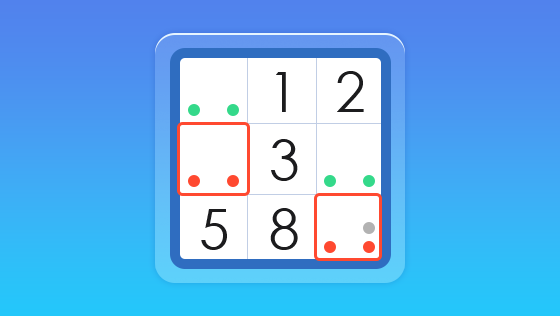
The Sudoku game, a ubiquitous presence in newspapers, mobile apps, and puzzle books, represents a sophisticated exercise in pure logic and deductive reasoning. Far from being a mathematical challenge, this number-placement puzzle requires players to fill a 9×9 grid with digits 1 through 9, ensuring each number appears only once in every row, column, and 3×3 subgrid. Its elegance lies in its simplicity of rules, contrasting sharply with the profound strategic depth required for mastery. In the realm of cognitive training, Sudoku holds significant value, offering a compelling solution to the problem of maintaining mental agility and fostering robust problem-solving skills in an increasingly complex world. Regular engagement with Sudoku stimulates critical brain functions, including pattern recognition, logical inference, and memory recall, thereby serving as an accessible yet potent tool for cognitive enhancement. This inherent capacity for intellectual stimulation underscores its enduring global popularity and relevance. This comprehensive article will delve into the fundamental mechanics of the Sudoku game, providing a structural analysis of its rules and a detailed breakdown of effective strategies, from basic candidate elimination to advanced techniques. We will explore its practical application through a step-by-step guide, compare its cognitive demands with other popular puzzles, address common pitfalls, and offer expert solutions. Ultimately, this deep dive aims to illuminate the strategic depth of Sudoku, positioning it not just as a pastime, but as a robust platform for continuous cognitive development.
Deconstructing the Sudoku Grid: Fundamental Rules and Structure
Understanding how to play the Sudoku game begins with a thorough grasp of its foundational grid and the immutable rules governing number placement. The standard Sudoku puzzle is presented as a 9×9 grid, which is further subdivided into nine smaller 3×3 ‘blocks’ or ‘regions’. Each of these smaller blocks contains nine cells, creating a total of 81 cells within the main grid. Initial puzzles typically provide a scattering of numbers within these cells, acting as critical starting points for deduction.
The first core principle dictates that every row in the 9×9 grid must contain all of the digits from 1 to 9, with each digit appearing exactly once. This constraint immediately establishes a powerful framework for eliminating possibilities and identifying definitive placements. Similarly, the second fundamental rule applies the same principle to columns: each of the nine columns must also contain every digit from 1 to 9 precisely one time. Based on structural analysis, these two rules alone provide a significant basis for initial number identification.
The third, and equally crucial, rule extends this unique digit requirement to each of the nine 3×3 subgrids. Within each of these smaller blocks, the digits 1 through 9 must appear exactly once. From a framework perspective, the interplay of these three rules—row, column, and block uniqueness—creates a tightly interwoven system of constraints. Any number placed must satisfy all three conditions simultaneously, which is the cornerstone of logical deduction in Sudoku and the primary engine for unraveling complex puzzles.
Core Strategies for Initial Placement and Candidate Elimination
Core strategies in how to play the Sudoku game involve systematic candidate elimination and definitive number placement, particularly during the initial phases of a puzzle. The most accessible method is ‘Scanning’ or ‘Cross-Hatching’, where a player systematically checks each number (1-9) across rows, columns, and blocks. By identifying where a number is already present, a player can deduce the sole remaining cell within a specific house (row, column, or block) where that number must reside, directly placing it into the grid.
Building upon basic scanning, the ‘Naked Single’ technique is a cornerstone of efficient play. A naked single refers to a cell that, after eliminating all impossible candidates based on its row, column, and 3×3 block constraints, is left with only one possible digit. This is a definitive placement that requires no further speculation. From a framework perspective, consistently identifying and placing naked singles allows for rapid progression through easier puzzles and establishes a strong foundation for more challenging ones.
A slightly more advanced yet fundamental technique is the ‘Hidden Single’. A hidden single occurs when a specific digit can only be placed in one particular cell within a given row, column, or 3×3 block, even if that cell currently has multiple candidate possibilities. Based on structural analysis, by focusing on a single digit (e.g., ‘where can the number 7 go in this row?’), and seeing it only fits in one empty cell, that cell becomes the definitive spot for that number. Mastering both naked and hidden singles is paramount for any player looking to improve their Sudoku skills and is often the first step in tackling medium-difficulty puzzles.
Advanced Sudoku Techniques for Complex Puzzles
Advanced Sudoku techniques extend beyond basic elimination to tackle more intricate puzzles, often involving sophisticated pattern recognition and multi-cell deductions. Among these, ‘Naked Pairs/Triples/Quadruples’ are crucial. A naked pair, for example, involves two cells within the same house (row, column, or block) that share exactly the same two candidate digits and no others. Because these two digits *must* occupy those two cells, these candidates can then be eliminated from all other cells within that same house, significantly reducing possibilities elsewhere.
Complementing naked sets are ‘Hidden Pairs/Triples/Quadruples’. A hidden pair, in contrast, involves two specific digits that can only appear in two specific cells within a house, even if those cells also contain other candidates. Once identified, all other candidates from those two cells can be eliminated, leaving only the hidden pair. In practical application, recognizing these hidden structures requires a more thorough analysis of candidate lists within a house, as opposed to just looking at single cells.
For truly complex puzzles, techniques like ‘X-Wing’ and ‘Swordfish’ come into play. An X-Wing, for instance, occurs when a particular candidate digit appears in only two cells in one row, and those two cells align with only two cells in another row where the same candidate also appears. This creates a rectangular pattern, allowing the candidate to be eliminated from any other cells in the two columns defined by the X-Wing. Based on structural analysis, these advanced strategies highlight the deep logical interplay within the Sudoku grid and are essential for solving ‘hard’ and ‘expert’ level puzzles, representing the pinnacle of deductive reasoning in the game.
A Step-by-Step Guide to Solving a Sudoku Puzzle
Solving a Sudoku puzzle systematically involves iterative application of logical deduction from initial setup to completion, making it a highly structured cognitive exercise. The process begins with ‘Initial Scan and Easy Fills’. This involves quickly scanning the entire grid for obvious ‘naked singles’ and ‘hidden singles’ by observing rows, columns, and 3×3 blocks. Many puzzles will yield a few immediate placements from this initial sweep, providing more constraints for subsequent deductions. Fill these in confidently.
Following initial fills, the next critical step is ‘Candidate Marking’. For cells that do not have an immediate single solution, it is highly recommended to pencil in all possible candidate digits (small numbers) within each empty cell. This provides a visual representation of all remaining options and is indispensable for applying more advanced techniques. Based on structural analysis, maintaining an accurate and updated list of candidates is key to avoiding errors and identifying complex patterns as the puzzle progresses.
The core of the solving process is ‘Iterative Elimination and Placement’. This involves continuously applying basic strategies (naked/hidden singles) and then advanced techniques (naked/hidden pairs/triples, X-wings) to the grid. After each successful placement of a number, immediately update the candidate lists for all affected rows, columns, and blocks, as new numbers will open up new elimination opportunities. This cyclical process of placing, eliminating, and re-evaluating is repeated until no more logical deductions can be made. If stuck, revisit previous assumptions or search for a new angle, systematically re-checking rows, columns, and blocks for hidden patterns.
Finally, for extremely challenging puzzles where pure deduction seems to stall, a ‘What-If Scenario’ or ‘Trial and Error’ approach might be cautiously employed, though it is generally a last resort. This involves tentatively placing a candidate number in a cell and following its logical implications. If this leads to a contradiction (e.g., two identical numbers in a row), the initial tentative placement was incorrect, and that candidate can be definitively eliminated. From a framework perspective, this method requires meticulous note-taking to ensure accurate backtracking. However, it’s crucial to exhaust all logical methods first, as most valid Sudoku puzzles can be solved through pure deduction.
Comparative Analysis: Sudoku vs. Related Cognitive Puzzles
Sudoku distinguishes itself from similar cognitive puzzles through its unique blend of number logic, spatial reasoning, and deduction within a fixed grid, making it a distinctive tool in cognitive training. While many puzzles challenge mental faculties, Sudoku’s specific constraints and solution methods offer a different profile of cognitive engagement.
The table below illustrates a comparative analysis between how to play the Sudoku game and several other popular cognitive puzzles, based on key dimensions relevant to cognitive training and problem-solving.
| Puzzle Type | Complexity (1-5) | Efficiency (Time/Puzzle) | Cognitive Skill Focus |
|:————-|:—————–|:————————-|:—————————————————-|
| Sudoku | 3-5 | Moderate to High | Logic, Deduction, Pattern Recognition, Memory |
| Crossword | 2-4 | Moderate | Vocabulary, General Knowledge, Linguistic Reasoning |
| KenKen | 4-5 | High | Arithmetic, Logic, Deduction, Combinatorics |
| Nonogram | 3-5 | Moderate to High | Spatial Reasoning, Pattern Recognition, Visual Logic|
Based on this structural analysis, Sudoku consistently emphasizes pure logical deduction and pattern recognition without requiring external knowledge like vocabulary (Crossword) or direct mathematical calculations (KenKen). While KenKen shares a similar grid-based, number-placement logic, its additional arithmetic constraints introduce a different layer of complexity and skill focus. Sudoku’s accessibility combined with its potential for deep logical challenges makes it a uniquely effective tool for enhancing abstract reasoning and systematic problem-solving, making it a staple in cognitive training curricula.
Common Pitfalls and Expert Solutions in Sudoku Play
Avoiding common pitfalls in how to play the Sudoku game involves diligent checking, systematic candidate tracking, and strategic patience, crucial for consistent improvement and enjoyment. One of the most frequent mistakes is ‘Rushing and Misplacing Numbers’. Players, eager to complete the puzzle, often make hasty placements without adequately checking all three constraints (row, column, block). This single error can cascade, making subsequent deductions impossible and leading to frustrating dead ends.
The expert solution to rushing is a methodical, double-checking approach. After every number placement, pause and verify that it satisfies the row, column, and 3×3 block uniqueness rules. From a framework perspective, building a habit of immediate verification prevents error propagation. Furthermore, consistently updating candidate lists after each placement ensures that all deductions are based on the most current and accurate state of the grid, minimizing the chances of incorrect assumptions.
Another significant pitfall is ‘Over-reliance on Guesswork’, especially when faced with harder puzzles where obvious deductions become scarce. While a controlled ‘what-if’ scenario can be a last resort, habitual guessing without exhausting logical avenues is inefficient and often leads to frustrating restarts. The solution lies in developing a repertoire of advanced logical techniques. Based on structural analysis, true mastery of Sudoku hinges on the ability to identify ‘hidden’ patterns like Naked/Hidden Pairs, X-Wings, or Swordfish. When stuck, instead of guessing, systematically re-examine all rows, columns, and blocks for these more complex logical relationships, ensuring that every possible deduction has been explored before considering any form of trial-and-error.
Frequently Asked Questions About Sudoku Play
**Q1: Is Sudoku a math game?**A1: No, Sudoku is a logic puzzle based on numbers 1-9 as symbols, not mathematical operations. The numbers are simply placeholders to ensure uniqueness within specific grid sections.
**Q2: How long does it take to get good at Sudoku?**A2: Improvement varies, but consistent practice, even 15-30 minutes daily, can significantly enhance logical reasoning and speed within weeks. Mastery of advanced techniques comes with more dedication.
**Q3: What’s the best strategy for beginners?**A3: Beginners should focus on finding ‘naked singles’ and ‘hidden singles’ by systematically scanning rows, columns, and 3×3 blocks to identify the only possible cell for a number.
**Q4: Can I solve Sudoku with only logic, no guessing?**A4: Yes, every valid Sudoku puzzle has a unique solution discoverable through pure logic. Advanced puzzles may require sophisticated techniques, but guessing is not inherently necessary for solution.
**Q5: Does playing Sudoku improve brain function?**A5: Studies suggest regular engagement with Sudoku can enhance logical reasoning, memory, concentration, and problem-solving skills, contributing positively to cognitive training and mental agility.
In conclusion, how to play the Sudoku game transcends mere entertainment, emerging as a powerful and accessible tool for cognitive training and mental stimulation. Its elegantly simple rules belie a profound logical depth, challenging players to refine their deductive reasoning, pattern recognition, and systematic problem-solving skills. From a framework perspective, mastering Sudoku involves a hierarchical application of strategies, from basic candidate elimination to sophisticated pattern identification, continuously rewarding methodical thought and persistence. Its enduring appeal in the cognitive wellness and digital puzzle markets underscores its strategic value in fostering mental sharpness. As the demand for engaging cognitive exercises grows, Sudoku stands as a timeless and highly effective mechanism for intellectual growth and an essential component of a well-rounded mental fitness regimen, ensuring its continued prominence for generations to come.