

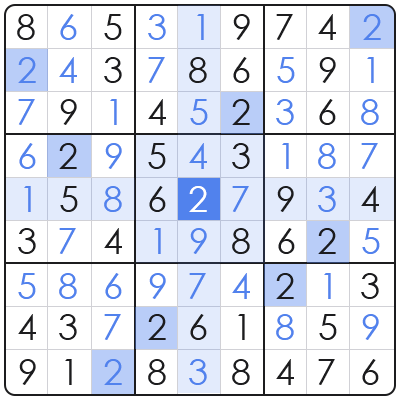
Solving expert Sudoku puzzles involves mastering advanced logical deductions and pattern recognition, moving far beyond basic single-candidate eliminations. This level of Sudoku challenges solvers to employ intricate strategies, often requiring mental visualization and a deep understanding of the puzzle’s underlying mathematical structure. The primary problem expert Sudoku solves, from a cognitive perspective, is the plateau many solvers experience at intermediate levels, where standard techniques prove insufficient against complex, multi-candidate scenarios. From a framework perspective, expert Sudoku serves as an exceptional training ground for enhancing analytical reasoning and systematic problem-solving abilities. It demands not just the identification of individual numbers, but the recognition of relationships and constraints across rows, columns, and 3×3 blocks simultaneously. This holistic approach is crucial for unlocking the most challenging puzzles, where obvious deductions are scarce and hidden patterns dictate the path to resolution. This article will provide a definitive, deep-dive into the methodologies required to conquer expert Sudoku. Based on structural analysis, we will explore the core mechanics, offer a step-by-step guide to applying advanced strategies, compare expert techniques to simpler approaches, highlight common pitfalls, and address frequently asked questions. Our goal is to equip you with the knowledge to approach even the most daunting Sudoku grids with confidence and precision.
Dissecting the Core Mechanics of Expert Sudoku
Expert Sudoku mechanics are founded on the identification and application of sophisticated candidate elimination patterns that leverage the puzzle’s grid structure. Unlike basic Sudoku, which often relies on ‘single-candidate’ or ‘hidden single’ deductions, expert puzzles necessitate spotting ‘subsets’ (Naked Pairs/Triples/Quads, Hidden Pairs/Triples/Quads) where specific candidates are confined to a limited number of cells within a unit. These subsets allow for powerful eliminations in other cells of that unit, significantly narrowing down possibilities.
Beyond simple subsets, the advanced solver must become adept at recognizing ‘Fish’ patterns such as X-Wings, Swordfish, and Jellyfish. An X-Wing, for instance, involves a candidate appearing exactly twice in two distinct rows and occupying the same two columns, allowing for its elimination from those columns outside the designated rows. These patterns are not immediately obvious and demand a thorough initial candidate marking phase to reveal their presence, highlighting the interconnectedness of seemingly disparate cells.
Furthermore, techniques like XY-Wings, XYZ-Wings, and more complex ‘Chains’ (e.g., Simple Coloring, Forcing Chains) become indispensable. An XY-Wing, for example, identifies three cells, where a ‘pivot’ cell shares two candidates with two ‘pincer’ cells. If the pivot forces an outcome in one pincer, and the other pincer also leads to the same outcome in a common target cell, then that candidate can be eliminated from the target. Understanding these intricate logical dependencies is paramount for navigating the densest expert-level grids.
Systematic Application of Advanced Sudoku Strategies
Systematic application of advanced Sudoku strategies involves a hierarchical approach to candidate elimination, moving from fundamental deductions to complex pattern recognition. The process typically begins with an exhaustive scan of the grid to fill in all possible candidates (pencil marks) for every empty cell. This foundational step is non-negotiable, as it makes the subtle patterns of expert Sudoku visible.
Following thorough candidate marking, the solver should first look for basic eliminations and obvious Naked/Hidden Singles. Once these are exhausted, transition to identifying Naked and Hidden Subsets (Pairs, Triples, Quads) within rows, columns, and 3×3 blocks. This phase requires meticulous scanning, as these patterns often hide among numerous other candidates, demanding sharp visual discernment and logical inference.
Next, focus on ‘Wing’ patterns, such as the XY-Wing or XYZ-Wing. These involve identifying a ‘pivot’ cell and two ‘pincer’ cells that share candidates in a specific configuration, leading to a candidate elimination in a target cell. Once Wings are exhausted, move on to ‘Fish’ patterns like X-Wings, Swordfish, or Jellyfish, which operate across multiple rows or columns to eliminate candidates. Finally, if the puzzle still resists, consider more advanced techniques like Unique Rectangles, Finned/Sashimi Fish, or various forms of simple coloring or chaining, which are often last resorts for truly stubborn puzzles.
Expert Sudoku: A Comparative Strategic Overview
Expert Sudoku presents a significantly elevated strategic landscape when compared to its simpler counterparts, demanding a deeper cognitive engagement across several key dimensions. From a complexity standpoint, basic Sudoku relies on direct numerical placement, while intermediate levels introduce fundamental candidate marking. Expert Sudoku, however, necessitates multi-step, conditional logic and the ability to track multiple candidate interactions across the entire grid simultaneously, making it far more intellectually demanding.
In terms of efficiency, the strategic value of expert techniques lies in their ability to dramatically reduce the reliance on trial-and-error, a highly inefficient and often frustrating approach. While basic methods can lead to dead ends or require extensive backtracking, advanced patterns like X-Wings or XY-Wings offer precise, logical eliminations that prune the candidate list effectively, accelerating the path to a solution. This precision ensures that each deduction is firm and contributes directly to progress.
The frequency and nature of required deductions also differ significantly. Basic Sudoku is replete with ‘hidden singles’ or ‘naked singles,’ offering constant small victories. Intermediate puzzles introduce more frequent Naked/Hidden Pairs. Expert Sudoku, conversely, requires solvers to patiently seek out less frequent, more obscure patterns—like Swordfish or Forcing Chains—which, once found, provide substantial breakthroughs. This shifts the focus from simple scanning to pattern recognition and hypothesis testing, requiring a different set of analytical muscles.
Avoiding Common Traps in Expert Sudoku
Successfully navigating expert Sudoku requires vigilance against common cognitive traps that can hinder progress and lead to frustration. One frequent mistake is incomplete candidate marking. Many solvers rush the initial pencil marking phase, leading to missed possibilities for complex patterns. Based on structural analysis, every potential candidate for every cell must be meticulously recorded to reveal the intricate relationships required for advanced deductions. The solution is to slow down and verify all initial candidate entries before attempting any advanced techniques.
Another significant pitfall is an over-reliance on a single, preferred advanced technique. For instance, a solver might become very good at spotting X-Wings but fail to look for XY-Wings or Naked Triples, even when those patterns are more readily available or more efficient for a given situation. In practical application, cultivating a diverse toolkit of techniques and being flexible in their application is crucial. If one approach isn’t yielding results, step back and systematically check for other known patterns across the grid.
Finally, a common error is the failure to thoroughly re-evaluate the entire grid after a major deduction. When a significant number is placed or a candidate is eliminated via a complex pattern, this action often creates new basic or intermediate opportunities that were previously hidden. Professional advice dictates that after every major breakthrough, perform a quick scan for new Naked Singles, Hidden Singles, or basic subsets before diving back into complex pattern hunting. This iterative refinement is key to maintaining momentum and avoiding unnecessary struggles.
Frequently Asked Questions on Expert Sudoku Solving
Q: What is the first step in solving an expert Sudoku? A: Begin by thoroughly filling in all possible candidates for every empty cell. This initial scan is crucial for identifying basic eliminations and setting the stage for advanced techniques, making hidden patterns visible.
Q: How do I identify an X-Wing pattern? A: An X-Wing involves four cells forming a rectangle, where a specific candidate appears exactly twice in two rows and twice in two columns. This allows for that candidate’s elimination from other cells in those specific columns outside the X-Wing rows.
Q: Is trial and error ever acceptable in expert Sudoku? A: While purely guessing is discouraged, advanced analytical techniques like ‘forcing chains’ or ‘what-if’ scenarios are acceptable. These are logical explorations of consequences, not random guesses, and must be backed by a clear logical path.
Q: What is a Naked Pair? A: A Naked Pair consists of two cells within the same row, column, or block that contain only the same two candidates (and no others). These two candidates can then be eliminated from all other cells in that unit, reducing possibilities.
Q: How can I improve my expert Sudoku skills faster? A: Consistent practice with challenging puzzles is vital. Beyond that, actively learn and memorize specific named techniques (like XY-Wing, Swordfish), analyze solved puzzles to understand their logic, and use online solvers to see optimal deductions.
Based on structural analysis, mastering expert Sudoku transcends mere puzzle completion; it cultivates advanced analytical reasoning and systematic problem-solving skills that are invaluable in diverse professional fields. In practical application, the ability to identify complex patterns and execute multi-step logical deductions is a powerful cognitive asset, directly transferable to strategic planning, data analysis, and decision-making. From a framework perspective, the journey through expert Sudoku reinforces the critical importance of a structured, iterative approach to challenges, emphasizing meticulous preparation, flexible strategy application, and continuous re-evaluation. As the landscape of complex problems evolves, the disciplined mindset fostered by expert Sudoku solving remains a cornerstone of intellectual development and strategic foresight.