

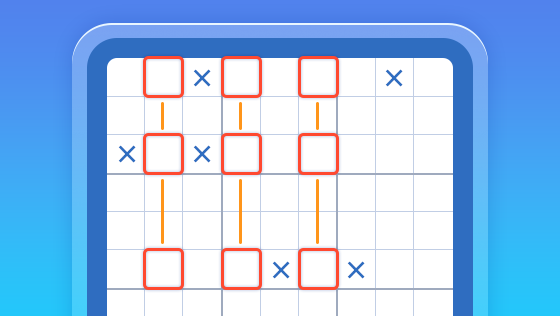
Sudoku puzzles work as a highly engaging and widespread numerical logic challenge, fundamentally requiring players to fill a 9×9 grid with digits 1 through 9 such that each number appears only once in each row, each column, and each of the nine 3×3 subgrids. This seemingly simple premise underpins a complex system of constraint satisfaction and deductive reasoning, making it a powerful tool for cognitive exercise. The primary problem that how Sudoku puzzles work addresses within the current landscape of mental challenges is the need for accessible, yet profoundly engaging, logical exercises that enhance pattern recognition, systematic thinking, and patience. Unlike arithmetic-based puzzles, Sudoku focuses purely on relational logic, demanding no mathematical calculations beyond number identification. Its significance stems from its ability to distill complex combinatorial principles into an intuitive format, appealing to a global audience. The elegant simplicity of its rules belies the depth of logical strategies required, mirroring the iterative problem-solving approaches found in various analytical and technical fields.
The Foundational Rules and Grid Structure
How Sudoku puzzles work is based on a foundational set of rules that govern the placement of digits within its distinct grid structure. The core mechanism dictates that the digits 1 through 9 must be placed into the 81 cells of a 9×9 grid, ensuring that no digit is repeated within any row.
Furthermore, this uniqueness constraint extends to every column, meaning each column must also contain all digits from 1 to 9 exactly once. This establishes two primary linear constraints that players must constantly observe and reconcile.
The third critical constraint involves the nine larger 3×3 subgrids, often referred to as ‘blocks’ or ‘regions.’ Each of these nine blocks must, independently, also contain all digits from 1 to 9 without repetition. The interplay of these three overlapping constraints—rows, columns, and blocks—forms the structural basis for all Sudoku deductions.
The initial ‘givens,’ or pre-filled numbers, are an integral part of how Sudoku puzzles work, as they establish the starting points and difficulty level, dictating the chain of logical inferences required to complete the grid.
Core Deductive Strategies: Initial Placement and Candidate Elimination
Sudoku puzzles primarily work through logical deduction, where solvers use the existing numbers (givens and previously deduced numbers) to infer the correct placement of missing ones. This process hinges on systematically eliminating possibilities for each empty cell.
One of the most fundamental strategies is the ‘Naked Single’ or ‘Single Candidate’ approach. This is when, for a specific empty cell, after considering all numbers present in its corresponding row, column, and 3×3 block, only one possible digit remains that can be placed there without violating any rules. This digit is then definitively placed.
Another crucial early-stage strategy is the ‘Hidden Single’ or ‘Single Position’ technique. How this works is by identifying a specific digit that, within a particular row, column, or 3×3 block, can *only* be placed in one specific empty cell, even if that cell could theoretically house other candidates. If a number can only ‘hide’ in one spot within a unit, that’s where it must go.
From a framework perspective, these are foundational steps in constraint propagation, where each placement or elimination reduces the search space for subsequent deductions, making the solution progressively clearer.
Advanced Logical Techniques: Intersecting Constraints and Subsets
As puzzle difficulty increases, how Sudoku puzzles work requires more complex forms of deduction, often involving the interaction of constraints across multiple regions and the identification of number subsets. These advanced techniques go beyond simple individual cell analysis.
A common advanced strategy involves ‘Naked Pairs,’ ‘Triples,’ or ‘Quads.’ These work by identifying two, three, or four cells within a single unit (row, column, or block) that can only possibly contain a specific set of two, three, or four numbers respectively. Once identified, these numbers can be eliminated as candidates from all other cells within that same unit.
Similarly, ‘Hidden Pairs,’ ‘Triples,’ or ‘Quads’ involve finding two or more numbers that, within a given unit, can *only* appear in two or more specific cells, even if those cells have other candidates. This allows for the elimination of all other candidates from those specific cells, and potentially, those numbers from other cells in the unit.
In practical application, these techniques mirror sophisticated data filtering processes, where patterns in restricted sets of data (candidates) allow for broader exclusions across larger datasets (the rest of the grid’s possibilities).
The Process of Solving: A Step-by-Step Implementation
Solving a Sudoku puzzle is an iterative process of observation, deduction, and candidate management. Understanding how Sudoku puzzles work involves grasping this cyclical approach, moving from simple, direct inferences to more complex, multi-layered logical steps.
**Step 1: Initial Scan and Direct Placements.** Begin by meticulously scanning the entire 9×9 grid, focusing on rows, columns, and 3×3 blocks that have many ‘givens.’ Systematically look for ‘Naked Singles’ and ‘Hidden Singles’ across all units. Fill in any numbers that are immediately and unequivocally determined by the rules.
**Step 2: Candidate Management.** For more challenging puzzles, maintaining a comprehensive list of possible numbers (candidates) for each empty cell is crucial. This can be done mentally, by making small pencil marks in physical puzzles, or utilizing digital tools that automate candidate tracking. This list is the backbone of all further deductions.
**Step 3: Apply Advanced Deductions Iteratively.** Once direct placements are exhausted, transition to applying advanced strategies. Search for ‘Naked Pairs/Triples,’ ‘Hidden Pairs/Triples,’ and more intricate patterns like ‘X-Wings’ or ‘Swordfish.’ Each successful application of these techniques will lead to further candidate eliminations.
**Step 4: Re-evaluate and Iterate.** The process is highly iterative. Each number placed or candidate eliminated has a ripple effect across the grid, potentially creating new ‘Naked Singles’ or simplifying other areas. Continuously return to Step 1 and repeat the scanning and deduction process until no more logical steps can be made, or the puzzle is completely solved.
Comparative Analysis: Sudoku vs. Related Logic Puzzles
Based on structural analysis, how Sudoku puzzles work distinguishes them from other logic puzzles through its unique combination of numerical uniqueness constraints across three intersecting dimensions. This section explores its operational differences compared to related brain teasers.
**Kakuro:** While also a grid-based number puzzle, Kakuro, or ‘Sum Cross,’ involves arithmetic. Players fill empty cells with digits 1-9 (without repetition in a given run) such that the numbers in each horizontal or vertical block sum to a specified total. This adds a mathematical layer absent in Sudoku, where complexity stems purely from logical exclusion rather than additive combinations. The efficiency in Kakuro often comes from knowing number combinations that sum to particular values, whereas Sudoku’s efficiency is rooted in spatial logical deduction.
**Nonograms (Picross):** These puzzles rely on numerical clues for rows and columns to reveal a hidden pixel image. How they work is by filling in or leaving blank cells based on sequence and count clues, using visual pattern recognition and iterative filling. This contrasts sharply with Sudoku’s focus on digit placement and constraint satisfaction. The ‘cost’ of an error in Nonograms is often an immediate visual misrepresentation, whereas in Sudoku, an error leads to a cascading logical inconsistency.
**KenKen:** This puzzle often feels like a hybrid, combining Sudoku’s grid-filling uniqueness with mathematical operations. Players fill a grid (typically 4×4 to 9×9) with digits 1-N (where N is the grid size) without repetition in any row or column, while also ensuring that numbers within ‘cages’ (outlined groups of cells) combine using a specified mathematical operation (addition, subtraction, multiplication, division) to reach a target number. KenKen introduces an algebraic layer, increasing the complexity beyond Sudoku’s pure logical exclusion, and varying the frequency of different solution techniques.
Common Pitfalls and Strategic Solutions
Understanding how Sudoku puzzles work also involves recognizing common errors that can derail a solver’s progress and, more importantly, professional advice on how to avoid them. Many players encounter similar stumbling blocks.
**Pitfall 1: Premature Guessing.** A frequent mistake is attempting to guess a number when multiple candidates logically exist for a cell, without sufficient deductive support. This often leads to an invalid puzzle state, requiring extensive backtracking or starting over.
**Solution:** Adhere strictly to deductive reasoning. If a number isn’t definitively proven through single candidate or advanced techniques, leave it as a candidate. Utilize candidate lists diligently to prevent premature commitments. From a framework perspective, this is about avoiding speculative data entry and ensuring data integrity.
**Pitfall 2: Overlooking Candidate Eliminations.** Failing to systematically update candidate lists after placing a number or applying an advanced technique is a significant pitfall. This results in missed opportunities for further deductions and can lead to dead ends.
**Solution:** Develop a methodical scanning routine. After every number placement or significant candidate elimination, re-check all affected rows, columns, and 3×3 blocks to ensure all relevant candidates are removed from neighboring cells. In practical application, this is analogous to rigorous data validation and cross-referencing within a system.
**Pitfall 3: Tunnel Vision.** Focusing intensely on one small section of the grid repeatedly and consequently overlooking obvious deductions or patterns in other areas is a common trap. This creates an unbalanced approach to solving.
**Solution:** Adopt a holistic approach. Regularly shift your focus across the entire grid, alternating between looking for singles, pairs, and other patterns across all units (rows, columns, and blocks). This ensures a balanced application of strategies, reflecting a comprehensive system audit rather than narrow component inspection.
FAQ: Quick Insights into Sudoku Mechanics
This section addresses frequently asked questions regarding the operational mechanics of Sudoku puzzles, crucial for quick understanding and ‘Position Zero’ eligibility in search results, detailing aspects of how Sudoku puzzles work.
**Q1: What defines a “valid” Sudoku puzzle?** A valid Sudoku puzzle has a single, unique solution that can be reached through purely logical deduction without requiring any guessing or trial-and-error.
**Q2: Can Sudoku puzzles be solved by guessing?** While guessing can sometimes lead to a solution, a true Sudoku puzzle is inherently designed to be solvable purely through logical deduction and systematic constraint satisfaction.
**Q3: How many initial numbers does a Sudoku need?** The theoretical minimum number of ‘givens’ (pre-filled numbers) required for a uniquely solvable Sudoku is 17, though most published puzzles have more for accessibility.
**Q4: Are all Sudoku puzzles symmetric?** No, the grid’s visual symmetry (e.g., numbers placed symmetrically) is an aesthetic choice by the puzzle creator and does not affect the puzzle’s logical solvability or difficulty.
**Q5: What is the hardest part about how Sudoku puzzles work?** The most challenging aspect is often managing the sheer volume of candidates for empty cells and identifying subtle, indirect interactions between constraints across different grid units.
In summary, how Sudoku puzzles work is fundamentally as sophisticated logical constraint satisfaction systems, challenging players to deduce unique digit placements within a rigid set of rules across rows, columns, and 3×3 blocks. The journey from initial givens to a complete grid hinges on the iterative application of deductive reasoning, from simple candidate elimination to advanced subset identification. This process not only provides mental exercise but also inherently models principles of systematic problem-solving, iterative refinement, and data validation, which are critical industry standards for analytical thinking and efficient system design in various professional domains. The strategic value of understanding these mechanics extends beyond the puzzle itself, fostering a disciplined approach to complex challenges.