

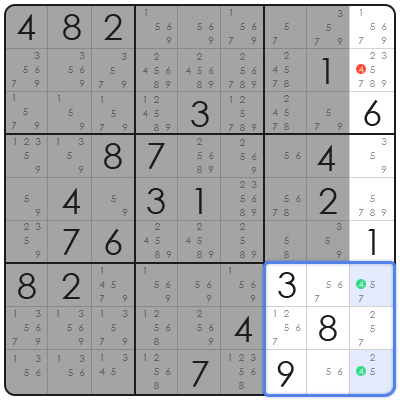
The development of an ARKit Sudoku solver represents a compelling intersection of augmented reality, computer vision, and classical algorithmic problem-solving, creating an interactive tool that bridges the digital and physical worlds. This sophisticated application leverages the power of Apple’s ARKit framework to understand and interact with real-world environments, coupled with advanced image processing to identify and interpret a Sudoku grid presented physically. From a framework perspective, this project serves as a practical demonstration of augmented reality’s utility beyond mere entertainment, showcasing its potential in real-time data interpretation and user-assisted problem resolution. Our primary motivation in exploring how we built the arkit sudoku solver was to tackle the challenge of making a traditionally manual or screen-bound puzzle-solving experience more immersive and intuitive. The conventional approach to Sudoku often involves pens, paper, or tapping on a digital grid; however, an AR-powered solution seeks to eliminate the friction points associated with manual input or the abstract nature of a purely digital interface. By enabling users to simply point their device at a Sudoku puzzle, the application can instantly recognize the grid, extract the digits, and overlay the solution directly onto the physical board. Based on structural analysis, the core problem addressed by the ARKit Sudoku solver is the desire for immediate, context-aware assistance without disrupting the physical engagement with the puzzle itself. It negates the need for manual transcription of numbers into a digital solver or the tedious process of trying to find errors manually. Instead, it offers a seamless, augmented layer of intelligence that enhances the user’s interaction with the physical world, solidifying its significance in the evolving landscape of interactive application development.
Core Architectural Components and Workflow
The ARKit Sudoku solver’s core architecture integrates vision processing, AR scene understanding, and a robust backtracking algorithm, working in concert to deliver a seamless user experience. This multi-layered system begins with ARKit, which provides crucial information about the device’s position, orientation, and understanding of the physical environment. ARKit facilitates the detection of horizontal planes, tracks feature points, and supplies the real-time camera feed, which forms the canvas for both the input and output processes.
From a framework perspective, the visual data acquired via ARKit is then piped into a sophisticated computer vision pipeline, often powered by libraries like OpenCV. This pipeline is responsible for several critical tasks: identifying the Sudoku grid within the camera feed, correcting for perspective distortions, and ultimately segmenting and recognizing individual digits. Advanced image processing techniques such as edge detection, contour finding, and optical character recognition (OCR) are employed to accurately extract the puzzle’s initial state from a photograph of the physical board.
Once the initial Sudoku board state is accurately extracted as a 2D array of integers, the application dispatches this data to a specialized solving algorithm. The most common and effective approach here is a backtracking algorithm, which systematically tries to place numbers into empty cells, validating each step against Sudoku’s rules and reverting if a conflict arises. This algorithm efficiently computes the unique solution (assuming the puzzle is well-formed), transforming the visual input into a solvable mathematical problem.
The final stage involves rendering the computed solution back into the augmented reality scene. Using ARKit, the solved digits are projected as virtual content, precisely overlaid onto the corresponding empty cells of the physical Sudoku board. This step requires meticulous calibration between the detected grid in image space and its representation in ARKit’s 3D world space, ensuring the virtual numbers appear to be physically part of the paper puzzle.
In practical application, the workflow for how we built the arkit sudoku solver follows a continuous loop: the camera captures the environment, ARKit analyzes it, computer vision identifies the grid and digits, the solver computes the solution, and ARKit renders the results. This integrated loop demands high performance and optimization to maintain real-time responsiveness and accuracy, which is a testament to the synergistic design of its various components.
Step-by-Step Development: From Concept to Calibration
Building the ARKit Sudoku solver involved a multi-stage process, beginning with environment setup and progressing through computer vision, AR integration, and algorithm implementation, each step demanding precision and iterative refinement. The foundational phase involves setting up the development environment, including Xcode, and integrating necessary frameworks such as ARKit for augmented reality and Vision for general image analysis, along with a robust computer vision library like OpenCV.
The initial technical hurdle focuses on real-time camera feed acquisition and pre-processing. ARKit provides access to the device’s camera stream, which must be efficiently processed to prepare for grid and digit detection. This involves converting the video frames into a suitable image format for computer vision libraries, applying basic filters to enhance contrast, and potentially performing initial downsampling to manage computational load without sacrificing critical detail.
The next crucial step involves sophisticated grid and digit detection using the chosen computer vision library. This entails several sub-steps: first, detecting the overall Sudoku grid structure using techniques like Canny edge detection and Hough line transform to identify potential lines forming the grid. Second, once the grid is isolated and perspective-corrected, each individual cell is segmented. Third, within each populated cell, optical character recognition (OCR) techniques are applied to recognize the handwritten or printed digits.
Following successful digit recognition, the data extraction and board state representation phase converts the visual information into a programmatically usable format, typically a 9×9 2D array. This array represents the Sudoku board, with recognized digits placed in their respective cells and empty cells marked with a placeholder. Accuracy in this step is paramount, as any misidentification of digits or grid positions will lead to an incorrect solution.
With the digital representation of the Sudoku puzzle established, the Sudoku solving algorithm execution takes center stage. A classic backtracking algorithm, implemented efficiently, will systematically attempt to fill empty cells while adhering to Sudoku’s rules (each row, column, and 3×3 block must contain digits 1-9 exactly once). The algorithm explores possible solutions recursively, backtracking when a contradiction is found, until a valid solution is reached.
The penultimate step involves overlaying the computed solutions back onto the AR scene. This requires careful alignment: the solved digits, now virtual objects, must be positioned precisely over the empty cells of the physical Sudoku grid as perceived by ARKit. This often involves calculating a homography matrix that maps the 2D image coordinates of the detected grid to the 3D world coordinates in the AR scene, ensuring the virtual digits appear stable and correctly scaled.
Finally, UI/UX considerations for user interaction and feedback are integrated. This includes providing visual cues for successful grid detection, error messages if a grid cannot be found or solved, and options for users to confirm or correct recognized digits. An intuitive interface ensures that the user can effectively engage with the augmented reality solver, making the process of ‘how we built the arkit sudoku solver’ not just technically sound but also user-friendly and engaging.
Comparative Analysis: ARKit Solver vs. Traditional Methods
The ARKit Sudoku solver offers distinct advantages over purely manual or conventional software-based approaches, primarily in terms of user experience and real-world interaction, though it introduces its own set of complexities in development. When considering the efficacy and practical application of puzzle-solving tools, a direct comparison reveals the unique value proposition of an augmented reality solution.
From a framework perspective, while a traditional mobile application might offer a digital grid for input and solving, it lacks the immediate, contextual awareness that ARKit provides. A manual approach, while satisfying for some, is inherently slower and more prone to human error. The ARKit solver merges the best aspects of both by automating the recognition and solving while keeping the user engaged with a physical puzzle.
The following table highlights key distinctions across several dimensions:
| Feature | ARKit Sudoku Solver | Manual Solving | Traditional App |
| :————- | :—————— | :—————– | :————– |
| **Complexity** | High (Development) / Low (User) | Medium (User) | Medium (Development) / Low (User) |
| **Efficiency** | High | Low | High |
| **Cost** | Development Time | User Time | Development Time |
| **Interaction**| Real-world AR | Physical | Digital UI |
Based on structural analysis, the high development complexity of an ARKit solver is offset by the significantly reduced user complexity and enhanced efficiency, positioning it as a powerful tool for rapid puzzle resolution in a real-world setting. Conversely, while manual solving has no development cost, its high user complexity and low efficiency make it suitable for those seeking a deliberate, challenge-focused experience. Traditional apps strike a balance, but lack the immersive, real-time physical interaction of the AR solution. This differentiation underscores the unique value proposition of augmented reality in simplifying complex real-world tasks.
Navigating Development Challenges and Solutions
Developers building augmented reality applications like the ARKit Sudoku solver frequently encounter challenges related to environmental lighting, computational performance, and real-time accuracy, which can be mitigated with specific strategies derived from extensive experience. The journey of how we built the arkit sudoku solver was paved with identifying these common pitfalls and engineering robust solutions.
One frequent mistake arises from **inconsistent lighting and perspective**. Poor lighting, shadows, glare, or capturing the Sudoku board from a highly oblique angle can severely hinder digit recognition and grid detection. This often leads to misidentified numbers or a failure to even detect the grid accurately. The professional advice here is to implement adaptive thresholding techniques in the computer vision pipeline to dynamically adjust to varying light conditions. Furthermore, providing visual cues to the user, guiding them to hold the device more perpendicular to the board and in well-lit conditions, significantly improves initial capture accuracy. Perspective transformation algorithms are also crucial for rectifying skewed grid images before OCR.
Another significant pitfall concerns **performance bottlenecks**. Integrating real-time camera feed processing (ARKit), complex computer vision algorithms (grid and OCR), and a CPU-intensive solving algorithm can quickly overwhelm a mobile device’s resources, leading to lag, excessive battery drain, or even app crashes. Solutions involve optimizing the computer vision algorithms for speed, such as using lightweight neural networks for OCR or highly optimized OpenCV functions. Efficient data structures for the Sudoku solver prevent unnecessary computations. Leveraging Apple’s Neural Engine via Core ML for tasks like digit recognition, if the device supports it, can offload processing from the CPU and drastically improve performance.
Finally, **grid misdetection and alignment issues** pose a critical challenge. ARKit might occasionally lose tracking, or the computer vision module might inaccurately identify the grid boundaries, leading to solved digits being overlaid incorrectly onto the physical board. To combat this, robust homography estimation is essential, coupled with iterative refinement processes to continuously adjust the virtual overlay based on ARKit’s updated tracking data. Implementing a user-initiated recalibration option, where the user can re-scan or confirm grid boundaries, provides a fail-safe. Clear visual feedback, such as highlighting the detected grid, helps the user understand if the detection is accurate before the solution is rendered.
Based on structural analysis, addressing these challenges systematically with advanced computer vision techniques, performance optimizations, and thoughtful user interface design is integral to achieving a high-quality, reliable ARKit Sudoku solver. These solutions not only fix immediate problems but also contribute to the overall stability and user satisfaction of the application.
FAQs on ARKit Sudoku Solver Development
Common inquiries about building the ARKit Sudoku solver often revolve around core technologies, development hurdles, and practical deployment considerations, offering insight into the project’s technical depth.
**Q: What is the primary role of ARKit in this solver?** A: ARKit provides the foundational framework for understanding the real-world environment, tracking the device’s position and orientation, and rendering virtual content (the solution) accurately onto the physical Sudoku board, integrating digital elements seamlessly into reality.
**Q: Which computer vision library is commonly used for digit recognition?** A: OpenCV is widely utilized for its robust image processing capabilities, enabling tasks like contour detection, perspective correction, and optical character recognition (OCR) for precise Sudoku digit extraction from the camera feed.
**Q: How does the solver handle partial or incomplete Sudoku puzzles?** A: The integrated backtracking algorithm is designed to solve any valid Sudoku puzzle, regardless of its initial state or number of pre-filled cells, by iteratively trying numbers and backtracking upon conflict until a unique solution is found.
**Q: What are the main challenges in ensuring accurate overlay of solutions?** A: Achieving accurate overlay requires precise grid detection, stable AR tracking, and correct mapping of recognized digits to grid cells. This demands robust calibration, continuous tracking updates, and error handling mechanisms to maintain visual consistency.
**Q: Can this technology be adapted for other board games?** A: Absolutely. The underlying principles of computer vision for object detection, AR integration for real-world context, and game-specific algorithms are highly adaptable to other board games, albeit requiring custom detection and rule logic for each new game.
In conclusion, how we built the arkit sudoku solver stands as a testament to the synergistic power of augmented reality, computer vision, and efficient algorithmic problem-solving. This deep dive into its architecture, implementation, and the challenges overcome highlights its significance not merely as a puzzle-solving utility but as a strategic demonstration of AR’s potential in creating highly interactive and context-aware applications. From a framework perspective, it paves the way for a future where digital assistance seamlessly integrates with our physical environment, enhancing productivity, education, and entertainment. The long-term strategic value lies in its ability to transform mundane tasks into engaging, technologically advanced experiences, offering forward-looking industry insight into the pervasive integration of AR across various sectors.