

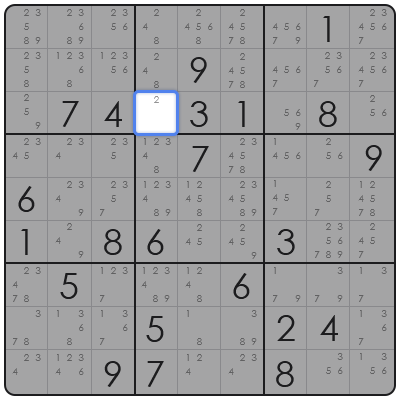
Solving a difficult Sudoku grid represents a significant challenge to conventional deductive reasoning, moving beyond simple cell-by-cell completion to demand a sophisticated array of analytical techniques. These puzzles are characterized by sparse initial clues and complex interdependencies that often resist straightforward methods like single-candidate elimination. From a framework perspective, addressing these intricate grids requires a shift from basic logic to pattern recognition and advanced candidate management, akin to tackling multi-layered problems in complex systems analysis. The primary problem solved by mastering difficult Sudoku strategies is the ability to navigate seemingly intractable logical dead ends. When basic approaches exhaust their utility, expert solvers must employ systematic, entity-based reasoning to uncover hidden relationships between numbers and cells. This capability is not merely about completing a puzzle; it hones a critical skillset in structured problem-solving, making it highly valuable in any domain requiring meticulous attention to detail and robust analytical thought. In practical application, the methodologies employed in solving difficult Sudoku mirror advanced problem-solving protocols across various technical fields. It involves hypothesizing, testing implications, and iteratively refining a solution set. The significance lies in developing a mental agility that can deconstruct complex information, identify critical paths, and systematically eliminate incongruent possibilities, all under constraints, which is a hallmark of efficient logical problem solving.
Unpacking the Core Mechanics of Advanced Sudoku
Advanced Sudoku solving relies on recognizing complex patterns and interdependencies beyond simple single-cell deductions. Unlike beginner puzzles where a cell might have only one possible number based on its row, column, and block, difficult grids often present multiple candidates for numerous cells. This necessitates a more strategic approach, centered on the management and reduction of these candidate lists through identifying specific structural relationships.
Based on structural analysis, fundamental advanced techniques involve identifying ‘Naked’ and ‘Hidden’ subsets. A ‘Naked Pair’ or ‘Triple’ occurs when two or three cells in a row, column, or block contain the exact same two or three candidates, and only those candidates. Once identified, these candidates can be eliminated from all other cells within that specific row, column, or block. Similarly, a ‘Hidden Pair’ or ‘Triple’ exists when two or three candidates, unique to a specific pair or triple of cells within a house, can only reside in those cells, allowing other candidates to be removed from those cells.
From a framework perspective, these techniques streamline the puzzle by systematically reducing the number of possibilities. For instance, if cells A and B are the only two cells in a row that can contain candidates 2 and 5 (a Naked Pair), then 2 and 5 must occupy A and B. Consequently, no other cell in that row can contain 2 or 5, irrespective of other houses. This logical step-down is crucial for revealing further deductions and is a cornerstone of advanced analytical reasoning in problem-solving.
Mastering Foundational Advanced Strategies
Effective difficult Sudoku resolution begins with systematic application of techniques like X-Wing, Swordfish, and Jellyfish patterns to eliminate candidates across rows, columns, and blocks. These strategies leverage the concept of ‘locked candidates’ or ‘forcing chains’ to make deductions that are not immediately obvious from local cell analysis. They represent a significant leap in complexity from basic candidate elimination, requiring a grid-wide perspective.
The ‘X-Wing’ strategy is a potent tool for candidate elimination when a specific number appears as a candidate in exactly two cells in two different rows (or columns), and these candidate cells align perfectly in the same two columns (or rows). If such a configuration exists, then that candidate number can be eliminated from all other cells in those two columns (or rows) that are not part of the X-Wing. In practical application, identifying an X-Wing often unlocks several subsequent deductions, accelerating the solution process significantly.
Building upon the X-Wing, ‘Swordfish’ and ‘Jellyfish’ patterns extend this logic to three or four rows/columns, respectively. A Swordfish involves three rows (or columns) where a candidate number appears exactly two or three times, with these candidate cells aligning in the same three columns (or rows). The candidate can then be eliminated from other cells in those three columns (or rows). These higher-order patterns, while more difficult to spot, are exceptionally powerful for resolving the most stubborn sections of a difficult Sudoku, showcasing the elegance of advanced combinatorial logic.
Systematic Application for Complex Grids
Implementing these advanced strategies involves a structured, iterative process of candidate identification, pattern recognition, and cautious deduction. A common mistake is to randomly jump between techniques; a methodical approach ensures thoroughness and prevents oversight.
First, perform an initial pass of basic candidate elimination (singles, locked candidates within blocks/rows/columns). This often prunes the grid sufficiently to make advanced patterns more visible. Second, methodically search for Naked and Hidden Pairs/Triples. Documenting candidate lists for each cell is crucial during this phase to maintain clarity. Third, systematically scan for X-Wing patterns, first for each number from 1 to 9, then for rows and columns. Fourth, if the puzzle remains intractable, progress to looking for Swordfish and Jellyfish patterns. Each time a deduction is made, re-evaluate the candidate lists for affected cells and repeat the process from the start, as new deductions can enable simpler techniques.
In practical application, maintaining an organized record of candidates and potential eliminations is paramount. Many expert solvers use digital tools or pencil markings to track candidates. The process is cyclical: apply a strategy, update the grid, re-scan for new opportunities, and repeat. This iterative refinement is a core principle in complex problem-solving methodologies, preventing premature conclusions and ensuring robust solution generation.
Advanced Sudoku Methodologies: A Comparative Analysis
Different advanced Sudoku strategies offer varying levels of complexity and efficiency, demanding a flexible analytical approach that adapts to the specific state of the grid. Understanding the trade-offs between these methodologies is key to optimizing solution time and minimizing errors. Based on structural analysis, certain techniques are more frequently applicable, while others, though more complex, provide breakthroughs in highly constrained scenarios.
A comparative overview of key advanced Sudoku techniques highlights their distinct attributes: Naked/Hidden Pairs/Triples offer moderate complexity and high efficiency for reducing candidates, making them frequently applicable. X-Wing patterns, with moderate complexity, provide high efficiency for specific candidate elimination across two houses and are moderately frequent. Swordfish patterns, possessing high complexity, offer very high efficiency for resolving complex grid segments but are less frequently encountered. Even more complex, Jellyfish are rare but exceptionally powerful. From a framework perspective, a solver’s toolkit should encompass all these, prioritizing the simpler, more frequent ones first.
This analysis underscores that no single technique is a panacea; rather, a comprehensive understanding of their relative strengths and weaknesses allows for strategic selection. In practical application, a solver might cycle through simpler techniques rapidly, then dedicate more time and focus to searching for complex patterns when progress stalls. This adaptive strategy reflects best practices in any field requiring iterative problem resolution under varying conditions, emphasizing the importance of a versatile analytical repertoire.
Navigating Common Obstacles in Difficult Sudoku
Overcoming challenges in difficult Sudoku often requires addressing common pitfalls such as premature guessing, overlooking subtle patterns, or failing to maintain organized candidate lists. These errors can lead to logical inconsistencies, wasted time, and the need to backtrack extensively, disrupting the methodical flow of problem-solving. Identifying and consciously avoiding these traps is a mark of a seasoned solver.
A frequent mistake is ‘premature guessing,’ where a solver makes an assumption about a cell’s value without a solid logical deduction, hoping it will unlock the puzzle. This often leads down a rabbit hole of invalid possibilities, necessitating extensive backtracking or even restarting the puzzle. The professional advice here is to strictly adhere to logical deduction; if a number cannot be definitively placed or eliminated, then further advanced techniques or a deeper scan of existing clues is required. Never guess.
Another common pitfall is ‘failing to maintain organized candidate lists.’ As grids become denser with possibilities, a chaotic mental or physical record of candidates can lead to missed opportunities for deductions or even misplacements. From a framework perspective, meticulous record-keeping, whether through pencil marks, digital tools, or systematic mental visualization, is non-negotiable for difficult puzzles. Regularly updating and reviewing candidate lists helps to reveal hidden patterns and ensures that all available information is being utilized effectively.
Overlooking ‘subtle patterns’ such as Naked/Hidden Quadruples or more intricate chains is also common. These patterns, while less frequent, are often the key to breaking stalemates in the most challenging puzzles. The solution involves systematically scanning for these patterns, perhaps dedicating specific passes to look for each one after simpler techniques have been exhausted. This systematic, exhaustive search prevents overlooking critical deductions that might otherwise remain unseen.
Cultivating the Analytical Mindset for Complex Puzzles
Developing proficiency in solving difficult Sudoku extends beyond technique to encompass patience, methodical thinking, and a willingness to re-evaluate assumptions. This analytical mindset is crucial when facing grids that offer no immediate pathways, requiring perseverance and a deep trust in the underlying logical structure of the puzzle. It’s about developing mental resilience in the face of ambiguity.
Patience is a cornerstone of this mindset. Difficult Sudoku puzzles are not designed to be solved quickly; they demand sustained attention and iterative problem-solving. Rushing through the grid often leads to errors or missed opportunities. Instead, taking breaks, stepping away, and returning with a fresh perspective can often reveal previously unseen patterns or clarify complex relationships. This reflective practice is an invaluable asset in any sustained intellectual endeavor.
Methodical thinking involves breaking down the complex problem into smaller, manageable sub-problems. Based on structural analysis, this means focusing on one row, column, or block at a time, or systematically scanning for a single candidate number across the entire grid before moving to the next. This structured approach prevents overwhelm and ensures that no area of the puzzle is neglected. From a framework perspective, it’s about applying a consistent, repeatable process to a variable problem space, which is a hallmark of efficient problem-solving in any analytical domain.
Finally, a willingness to re-evaluate assumptions is critical. Sometimes, despite careful deduction, a logical path might lead to a contradiction. In such cases, the expert solver does not abandon the puzzle but meticulously retraces their steps, checking for overlooked candidates or misapplied techniques. This rigorous self-correction and commitment to foundational logic distinguish advanced solvers and reinforce the integrity of the problem-solving process.
Frequently Asked Questions on Difficult Sudoku
Q: What distinguishes a difficult Sudoku from an easy one?A: A difficult Sudoku typically has fewer starting numbers and requires advanced techniques like X-Wing or Swordfish, as basic single-candidate elimination is insufficient to complete the grid. It presents more complex candidate interdependencies.
Q: Is guessing ever an acceptable strategy in difficult Sudoku?A: No, guessing is strictly prohibited in true Sudoku solving. Every number placement and elimination must be based on logical deduction. Guessing almost always leads to errors and requires extensive backtracking.
Q: How can I improve my ability to solve difficult Sudoku puzzles?A: Practice consistently, focus on mastering one advanced technique at a time (e.g., Naked Pairs, then X-Wing), maintain organized candidate lists, and patiently re-evaluate your steps if you get stuck.
Q: Are there any tools that can help with difficult Sudoku?A: While true mastery comes from mental effort, digital Sudoku solvers or apps that allow for candidate marking can help organize possibilities, aiding in the application of advanced techniques and reducing clerical errors.
Q: How long should it take to solve a difficult Sudoku?A: There’s no fixed time. For expert solvers, it might range from 15 minutes to over an hour, depending on the puzzle’s specific complexity. Focus on accuracy and logical integrity rather than speed initially.
In conclusion, mastering how to solve a difficult Sudoku is more than just a pastime; it is a rigorous exercise in advanced logical problem-solving and analytical reasoning. The systematic application of techniques like X-Wings, Swordfish, and sophisticated candidate management, coupled with a patient and methodical mindset, enables solvers to navigate grids that initially appear intractable. This disciplined approach to deconstructing complex problems, identifying subtle patterns, and iterating through solutions offers a transferable skill set invaluable in any domain requiring precision, critical thinking, and resilient analytical strategy. As logical challenges grow in complexity across industries, the foundational principles honed by mastering difficult Sudoku will continue to serve as a robust blueprint for effective problem resolution.