

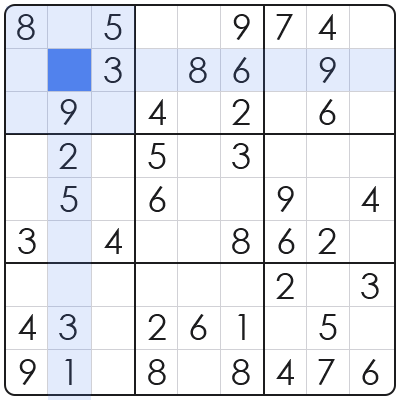
Working out Sudoku, at its core, is a systematic process of logical deduction aimed at filling a 9×9 grid, ensuring each digit from 1 to 9 appears exactly once in every row, every column, and every 3×3 subgrid. This seemingly simple puzzle serves as a profound exercise in constraint satisfaction and pattern recognition, providing a microcosmic model for complex problem-solving across diverse analytical domains. The significance of mastering Sudoku solving extends beyond mere recreational enjoyment; it actively hones critical cognitive skills such as focused attention, memory retention, and systematic deduction. In an era demanding robust analytical capabilities, the practice of disentangling Sudoku puzzles directly contributes to enhancing an individual’s capacity for meticulous data processing and strategic decision-making. This structured approach to problem-solving, exemplified by Sudoku, offers a foundational framework for tackling real-world challenges where variables are interdependent and solutions must adhere to strict parameters. It provides a practical, low-stakes environment to cultivate the mental agility required to identify bottlenecks, eliminate non-viable options, and arrive at optimal solutions in professional contexts demanding precision and logical rigor.
The Fundamental Logic of Sudoku Solving: A Structural Analysis
Sudoku solving fundamentally relies on deductive reasoning to fill a 9×9 grid, ensuring each digit from 1 to 9 appears exactly once in each row, column, and 3×3 subgrid, a principle known as ‘single-occurrence constraint.’ This constraint forms the bedrock of all solving techniques, necessitating a continuous evaluation of possibilities and impossibilities for every empty cell.
From a structural analysis perspective, the Sudoku grid can be broken down into three primary units: rows, columns, and 3×3 blocks, each containing nine cells. The interplay between these units, where a number’s presence in one unit restricts its placement in intersecting units, creates a complex network of interdependencies that solvers must navigate.
Based on this framework, the initial step involves identifying ‘candidates’—the possible numbers that can fit into each empty cell without violating the single-occurrence constraint. This methodical generation of potential solutions is crucial for subsequent logical eliminations and sets the stage for advanced deductive maneuvers, minimizing guesswork and maximizing efficiency.
Systematic Approaches to Solving Sudoku Puzzles
Effectively working out a Sudoku puzzle involves a sequence of methodical steps, progressing from simple deductions to more complex pattern recognition and candidate elimination strategies. The initial phase focuses on identifying obvious placements through direct observation and basic elimination techniques.
In practical application, the first step is to scan the grid for ‘naked singles’ (cells where only one candidate digit remains after eliminating all other possibilities from its row, column, and block) and ‘hidden singles’ (digits that can only be placed in one specific cell within a given row, column, or block). This systematic sweep often reveals a significant number of immediate solutions.
Advanced systematic approaches involve ‘pencil marking’ all possible candidates in each empty cell, creating a visual map of potential numbers. Subsequently, techniques like identifying ‘naked pairs’ or ‘hidden triples’ within a unit (where two or three cells share the same two or three candidate digits) allow for the elimination of those candidates from other cells in that unit, reducing complexity and paving the way for further deductions.
Comparative Analysis: Sudoku Strategies vs. Related Problem-Solving Paradigms
Comparing how to work out Sudoku with other logical problem-solving paradigms reveals its unique blend of constraint satisfaction and deductive reasoning, offering insights into broader analytical applications. Sudoku is fundamentally a Constraint Satisfaction Problem (CSP), where the goal is to find an assignment of values to variables (cells) subject to constraints (unique digits in rows, columns, and blocks). This aligns with industry standards in operations research and artificial intelligence for resource allocation and scheduling.
While Sudoku shares elements with the Boolean Satisfiability Problem (SAT) in its pursuit of a ‘satisfying’ assignment, its domain is numerical and spatial rather than purely propositional logic. SAT problems, often NP-complete, typically involve finding a truth assignment for Boolean variables that makes a given Boolean formula true. Sudoku’s structured 9×9 grid and specific numerical constraints make it more tractable for human deduction, contrasting with the often computational brute-force or advanced algorithmic approaches required for complex SAT instances.
From a framework perspective, Sudoku’s deductive methods also parallel those used in traditional logic puzzles, such as Einstein’s Riddle, but with a greater emphasis on spatial relationships and numerical permutations. Unlike categorical logic puzzles that rely on verbal clues and attribute matching, Sudoku’s visual nature and direct numerical constraints offer a more immediate and often less ambiguous path to logical inference, making it an accessible yet rigorous training ground for analytical thinking applicable across various data-driven fields.
Navigating Common Challenges in Sudoku Resolution
Successful Sudoku resolution often hinges on recognizing and actively mitigating common pitfalls that can lead to errors or inefficient solving processes. One prevalent mistake is premature guessing, where a solver resorts to trial-and-error without exhausting all logical deductions. This significantly increases the risk of errors and can lead to extensive backtracking, wasting valuable time and effort.
Another frequent challenge arises from inaccurate or inconsistent candidate marking. Based on structural analysis, flawed data entry, whether through incorrect initial pencil marks or overlooked eliminations, propagates errors throughout the entire solution process. Meticulous and continuous updating of candidate lists is paramount, as even a single error can render the entire puzzle unsolvable or lead to contradictory results.
In practical application, many solvers fall into ‘tunnel vision,’ focusing exclusively on a single row, column, or block and missing opportunities that span across units. To avoid this, it is crucial to continuously scan the entire grid, alternating focus between rows, columns, and blocks, and looking for interactions between these units that might reveal hidden patterns or allow for advanced eliminations.
Frequently Asked Questions on Sudoku Solving Strategies
Q: What is the most effective initial step in solving Sudoku? A: The most effective initial step is a thorough scan for ‘naked singles’ and ‘hidden singles’ across all rows, columns, and 3×3 blocks, placing any obvious numbers directly.
Q: How do advanced players approach difficult Sudoku puzzles? A: Advanced players rely heavily on sophisticated candidate elimination techniques like X-Wing, Swordfish, and various chaining methods, meticulously noting pencil marks to identify intricate patterns.
Q: Is guessing ever a valid Sudoku strategy? A: While guessing (and backtracking) can solve any puzzle, it’s generally inefficient. Professional strategy prioritizes exhausting all logical deductions first to minimize arbitrary choices and potential errors.
Q: What tools or aids are recommended for Sudoku beginners? A: For beginners, a pencil and eraser are essential for candidate marking. Online solvers can also help verify steps, but the goal is to develop internal logical deduction skills.
Q: How does Sudoku benefit cognitive function? A: Sudoku significantly enhances logical reasoning, memory, concentration, and patience. From a cognitive framework perspective, it’s a potent exercise for maintaining mental acuity and problem-solving agility.
In conclusion, working out Sudoku is far more than a recreational pastime; it serves as a rigorous, accessible exercise in analytical thinking, constraint satisfaction, and systematic problem-solving. The methodologies employed, from basic deductions to advanced pattern recognition, mirror the strategic processes essential for navigating complex challenges in various professional landscapes. The long-term strategic value lies in cultivating a disciplined mindset capable of breaking down intricate problems, identifying interdependencies, and logically progressing towards viable solutions. The principles of logical deduction and structured problem-solving exemplified by Sudoku remain foundational for achieving precision and efficiency in any data-driven or constraint-heavy environment, making its mastery a valuable asset for continuous cognitive development and professional application.