

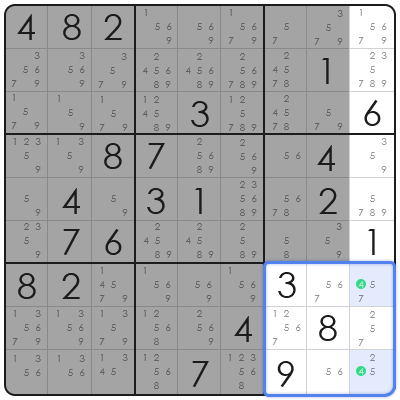
Sudoku is a logic-based number-placement puzzle, originating in the late 19th century and popularized in Japan. It challenges players to fill a 9×9 grid with digits so that each column, each row, and each of the nine 3×3 subgrids contains all of the digits from 1 to 9. Far from being a mere pastime, Sudoku serves as a powerful mental exercise, demanding precision and analytical thought. The significance of understanding how to approach Sudoku extends beyond recreational enjoyment; it hones critical cognitive functions. It compels the brain to engage in systematic deduction, pattern recognition, and sustained focus, which are invaluable skills applicable across various intellectual disciplines, fostering mental agility essential in today’s fast-paced world. The primary problem Sudoku solves in the current landscape of digital distractions is the erosion of focused attention and analytical reasoning. By demanding precise logical steps without the need for complex calculations, Sudoku offers an accessible yet profound pathway to strengthening mental agility and concentration, making it an excellent starting point for anyone looking to sharpen their mind and improve their problem-solving capabilities.
The Core Logic of Sudoku Puzzles
The core logic of Sudoku involves a straightforward set of rules applied within a complex 9×9 grid. Each grid is subdivided into nine 3×3 blocks. The fundamental principle is that every row, every column, and every 3×3 block must contain all digits from 1 to 9 exactly once, without any repetition. Based on structural analysis, this triple constraint is what creates the puzzle’s unique challenge and ensures a single solution for well-formed puzzles.
Understanding this structure is paramount for beginners. The pre-filled numbers in a Sudoku puzzle serve as fixed points from which all other numbers must be logically deduced. Players do not guess; instead, they use the existing numbers to eliminate possibilities for empty cells, progressively narrowing down the options until only one number can fit. This iterative process of elimination and deduction forms the backbone of all Sudoku solving techniques and is critical for consistent success.
From a framework perspective, the elegance of Sudoku lies in its simplicity of rules combined with the combinatorial complexity it generates. There are no mathematical operations involved beyond recognizing unique digits within defined sets. This makes it universally accessible, requiring only logical reasoning rather than advanced arithmetic, fostering a pure exercise in pattern recognition and systematic problem-solving that can be applied to many facets of daily life and work.
A Beginner’s Step-by-Step Approach to Sudoku
Getting started with Sudoku requires a methodical approach, beginning with identifying the easiest numbers to place. The best way to start a Sudoku puzzle is by scanning the entire grid for numbers that appear frequently or for rows, columns, or 3×3 blocks that have many pre-filled cells. Look for single empty cells within these nearly complete units; often, the missing number will be immediately obvious through a process of elimination.
Once obvious placements are made, the next step involves ‘candidate elimination’ or ‘pencil marking.’ This technique involves noting down all possible numbers (candidates) that could fit into an empty cell, based on the numbers already present in its row, column, and 3×3 block. From a framework perspective, this systematic tracking of possibilities is crucial for puzzles that aren’t immediately solvable through simple observation, preventing errors and guiding subsequent deductions.
As you fill in more numbers and eliminate candidates, look for ‘naked singles’ and ‘hidden singles.’ A naked single is when a cell has only one possible candidate left after elimination. A hidden single occurs when a particular number can only appear in one specific cell within a row, column, or 3×3 block, even if that cell has other candidates. In practical application, consistently applying these initial steps will allow a beginner to solve many easy and medium-difficulty puzzles, building confidence and familiarity with the puzzle’s mechanics.
Foundational Strategies for Initiating Sudoku Play
Beyond the initial scan, several foundational strategies are essential for beginners. ‘Scanning and cross-hatching’ is a technique where you pick a number (e.g., ‘1’) and scan all rows and columns to see where it could possibly fit in each of the nine 3×3 blocks. By drawing imaginary lines from existing ‘1’s, you can often pinpoint empty cells where that ‘1’ must reside due to the rules. This method systematically reduces the search space for each digit.
Another critical approach involves ‘counting techniques.’ Focus on a specific row, column, or 3×3 block and identify which numbers from 1 to 9 are missing. Then, for each missing number, check its potential placement by cross-referencing with the numbers already present in the corresponding rows, columns, or blocks. This helps in identifying hidden singles more effectively, leveraging the constraints of the Sudoku grid to reveal solutions without complex computations.
In practical application, beginners should prioritize areas of the grid that are most ‘dense’ with pre-filled numbers. These areas offer more immediate constraints and thus more opportunities for quick deductions. Working outwards from these denser sections to sparser ones often provides a smoother solving experience, as each placed number further restricts possibilities across the entire grid, making subsequent steps easier to discern and reducing potential frustration.
Navigating Initial Challenges: Common Sudoku Pitfalls
A common pitfall for beginners is rushing the puzzle and making assumptions or outright guesses. This often leads to errors that can propagate throughout the grid, making the puzzle unsolvable or requiring extensive backtracking. Professional advice suggests exercising patience and double-checking every placement against the row, column, and block rules before committing. If a number isn’t logically certain, it should remain a candidate or a pencil mark.
Another frequent mistake is neglecting the use of pencil marks for potential candidates. Without systematically noting down possibilities, especially in more challenging puzzles, the mental load becomes overwhelming, and crucial deductions can be missed. From a framework perspective, pencil marks act as a vital external memory aid, organizing information and enabling the identification of more complex patterns like naked or hidden pairs later on, which are critical for advanced puzzles.
Getting stuck and giving up prematurely is also a common hurdle. When progress halts, many beginners feel frustrated. The solution is to take a short break, clear your mind, and then return to the puzzle with a fresh perspective. Often, a new vantage point reveals a previously overlooked deduction. Alternatively, re-evaluating existing numbers and pencil marks, especially in a different area of the grid, can unlock progress, emphasizing persistence as a key problem-solving trait.
Comparing Sudoku with Related Logic Puzzles
While Sudoku stands as a popular and accessible logic puzzle, it’s insightful to compare it with other brain teasers to understand its unique position in cognitive development. Puzzles like Kakuro and KenKen, while also number-based, introduce different mechanics that cater to varied logical aptitudes. This comparison highlights Sudoku’s distinct value proposition in pure deductive reasoning.
Kakuro, for instance, is often described as a ‘crossword with numbers,’ where players fill in numbers 1-9 to meet sum clues in specified rows or columns. KenKen involves arithmetic operations (addition, subtraction, multiplication, division) within ‘cages’ and also requires unique numbers in rows and columns. Based on structural analysis, Sudoku’s strength lies in its pure logic and pattern-matching, free from arithmetic, which significantly simplifies its entry barrier for novices.
From a framework perspective, the direct application of exclusion rules in Sudoku provides a clear, linear learning path. Unlike Kakuro, which demands basic arithmetic proficiency and more complex combination logic, or KenKen, which adds an an arithmetic layer to spatial reasoning, Sudoku isolates and hones singular deductive reasoning, making it an excellent starting point for developing foundational logical thinking skills.
| Metric | Sudoku | Kakuro | KenKen || — | — | — | — || **Complexity** | Pure logic, pattern matching, no arithmetic | Logic, pattern matching, arithmetic sums | Logic, pattern matching, arithmetic operations (variable) || **Efficiency (of learning)** | High, simple rules, quick to grasp | Moderate, requires understanding of sums and combinations | Moderate, requires understanding of operations and their constraints || **Cost (Access)** | Very low, widely available in free apps/print | Low to moderate, available in specialized apps/books | Low to moderate, available in specialized apps/books || **Frequency (of Solving Techniques)** | High (scanning, singles, pairs) | Moderate (sum combinations, cross-referencing) | Moderate (cage logic, number placement) |
Frequently Asked Questions About Starting Sudoku
**Q: What is the best way to start a Sudoku puzzle?**A: Begin by scanning for rows, columns, or 3×3 blocks with many pre-filled numbers. Look for single empty cells where the missing digit is immediately obvious, then use pencil marks to note down possibilities for other cells.
**Q: Do I need special math skills for Sudoku?**A: No, Sudoku does not require any mathematical calculations beyond recognizing numbers 1 through 9. It is purely a logic and pattern-recognition puzzle, making it accessible to anyone regardless of their mathematical background.
**Q: How long does it typically take to learn Sudoku?**A: The basic rules of Sudoku can be learned in minutes. Proficiency in initial solving techniques can be gained within a few hours of practice, with more advanced strategies developing over weeks or months of consistent play, depending on individual dedication.
**Q: Are there different difficulty levels in Sudoku?**A: Yes, Sudoku puzzles come in various difficulty levels (easy, medium, hard, expert). These levels are determined by the number of pre-filled cells and the complexity of the logical techniques required to solve them, allowing for progressive skill development.
**Q: Can Sudoku improve my brain?**A: Absolutely. Regular Sudoku play enhances logical reasoning, problem-solving skills, concentration, memory, and pattern recognition. These benefits contribute to overall cognitive engagement and mental agility, serving as an excellent brain exercise.
Embarking on the journey of how to get started with Sudoku offers significant long-term strategic value, extending well beyond the pleasure of completing a puzzle. It serves as a foundational exercise in developing systematic thinking, patience, and precise deductive reasoning—skills that are universally transferable. From a forward-looking industry insight, the mental discipline cultivated through Sudoku parallels the analytical rigor required in complex problem-solving across various professional domains, preparing individuals to approach challenges with a structured and logical mindset, fostering continuous cognitive growth.