

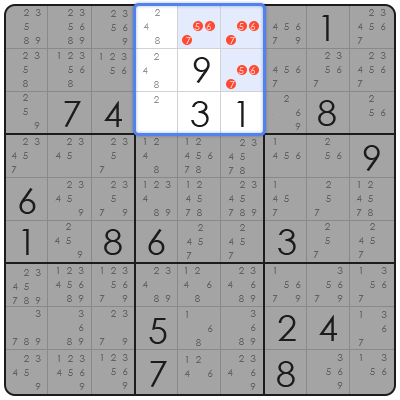
Setting Sudoku puzzles is a specialized craft that transforms a simple numerical grid into a captivating logical challenge, providing intellectual stimulation for millions globally. It fundamentally involves the precise extraction of numbers from a fully solved Sudoku grid to leave behind a unique, solvable pattern of given digits, known as ‘givens’. This process is far more intricate than random number removal; it demands a deep understanding of logical deduction paths, combinatorial mathematics, and often, an intuitive sense of how human solvers approach these puzzles. From a framework perspective, the core significance of mastering how to set sudoku puzzles lies in ensuring the integrity and quality of the puzzle experience. A well-set Sudoku guarantees a single, verifiable solution, preventing solver frustration and upholding the game’s intrinsic logical elegance. It’s about designing a coherent system where every ‘given’ contributes meaningfully to the puzzle’s unique resolution, rather than merely occupying a cell. The primary problem that adept puzzle setting solves in the current landscape is the proliferation of poorly constructed Sudoku grids—those with multiple solutions, no solutions, or an uneven difficulty curve. By applying rigorous structural analysis and systematic methodology, expert setters elevate the standard of published puzzles, preserving Sudoku’s reputation as a quintessential logic game and enhancing its appeal across diverse player demographics.
The Fundamental Principles of Sudoku Puzzle Generation
The fundamental principles of Sudoku puzzle generation involve creating a fully solved grid and then intelligently removing numbers to yield a unique, solvable puzzle. This process begins with a ‘complete grid,’ which is any 9×9 grid where every row, column, and 3×3 block contains the digits 1-9 exactly once. While numerous complete grids exist, the true artistry lies in the subsequent reduction phase, where numbers are removed according to specific criteria.
Based on structural analysis, the key challenge after generating a complete grid is to ensure ‘uniqueness.’ A Sudoku puzzle is considered well-set only if it has one and only one valid solution. This property is paramount because ambiguity detracts from the logical purity of the game. Achieving uniqueness often requires sophisticated algorithms or meticulous manual testing to verify that no alternative combinations of remaining numbers can lead to a different correct solution.
Furthermore, solvability is a non-negotiable principle. An expertly set Sudoku, regardless of its difficulty, must always be solvable through logical deduction, without requiring guesswork or trial-and-error. This implies that at every step of the solution path, there must be at least one cell where a digit can be logically determined. The density and placement of the ‘givens’ profoundly influence this, creating a delicate balance between sparsity and sufficient information.
Step-by-Step Methodology for Crafting Sudoku Puzzles
Crafting Sudoku puzzles follows a systematic methodology that ensures both solvability and an engaging challenge for players. The first step involves generating a valid, complete 9×9 Sudoku grid. This can be done manually, often by filling in numbers randomly and then permuting rows and columns to satisfy the Sudoku rules, or more efficiently using computational algorithms that construct valid grids.
In practical application, the second step is the iterative removal of numbers. Starting from the complete grid, numbers are systematically removed, one by one, with each removal followed by a verification step. This verification is crucial: after each digit is removed, the partially filled grid must be checked to confirm that it still possesses a unique solution. If removing a digit leads to multiple solutions or no solution, that removal is undone, and a different digit is considered for removal.
The final stages involve optimizing the puzzle for difficulty and aesthetic appeal. Once a minimal set of givens that ensures uniqueness is established, further refinement might involve rearranging the numbers or adjusting the pattern of givens to target a specific difficulty level or to create visually symmetrical designs. This iterative removal and validation process continues until the desired number of givens and difficulty are achieved, ensuring a meticulously crafted puzzle.
Testing and Validation for Uniqueness and Solvability
Testing and validation are indispensable steps in how to set sudoku puzzles, specifically to guarantee the uniqueness and solvability of the final product. After a set of ‘givens’ has been determined, the crucial phase involves running a solver algorithm against the partial grid. This algorithm attempts to find all possible solutions. If it returns exactly one solution, the uniqueness criterion is met.
From a framework perspective, the validation process for solvability ensures that the puzzle can be solved using standard Sudoku deduction techniques. This often means employing a solver that mimics human thought processes—checking for naked singles, hidden singles, pairs, triples, quads, and more advanced techniques like X-wings or Swordfish. If the puzzle requires guessing at any stage, it might be deemed unsolvable by pure logic or inappropriately difficult for its intended category.
Professional validation often utilizes multiple solver heuristics to confirm both uniqueness and solvability. Some advanced techniques even track the ‘difficulty score’ as the puzzle is solved, providing objective metrics on the complexity introduced by each deduction step. This meticulous testing prevents the release of flawed puzzles, which can severely diminish a player’s experience and the puzzle’s reputation.
Grading Sudoku Difficulty: Metrics and Player Experience
Grading Sudoku difficulty involves a blend of quantitative metrics and qualitative assessment of player experience, categorizing puzzles from ‘easy’ to ‘expert’. Objective metrics typically count the number of logical steps required to solve the puzzle and the complexity of the deduction techniques employed. Puzzles requiring only basic techniques like naked singles are usually ‘easy’, while those demanding advanced strategies are ‘hard’ or ‘expert’.
Based on structural analysis, difficulty can also be influenced by the distribution and patterns of the initial ‘givens’. A puzzle with fewer givens is often, but not always, more difficult. However, the specific placement of these givens and their interrelationships play a more significant role in determining the actual logical challenge. Symmetrical patterns can sometimes simplify initial scans, while asymmetrical ones might force deeper analysis.
In practical application, effective difficulty grading often involves human testing in addition to algorithmic analysis. Experienced Sudoku solvers can provide invaluable feedback on the perceived difficulty, identifying areas where a puzzle might unexpectedly trap a solver or offer an uncharacteristic leap in complexity. This iterative process of algorithmic analysis and human playtesting ensures accurate and consistent difficulty ratings across a collection of puzzles.
Comparative Analysis: Manual vs. Algorithmic Puzzle Setting
Comparing manual and algorithmic approaches to how to set sudoku puzzles reveals distinct advantages and limitations in terms of efficiency, complexity, and creative control. Historically, puzzles were set manually, relying on human intuition and exhaustive trial-and-error. While capable of producing highly creative and elegant puzzles, this method is extraordinarily time-consuming and prone to errors in uniqueness or solvability.
Algorithmic puzzle setting, conversely, leverages computational power to rapidly generate and validate thousands of puzzles. Algorithms can efficiently generate complete grids, remove numbers, and rigorously test for uniqueness and solvability using backtracking or constraint propagation. This approach excels in producing a high volume of consistent, error-free puzzles tailored to specific difficulty levels, making it the industry standard for commercial Sudoku publications.
| Dimension | Manual Setting | Algorithmic Setting |
|————|————————————————-|—————————————————|
| Complexity | High for large volume, prone to human error | Handles extreme complexity with ease |
| Efficiency | Very low; requires significant time per puzzle | Extremely high; generates many puzzles rapidly |
| Cost | High labor cost for skilled human setters | High initial development cost, low per-puzzle cost|
| Frequency | Low volume, often unique ‘masterpiece’ puzzles | High volume, consistent output |
Common Pitfalls and Strategic Solutions in Sudoku Design
Common pitfalls in setting Sudoku puzzles often revolve around ensuring uniqueness, guaranteeing solvability, and accurately grading difficulty. One frequent mistake is creating a puzzle that has multiple valid solutions. This leads to solver frustration and undermines the logical foundation of Sudoku. The strategic solution involves implementing robust solver algorithms during the puzzle-setting phase to test for uniqueness after every number removal.
Another significant pitfall is inadvertently designing an unsolvable puzzle, or one that requires pure guessing rather than logical deduction. This often arises from removing too many numbers or placing the ‘givens’ in an unhelpful configuration. Professional advice dictates using advanced solver routines that not only find solutions but also record the logical techniques required. If the solver stalls or resorts to brute force, the puzzle is flagged for revision.
A third common error is misjudging the puzzle’s difficulty. A puzzle intended as ‘easy’ might turn out to be ‘hard’, or vice versa, leading to player dissatisfaction. The solution lies in a multi-faceted approach to difficulty grading, combining objective metrics (counting necessary logical steps and advanced techniques) with subjective human playtesting. This ensures that the published difficulty aligns with the actual solver experience, maintaining consistency across a puzzle series.
Frequently Asked Questions about Sudoku Puzzle Creation
Q: What makes a good Sudoku puzzle?
A: A good Sudoku puzzle has a unique solution, is solvable purely by logic, and offers an engaging challenge appropriate for its stated difficulty level. Aesthetic considerations like symmetrical patterns are also often valued.
Q: Can every partially filled Sudoku grid be solved?
A: No, not every partially filled grid is solvable. A valid Sudoku puzzle must have enough ‘givens’ positioned correctly to lead to at least one valid and unique solution through logical deduction.
Q: How many numbers must be given in a Sudoku puzzle?
A: The minimum number of ‘givens’ required for a unique Sudoku solution is 17. However, most published puzzles have between 20 and 30 givens, balancing uniqueness with a challenging solving experience.
Q: Is it possible to create a Sudoku puzzle manually?
A: Yes, it is possible to create Sudoku puzzles manually, though it is a painstaking process. It involves filling a complete grid, then iteratively removing numbers while checking for unique solvability, often requiring significant trial-and-error.
Q: What tools are used by professionals to set Sudoku?
A: Professionals primarily use specialized software and algorithms that can generate complete grids, remove numbers, and rigorously test for uniqueness, solvability, and difficulty grading with high efficiency and accuracy.
In conclusion, the sophisticated process of how to set sudoku puzzles is a testament to the blend of mathematical logic, computational power, and an understanding of human problem-solving. It moves beyond simple number arrangement to become an intricate design challenge, ensuring each puzzle offers a fair, unique, and engaging intellectual journey. The evolution from manual craftsmanship to advanced algorithmic generation has standardized quality and scaled production, cementing Sudoku’s place as a global phenomenon. Moving forward, innovation in puzzle setting will likely focus on even more nuanced difficulty grading, personalized challenge generation, and integration with interactive digital platforms, continuously refining the art of logical entertainment.