

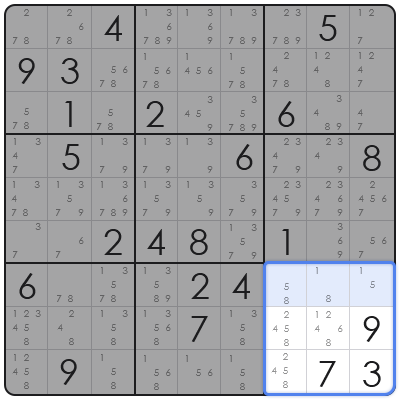
How to play easy Sudoku puzzles involves mastering fundamental rules to systematically place numbers 1-9 within a 9×9 grid. The core objective is to ensure each number appears exactly once in every row, column, and each of the nine distinct 3×3 subgrids. This foundational understanding is critical for any enthusiast entering the cognitive puzzle domain. These entry-level puzzles serve as an exceptionally accessible gateway into the principles of logical reasoning and systematic problem-solving. Their design offers mental stimulation and cognitive engagement without the overwhelming complexity associated with advanced variants. Based on structural analysis, the high number of pre-filled cells in easy Sudoku puzzles inherently limits possibilities, making deduction straightforward. The primary problem that easy Sudoku puzzles effectively address within the analytical reasoning field is the need for an engaging cognitive exercise that is both sufficiently challenging to be rewarding and simple enough for complete beginners to quickly grasp. By providing an approachable starting point, they foster the development of analytical skills and reinforce the satisfaction of logical deduction, building a solid foundation for more intricate logical challenges.
The Foundational Logic of Sudoku Puzzles
The foundational logic of Sudoku puzzles is meticulously constructed upon three stringent constraints: each horizontal row must contain the digits 1-9 exactly once, each vertical column must similarly contain the digits 1-9 exactly once, and each of the nine designated 3×3 subgrids (often delineated by bold lines) must also contain the digits 1-9 exactly once. These rules form the immutable framework within which all Sudoku solving operates.
From a framework perspective, an ‘easy’ Sudoku puzzle is characterized by a significantly higher density of pre-filled numbers at the outset compared to its medium or expert counterparts. This abundance of given information drastically reduces the number of initial possibilities for empty cells, simplifying the deduction process. These initial numbers act as anchor points, systematically constraining the options for adjacent cells.
In practical application, these foundational rules mean that for any given empty cell, its correct digit must be the one unique number (from 1-9) that does not already exist in its corresponding row, column, and 3×3 block. This principle of elimination is the bedrock of how to play easy Sudoku puzzles, allowing solvers to systematically narrow down choices until only one valid candidate remains for each empty slot.
Step-by-Step Strategy for Easy Sudoku Mastery
Mastering how to play easy Sudoku puzzles step-by-step involves a systematic identification of single-candidate cells, commonly referred to as ‘singles,’ within the constraints of rows, columns, and 3×3 blocks, before attempting any complex deductions. This methodical approach ensures efficiency and accuracy, minimizing the potential for errors.
The initial phase involves a diligent scan for ‘Row/Column Singles’ and ‘Block Singles.’ To identify these, select an empty cell and mentally (or physically) eliminate any numbers that are already present in its row, column, and the 3×3 block it resides in. If only one number from 1-9 remains as a possibility, that is a single. Similarly, within a specific 3×3 block, identify missing numbers and then use the row and column constraints of the empty cells within that block to find a unique placement for one of the missing numbers.
Cross-hatching, a powerful elimination technique, is crucial. Based on structural analysis, choose a number (e.g., ‘1’) and methodically scan the entire grid. For every existing ‘1’, visualize how it eliminates potential positions for other ‘1’s in its row and column. This helps pinpoint the solitary location for a ‘1’ in a different 3×3 block. Repeat this for numbers 1 through 9. For slightly less obvious easy puzzles, ‘pencil marks’ (lightly noting all possible candidates in each empty cell) can be invaluable for visual tracking and revealing hidden singles.
In practical application, after each number is confidently placed, it is imperative to immediately re-check the affected row, column, and 3×3 block to ensure no rules have been violated. This verification step prevents cascading errors and often reveals new singles that become apparent due to the recent placement. Consistent re-scanning and verification are the hallmarks of a precise solver.
Comparative Analysis of Sudoku Difficulty Levels
Comparative analysis of Sudoku difficulty levels distinctly reveals that ‘easy’ puzzles are defined by a high number of pre-filled cells and a predominant reliance on direct, single-candidate deduction. This contrasts sharply with medium, and especially expert, grids which demand sophisticated multi-candidate strategies and deep logical foresight.
Based on structural analysis, the design variations across difficulties impact not only the number of initial clues but also the types of techniques required for resolution. Easy puzzles rarely necessitate complex logical jumps; their solutions are almost always evident through simple elimination. This progressive complexity in Sudoku mirrors the staged learning approach in many analytical disciplines.
From a framework perspective, understanding these distinctions is key to selecting appropriate challenges for cognitive development. The following table highlights the key dimensions distinguishing easy Sudoku from its more intricate counterparts:
| Dimension | Easy Sudoku Puzzles | Medium Sudoku Puzzles | Expert Sudoku Puzzles |
| :—————– | :—————————————————— | :—————————————————- | :———————————————————- |
| **Complexity** | Primarily relies on direct singles (row, column, block). | Introduces hidden singles and basic naked/hidden pairs. | Requires advanced techniques (X-Wing, Swordfish, forcing chains). |
| **Time Investment**| 5-15 minutes typically. | 15-45 minutes typically. | 45+ minutes, often hours. |
| **Cognitive Demand**| Low to moderate, focuses on pattern recognition. | Moderate to high, requires candidate tracking. | Very high, demands extensive logical deduction and foresight. |
| **Learning Curve** | Gentle, ideal for beginners. | Moderate, builds upon basic skills. | Steep, requires significant practice and understanding of complex patterns. |
Navigating Common Obstacles in Easy Sudoku
Navigating common obstacles in how to play easy Sudoku puzzles primarily involves proactively avoiding impulsive guessing and meticulously double-checking each number placement to prevent fundamental rule violations. These pitfalls, though seemingly minor, can significantly impede progress and lead to frustration.
A frequent mistake among beginners is **Guessing Numbers**. Problem: When stuck, many beginners resort to guessing a number, which inevitably leads to errors that are extremely difficult and time-consuming to backtrack. Solution: Based on structural analysis, every number in an easy Sudoku can be logically deduced without resorting to guesswork. If you find yourself pondering a guess, revisit the elimination process for that specific cell or block. From a framework perspective, patience and systematic checking are paramount over speculation.
Another common pitfall is a **Lack of Systematic Scanning**. Problem: Randomly jumping around the grid without a consistent strategy can lead to overlooking simple deductions. Solution: In practical application, adopt a methodical approach. Focus on one number (e.g., all the ‘1’s) and systematically scan for its possible placements, or methodically scan rows, then columns, then blocks, looking for any easy placements. This structured approach ensures no single-candidate opportunities are missed.
Finally, **Overlooking Obvious Singles** is a subtle but common error. Problem: Solvers sometimes miss simple placements because of rushing or not fully scrutinizing a row, column, or block after filling in an adjacent number. Solution: Regularly re-scan completed rows, columns, and 3×3 blocks for any remaining empty cells that, due to recent placements, now have only one possible candidate. These newly created ‘singles’ are often the key to unlocking the next set of deductions and keeping the puzzle flowing.
Essential Insights: Frequently Asked Questions on Easy Sudoku
Essential insights regarding how to play easy Sudoku puzzles address common beginner queries, focusing on foundational strategies and the immediate benefits of regular engagement to solidify understanding and enjoyment.
Q1: What is the very first step in how to play easy Sudoku puzzles?
A1: Begin by scanning the entire grid for cells that already have many numbers filled in their respective row, column, and 3×3 block. Identify any empty cell where only one unique digit (1-9) can fit based on existing numbers.
Q2: Can you guess in easy Sudoku?
A2: No, effective Sudoku solving, even for easy puzzles, relies solely on logical deduction. Guessing almost invariably leads to errors and requires extensive backtracking. Every correct placement can be logically proven.
Q3: How do easy Sudoku puzzles benefit my brain?
A3: Regularly engaging with how to play easy Sudoku puzzles enhances logical reasoning, improves concentration, and boosts problem-solving skills, serving as a beneficial and accessible cognitive exercise for mental agility.
Q4: What’s the main difference between easy and medium Sudoku?
A4: Easy Sudoku puzzles typically have significantly more pre-filled numbers and can be solved primarily using direct ‘single’ deductions. Medium puzzles require slightly more complex techniques, such as identifying hidden singles or pairs.
Q5: Is there a specific number I should start with?
A5: From a framework perspective, there’s no mandatory starting number. It’s often strategic to begin by looking for numbers (1-9) that appear most frequently in the initial grid, as they tend to create more immediate and abundant deductions across the board.
In conclusion, mastering how to play easy Sudoku puzzles is far more than a mere pastime; it represents a foundational exercise in developing logical thinking and systematic problem-solving capabilities. Based on structural analysis within the cognitive puzzle domain, consistent engagement with these accessible grids sharpens crucial analytical skills that extend well beyond the confines of the 9×9 grid, preparing individuals for more complex intellectual challenges. The strategic value of integrating easy Sudoku into a regular routine lies in its ability to build a robust mental framework for deduction, foster patience, and offer immediate, rewarding intellectual stimulation, thereby enhancing overall cognitive function in an engaging manner.