

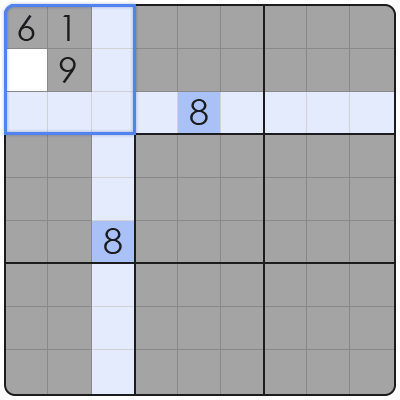
In an era where cognitive agility is paramount, understanding the mechanics of how do play sudoku offers a profound insight into structured problem-solving. Sudoku, a deceptively simple number placement puzzle, has captivated millions worldwide, not just as a pastime but as a potent tool for enhancing logical reasoning and mental discipline. At its core, it challenges players to fill a 9×9 grid with digits such that each column, each row, and each of the nine 3×3 subgrids contains all of the digits from 1 to 9. From a framework perspective, Sudoku’s significance extends beyond mere entertainment. It serves as an accessible gateway to developing critical thinking skills, pattern recognition, and systematic deduction. The puzzle’s immutable rules create a closed system, making it an ideal environment for honing analytical capabilities that are transferable to more complex real-world scenarios. It trains the brain to process information efficiently, identify constraints, and predict outcomes based on a defined set of parameters. The primary problem Sudoku solves in the current landscape is the need for consistent, low-barrier cognitive exercise. In a world saturated with fleeting digital distractions, Sudoku offers a focused mental workout that requires sustained attention and methodical application of logic. It encourages players to slow down, observe details, and engage in deep thinking, thereby fostering mental resilience and reducing reliance on instant gratification.
Understanding the Core Mechanics of Sudoku Play
Understanding the Core Mechanics of Sudoku Play involves grasping the foundational rules and grid structure that define this popular number puzzle. The game is universally played on a 9×9 grid, which is further subdivided into nine 3×3 ‘blocks’ or ‘regions.’ This tripartite structure forms the basis of all logical deductions, demanding that numbers adhere to a strict placement protocol within these distinct, yet interconnected, units.
The fundamental rule is straightforward yet forms the bedrock of every solution: each digit from 1 to 9 must appear exactly once in each row, each column, and each 3×3 block. Based on structural analysis, this constraint ensures that every empty cell has a unique solution, although uncovering it often requires a cascade of logical steps. Initial puzzles present a varying number of pre-filled cells, known as ‘givens,’ which act as the immutable starting points from which all other numbers must be deduced.
In practical application, the interplay between rows, columns, and blocks necessitates a holistic view of the grid. A number placed in one cell instantly impacts the possibilities for that row, column, and block, eliminating that number as a candidate for other cells within those specific confines. This interconnectedness is what makes Sudoku a deeply engaging exercise in spatial reasoning and numerical elimination, differentiating it from simpler number games.
A Step-by-Step Guide to Solving Sudoku Puzzles
Solving Sudoku puzzles methodically involves a series of logical deductions and strategic approaches, starting with basic techniques and progressing to more advanced strategies. The initial phase focuses on identifying ‘Naked Singles,’ which are cells where, by elimination, only one number can possibly fit. This often begins with scanning each row, column, and block for missing numbers, and then checking which of these missing numbers can only be placed in one specific empty cell.
Following the identification of obvious singles, the next critical step involves ‘Pencil Marking’ or ‘Candidate Elimination.’ This technique requires annotating each empty cell with all possible numbers (1-9) that could potentially fit, based on the numbers already present in its respective row, column, and block. As numbers are filled in, these candidate lists must be meticulously updated, as the placement of one number often eliminates several possibilities in surrounding cells.
From a framework perspective, further progress often relies on identifying ‘Hidden Singles,’ ‘Naked Pairs/Triples,’ and ‘Hidden Pairs/Triples.’ Hidden Singles occur when a candidate number appears only once within a row, column, or block, despite other numbers being candidates for that same cell. Naked Pairs/Triples involve two or three cells in a unit that share the exact same two or three candidates, respectively, effectively ‘claiming’ those numbers and eliminating them from other cells in that unit. These strategies, while more complex, are essential for progressing through medium to hard puzzles and are foundational to advanced techniques.
Comparing Sudoku Strategies: Complexity, Efficiency, and Application
Comparing various Sudoku strategies involves evaluating their complexity, efficiency in solving different puzzle difficulties, and their practical application for players of all skill levels. The ‘Naked/Hidden Singles’ strategy, for instance, represents the lowest complexity. It’s highly efficient for beginners and for the initial stages of any puzzle, allowing quick progress by identifying immediate, unambiguous placements. Its application is universal, forming the bedrock of all Sudoku solving.
Moving up in complexity, ‘Candidate Elimination’ via pencil marks offers moderate intricacy. Its efficiency is sustained throughout a puzzle, as it systematically narrows down possibilities, making it indispensable for medium to difficult grids. In practical application, it’s the most widely adopted intermediate strategy, bridging the gap between simple scanning and advanced pattern recognition.
Advanced strategies like ‘X-Wing,’ ‘Swordfish,’ and ‘Jellyfish’ represent the highest complexity. These involve identifying specific patterns of candidate numbers across multiple rows or columns to eliminate possibilities in other areas. While their efficiency is remarkably high for solving the most challenging, ‘expert’ level puzzles, their application is specialized, primarily used by seasoned players when simpler methods yield no further progress. Each strategy, from simple to complex, serves a distinct purpose, and a proficient player effectively employs a dynamic mix tailored to the puzzle’s evolving state.
Navigating Common Sudoku Pitfalls and Professional Solutions
Navigating common Sudoku pitfalls involves recognizing frequent mistakes players make and applying professional solutions to overcome these challenges, thereby improving accuracy and speed. One pervasive mistake is ‘premature guessing,’ where players insert a number without absolute certainty, often leading to a cascade of incorrect entries and necessitating a restart. The professional solution is to adhere strictly to logical deduction; if a number cannot be definitively proven, mark it as a candidate but never commit to it prematurely.
Another frequent oversight is ‘failing to update pencil marks’ promptly. Based on structural analysis, once a number is placed in a cell, that number must be immediately removed from the candidate lists of all other cells in its row, column, and 3×3 block. Neglecting this crucial step can lead to confusion, incorrect deductions, and overlooking newly formed singles. A disciplined approach to refreshing candidate lists is essential for maintaining an accurate grid state.
From a framework perspective, ‘tunnel vision’ is a common pitfall where players become fixated on a single row, column, or block, overlooking critical deductions available elsewhere on the board. The professional advice to counter this is to adopt a systematic scanning approach: after making a few placements, take a moment to scan the entire grid for new opportunities, or consciously switch between focusing on rows, columns, and blocks. This broader perspective often reveals hidden patterns or simple singles that were previously missed due to over-focusing on one area, significantly enhancing puzzle-solving efficiency.
Frequently Asked Questions About Playing Sudoku
Frequently asked questions about playing Sudoku address common queries regarding rules, strategies, and benefits, providing concise answers for quick understanding.
Q: What are the basic rules for how do play sudoku? A: The goal is to fill a 9×9 grid so that each row, column, and 3×3 block contains all digits from 1 to 9, without repetition. Initial numbers are given as clues.
Q: Is Sudoku good for your brain? A: Yes, playing Sudoku regularly is highly beneficial for cognitive health. It enhances logical reasoning, memory, concentration, and problem-solving skills, contributing to overall mental agility.
Q: How can I get better at playing Sudoku? A: To improve, practice consistently, start with easier puzzles, and learn basic strategies like ‘Naked Singles’ and ‘Candidate Elimination’ using pencil marks. Gradually tackle harder puzzles.
Q: What’s the best strategy for beginners? A: The best beginner strategy involves scanning rows, columns, and blocks for ‘Naked Singles’ (cells where only one number can fit). Use pencil marks to note down potential candidates for harder cells.
Q: Are there different types of Sudoku puzzles? A: Yes, beyond the classic 9×9 grid, variations include Killer Sudoku, Sum Sudoku, Diagonal Sudoku, and various grid sizes, each introducing unique rules or constraints for added challenge.
In conclusion, the structured analysis of how to play Sudoku reveals it as far more than just a numbers game; it is a profound exercise in logic, deduction, and cognitive resilience. Its enduring appeal stems from its ability to provide a consistent, measurable challenge that sharpens the mind and rewards systematic thinking. The strategic value of engaging with Sudoku lies in its capacity to cultivate patience, attention to detail, and a methodical approach to problem-solving, skills that are invaluable in any professional or personal endeavor. As a timeless mental discipline, Sudoku continues to stand as a testament to the power of structured logic in unlocking human cognitive potential.