

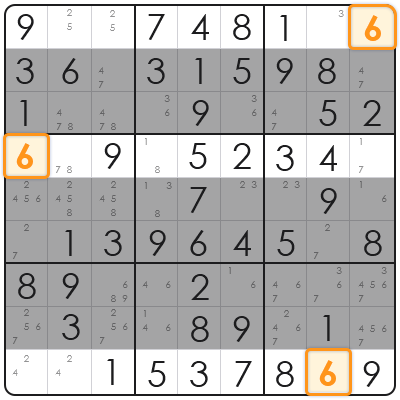
Making your own Sudoku puzzle on your computer involves leveraging algorithmic design to generate a valid, solvable grid, merging principles of combinatorial logic with computer programming. This process allows for the creation of unique number puzzles that strictly adhere to the established rules of Sudoku, ensuring each row, column, and 3×3 subgrid contains all digits from 1 to 9 without repetition. From a framework perspective, automating Sudoku puzzle generation addresses the inherent inefficiencies and error-proneness associated with manual puzzle creation. This digital approach enables the scalable production of puzzles across various difficulty levels, catering to a diverse audience from casual enthusiasts to dedicated problem-solvers, thereby expanding the reach and accessibility of these popular logic challenges. The significance of developing such a capability extends beyond mere entertainment; it represents a practical application of advanced computer science concepts, specifically constraint satisfaction problems and backtracking algorithms. Mastering this process offers profound insights into efficient problem-solving strategies, data validation techniques, and the robust design patterns crucial within modern software development and artificial intelligence domains.
Understanding Sudoku Generation Algorithms
Sudoku generation algorithms are systematic computational methods meticulously designed to create valid Sudoku grids that possess a unique solution, primarily relying on principles of intricate matrix manipulation and rigorous logical deduction. These algorithms ensure that every generated puzzle adheres to the fundamental rules: each digit from 1 to 9 must appear exactly once in every row, column, and 3×3 subgrid.
The core challenge in algorithmic Sudoku generation lies not just in filling a 9×9 grid, but in doing so in a way that guarantees a singular, unambiguous path to completion. This often involves a multi-step process, beginning with the creation of a fully solved grid, followed by the strategic removal of numbers to form a puzzle that challenges the solver without being ambiguous.
Based on structural analysis, effective algorithms prioritize efficiency and the ability to produce a wide range of difficulties. They must intelligently manage the placement of initial numbers (the ‘clues’) such that the resulting empty cells create a solvable and uniquely determined puzzle, distinguishing a well-designed algorithm from a simple random number generator.
Core Logic: Backtracking and Constraint Satisfaction
Backtracking is a fundamental algorithmic technique crucial for effectively generating Sudoku puzzles, systematically attempting to build a solution by extending partial solutions step by step and, critically, undoing choices that inevitably lead to dead ends. This recursive approach explores all possible assignments for empty cells until a valid configuration is found or all possibilities are exhausted.
In practical application, the backtracking algorithm for Sudoku generation typically starts by filling the grid randomly while maintaining basic row and column constraints for each placement. When a position cannot be filled with a valid digit due to existing constraints, the algorithm ‘backtracks’ to the previous position, erases its choice, and attempts an alternative digit, demonstrating its trial-and-error nature.
Coupled with constraint satisfaction principles, where each decision (placing a number) immediately reduces the available options for subsequent cells, backtracking efficiently navigates the vast search space of potential Sudoku grids. This combination ensures that the generated grids are not only valid but also have the inherent logical structure necessary for a solvable puzzle, a cornerstone of high-quality puzzle design.
Setting Up Your Development Environment
Establishing a suitable development environment for creating a Sudoku puzzle generator involves several key steps, beginning with the selection of an appropriate programming language such as Python, Java, or C++. Python is frequently favored for its readability and extensive libraries, making it an excellent choice for rapid prototyping and educational purposes.
Once a language is chosen, installing a robust Integrated Development Environment (IDE) like VS Code, PyCharm, or IntelliJ IDEA is essential. An IDE provides a comprehensive suite of tools for coding, debugging, and managing project files, significantly streamlining the development workflow for complex algorithmic tasks like Sudoku generation.
Furthermore, depending on the complexity of your implementation and desired features, you might consider configuring specific libraries. For instance, if you plan to visualize the grid graphically, libraries like Pygame for Python or JavaFX for Java would be necessary, extending the functionality beyond mere console output and enhancing user interaction.
Implementing the Generation Algorithm
Implementing the generation algorithm typically begins by constructing a fully solved 9×9 Sudoku grid. A common strategy involves filling the diagonal 3×3 subgrids first, as these operations are independent and reduce the number of immediate conflicts, providing a stable foundation for the rest of the grid.
Following the diagonal fill, a backtracking algorithm is employed to fill the remaining cells. This involves iteratively placing numbers from 1 to 9 into empty cells, checking at each step if the placement violates any row, column, or 3×3 subgrid rules. If a violation occurs, the algorithm tries the next number; if no number works, it backtracks to the previous cell and revises that choice.
After a complete and valid grid is generated, the final crucial step involves removing a strategic number of cells to create the puzzle itself. The number of cells removed directly impacts the puzzle’s difficulty, and this removal process must be carefully managed to ensure the resulting puzzle still possesses a unique solution, which often necessitates repeatedly attempting to solve the partial grid after each removal.
Validating and Refining the Puzzle
Validating and refining a generated Sudoku puzzle involves a rigorous two-fold process: first, confirming absolute adherence to all standard Sudoku rules, and second, unequivocally guaranteeing the existence of only a single unique solution. The first part is a straightforward check of rows, columns, and blocks for duplicate numbers.
The unique solution guarantee is significantly more complex and often requires implementing a separate Sudoku solver algorithm. After a puzzle is created by removing numbers from a full grid, this solver is run. If it finds more than one solution, the puzzle is deemed invalid and needs adjustment, typically by adding back one of the removed numbers to constrain the solution path.
From a framework perspective, refinement involves iteratively adjusting the number of given clues and their positions. This iterative process, guided by the unique solution check, allows for fine-tuning the puzzle’s difficulty. Professional puzzle generators often incorporate heuristic methods to identify and adjust particularly challenging or ambiguous clue placements, ensuring a fair and engaging experience for the solver.
Comparative Analysis of Puzzle Generation Methods
Comparing puzzle generation methods reveals distinct approaches, such as building from a completed grid, using advanced constraint propagation, or employing a simpler random fill-and-solve technique. Each method presents varying implications for computational complexity, generation efficiency, and the consistency of solution uniqueness.
The ‘fill-and-remove’ strategy, often utilizing backtracking to construct a full grid before stripping cells, is generally robust but can be computationally intensive, especially when ensuring uniqueness. In contrast, constraint propagation methods, inspired by techniques like Dancing Links, can be exceptionally efficient for both generation and solving, often building the puzzle and validating uniqueness simultaneously.
Another approach, ‘random fill and brute-force solve,’ involves randomly placing numbers and then attempting to solve the grid; if solvable and unique, it’s accepted. While conceptually simple, this method can be highly inefficient due to frequent restarts and is less predictable in generating puzzles of specific difficulties, highlighting the trade-offs between algorithm complexity and desired outcome quality.
Addressing Common Challenges in Sudoku Creation
Common challenges in creating Sudoku puzzles on a computer include, but are not limited to, ensuring the solution uniqueness of the generated puzzle, effectively managing and categorizing the difficulty levels, and optimizing the underlying algorithm for maximum computational efficiency and speed.
Ensuring a unique solution is paramount; a puzzle with multiple solutions is fundamentally flawed. This often means carefully designing the clue removal phase and implementing a reliable solver to verify uniqueness. Incorrectly removing clues can inadvertently create alternative solution paths, rendering the puzzle ambiguous for the solver.
Managing difficulty levels requires a sophisticated understanding of solving techniques. A purely random removal of numbers rarely leads to consistently difficult puzzles. Instead, algorithms might track the ‘hint value’ of each cell or rely on a solver to determine which human-like strategies are needed, such as naked pairs, hidden singles, or X-wings, to categorize difficulty accurately and avoid generating overly simple or excessively complex puzzles.
Frequently Asked Questions about Digital Sudoku Puzzles
This section directly addresses several frequently asked questions regarding the digital creation and fundamental characteristics of Sudoku puzzles, providing concise and authoritative answers tailored for quick comprehension.
Q: How do I ensure my generated Sudoku has only one solution? A: A common and effective technique involves running a solver on the generated puzzle after clue removal. If the solver identifies more than one valid solution path, the puzzle must be refined by adding back one or more removed numbers until uniqueness is confirmed.
Q: What programming languages are best suited for developing a Sudoku generator? A: Python is widely recommended due to its clear syntax, robust data structure capabilities, and ease of prototyping. However, C++, Java, or JavaScript are also highly suitable, offering performance benefits or web integration depending on the project’s specific requirements.
Q: Can I reliably control the difficulty of the puzzles I generate? A: Yes, puzzle difficulty is primarily controlled by the number of initially revealed cells and, more importantly, the complexity of the logical steps required to solve it. Algorithms can be designed to remove clues strategically, targeting specific solving techniques to adjust perceived difficulty.
Q: Is it permissible to make and distribute my own Sudoku puzzles for commercial use? A: Generally, yes. The Sudoku grid itself, as a mathematical concept, is not subject to copyright. However, specific visual designs, branding, or collections of puzzles created by others are protected. Generating your own unique puzzles is legally sound.
In conclusion, the ability to make your own Sudoku puzzle on your computer represents a significant advancement in programmatic content generation, offering a robust and scalable method for creating engaging, logic-driven entertainment. Based on structural analysis, the mastery of underlying algorithmic principles not only facilitates the production of infinitely varied and solvable puzzles but also provides a fertile ground for exploring advanced topics in computer science, such as constraint satisfaction, graph theory, and computational complexity. The long-term strategic value lies in its profound customizability and the potential for continuous innovation in puzzle design, ensuring a continuous supply of fresh, challenging content for an ever-growing global digital audience, while also honing essential software engineering skills.