

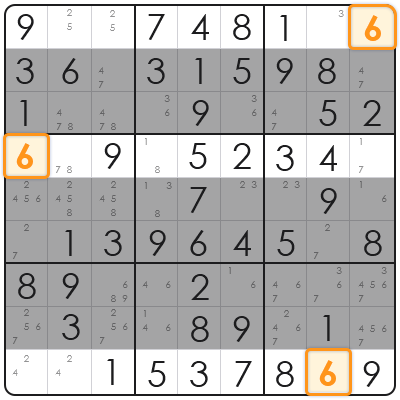
Determining how to tell if a Sudoku is solvable involves assessing whether a given puzzle grid possesses at least one valid configuration where all rules are satisfied. This goes beyond the act of simply solving; it’s a foundational inquiry into the puzzle’s inherent integrity and logical coherence from its initial state. The significance of verifying Sudoku solvability is paramount for both puzzle enthusiasts and creators. For players, it prevents the frustration of attempting to solve an impossible grid, ensuring their effort is directed towards a meaningful challenge. For creators, it is a critical validation step, guaranteeing that generated puzzles are fair and well-formed. The primary problem solvability analysis addresses is the waste of time and resources on ill-posed puzzles. In the realm of automated puzzle generation and competition design, confirming solvability is essential to maintain quality control and ensure a consistent experience, eliminating grids that contain inherent contradictions or insufficient information for completion. From a framework perspective, understanding solvability touches upon principles of constraint satisfaction problems (CSPs) and combinatorial logic, where every cell must satisfy conditions imposed by its row, column, and 3×3 block without duplication of digits 1-9.
The Fundamental Principles of Sudoku Solvability
Based on structural analysis, a Sudoku puzzle is solvable if and only if there exists at least one complete assignment of digits (1-9) to all empty cells that satisfies the core rules: each digit must appear exactly once in every row, column, and 3×3 subgrid. This definition differentiates solvability from uniqueness, as a solvable puzzle may have one or multiple valid solutions.
An unsolvable Sudoku, conversely, is one where any attempt to fill the empty cells according to the rules inevitably leads to a contradiction. This contradiction can manifest as a cell having no possible valid digit, or a situation where a digit must appear twice within a constrained area, even before the grid is fully populated.
The initial ‘givens’ – the pre-filled numbers – are crucial. They define the search space and constraints. A well-constructed solvable Sudoku has a set of givens that guides the solver towards a valid solution without ambiguity, reflecting a balance between constraint and possibility.
Algorithmic Approaches to Verifying Solvability
In practical application, algorithmic methods provide a robust means to determine solvability. The most common approach is backtracking, which systematically tries to assign digits to empty cells. If an assignment leads to a contradiction, the algorithm ‘backtracks’ to the previous decision point and tries an alternative digit. If a complete, valid grid is found, the puzzle is solvable.
From a framework perspective, backtracking can be enhanced with constraint propagation techniques. These involve deducing implications of placed digits (e.g., if a 5 is placed, remove 5 as a possibility from its row, column, and block) to reduce the search space. Techniques like naked singles, hidden singles, and pointing pairs streamline the process.
A Sudoku is deemed solvable by an algorithm if it successfully terminates with at least one valid solution. If the algorithm explores all possible branches and every path leads to a contradiction, concluding that no valid assignments can be made, then the Sudoku is definitively unsolvable.
Step-by-Step Verification: Manual and Assisted Methods
**Step 1: Initial Grid Contradiction Scan.** The first step in how to tell if a Sudoku is solvable is to rigorously check the initial grid for any immediate rule violations. Examine each row, column, and 3×3 block to ensure no digit (1-9) appears more than once among the ‘givens’. If such a contradiction is found, the puzzle is inherently unsolvable.
**Step 2: Apply Basic Constraint Propagation.** Systematically scan for ‘naked singles’ (cells with only one possible digit) and ‘hidden singles’ (digits that can only go in one specific cell within a row, column, or block). Fill these in. Repeat this process iteratively. If at any point a cell ends up with no possible valid digits, the Sudoku is unsolvable.
**Step 3: Advanced Logical Deduction or Assumption.** For more complex puzzles, employing advanced human-solving techniques (like naked/hidden pairs/triples, X-Wing, Swordfish) or a ‘trial and error’ approach (making an educated guess and following its implications) is necessary. If a guess leads to a contradiction, backtrack and try another path. If all branches of logical deductions lead to contradictions, it’s likely unsolvable.
**Step 4: Utilize Software Solvers for Confirmation.** For definitive proof or for puzzles resistant to manual methods, specialized Sudoku solving software or online tools can quickly determine solvability. These tools typically employ optimized backtracking algorithms and constraint propagation to swiftly identify if a solution exists and often confirm uniqueness.
Comparative Analysis of Solvability Methods
When considering how to tell if a Sudoku is solvable, various methods offer different trade-offs in terms of complexity, efficiency, cost, and frequency of use. These range from intuitive manual checks to sophisticated computational approaches. Each method serves distinct purposes depending on the context of the assessment.
Based on structural analysis, here is a comparative overview of common approaches:
| Method | Complexity | Efficiency | Application Cost | Frequency of Use |
|—|—|—|—|—|
| Manual Intuition | Low to Medium | Low | None | High (casual players) |
| Basic Constraint Checks | Medium | Medium | Low (pencil marks) | Medium (enthusiasts) |
| Full Backtracking/CSP | High | High | Medium (computational) | High (puzzle generators, researchers) |
Common Pitfalls in Assessing Sudoku Solvability
One frequent mistake when assessing how to tell if a Sudoku is solvable is **premature abandonment due to perceived difficulty**. Many complex puzzles only reveal their solution through advanced logical steps or deeper levels of deduction, leading solvers to mistakenly believe the puzzle is unsolvable when it is merely challenging. Professional advice: Always exhaust basic and intermediate techniques before declaring a puzzle impossible.
Another pitfall is **failing to conduct a thorough initial scan for contradictions**. Overlooking an immediate duplicate digit in a row, column, or block among the ‘givens’ can lead to wasted effort on an inherently flawed puzzle. From a framework perspective, this pre-check is non-negotiable and should be the very first step in any solvability assessment.
In practical application, some may **confuse a non-unique solution with unsolvability**. A puzzle is solvable if it has at least one valid solution. While most published Sudokus are designed to have a unique solution for a better solving experience, the presence of multiple solutions does not render the puzzle unsolvable, only perhaps less ‘well-posed’ by some standards.
Frequently Asked Questions on Sudoku Solvability
Based on common inquiries regarding Sudoku puzzles, here are frequently asked questions addressing key aspects of solvability and uniqueness, optimized for clarity and direct answers.
Q: Can a Sudoku have multiple solutions and still be solvable?
A: Yes, a Sudoku is solvable if it has at least one valid solution. However, professionally designed puzzles typically aim for a unique solution for a better solving experience.
Q: What is the minimum number of givens for a solvable Sudoku?
A: Based on current research, the absolute minimum is 17 given numbers to ensure a unique solution. Puzzles with fewer givens might have multiple solutions or none.
Q: Is every partially filled Sudoku solvable?
A: No. A partially filled Sudoku can contain contradictions from its initial state, or lead to logical dead ends, making it impossible to complete according to the rules.
Q: How quickly can one determine solvability?
A: For humans, it varies greatly with puzzle complexity. Algorithms can determine solvability almost instantly for most standard puzzles, often within milliseconds.
Q: Does the difficulty of a Sudoku affect its solvability?
A: Difficulty primarily relates to the complexity of the logical steps required to solve it, not its fundamental solvability. A difficult Sudoku is still solvable if a path to a valid solution exists.
Understanding how to tell if a Sudoku is solvable is more than just a theoretical exercise; it’s a critical component in puzzle design, validation, and advanced algorithmic development. By employing a blend of meticulous manual checks and robust computational tools, one can definitively ascertain the solvability of any given grid, thereby upholding the integrity and enjoyment of these timeless logic puzzles. The forward-looking industry insight suggests continued integration of advanced AI for generating, validating, and even categorizing Sudoku puzzles based on their intricate solvability profiles.