

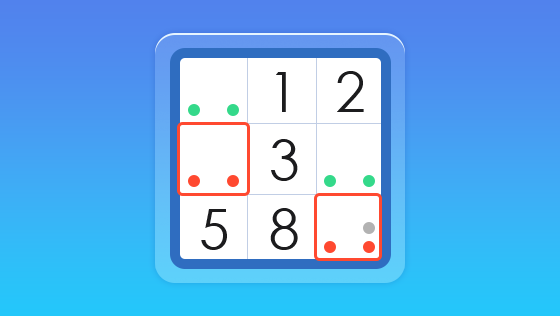
In the intricate world of logic puzzles, the term ‘black spaces’ is often used by casual players to refer to the empty cells within a Sudoku grid. From a framework perspective, these are not ‘black spaces’ in a technical sense, but rather the essential blank canvas where the solver must apply deductive reasoning to place the correct digits. This article delves into the structural significance of these unfilled cells, clarifying their role and impact on the puzzle’s solvability and difficulty. The primary problem these ‘blank spaces’ present, and simultaneously solve, is the core challenge of Sudoku itself: the deduction of missing values. Without these empty cells, there would be no puzzle. Their quantity and strategic distribution are paramount in defining the puzzle’s character, dictating the complexity of the logical paths required for its resolution. Understanding their nature is crucial for both puzzle designers and solvers aiming for mastery. Based on structural analysis, the number of initially provided digits directly determines the count of these unfilled cells, which in turn influences the array of available solving techniques. As we explore the mechanics of Sudoku, we will clarify that there is no fixed number of ‘black spaces’ and instead focus on the dynamic interplay between given clues and the vast majority of cells awaiting completion.
The Variable Nature of Unfilled Cells in Sudoku Grids
Unfilled cells, often mistakenly referred to as ‘black spaces,’ are the blank squares in a standard 9×9 Sudoku grid that players must populate with unique digits from 1 to 9 within each row, column, and 3×3 subgrid. From a framework perspective, these are the fundamental elements that transform a mere collection of numbers into a complex logical challenge. The exact number of these cells is not static; it is inversely proportional to the number of ‘given’ digits (pre-filled numbers) provided at the start of the puzzle.
A standard Sudoku grid contains 81 individual cells. Therefore, the count of unfilled cells is always 81 minus the number of given digits. For instance, a puzzle with 25 given numbers will have 56 unfilled cells. This variability is a cornerstone of Sudoku design, allowing for an immense range of puzzles from beginner-friendly to exceptionally difficult. Professional puzzle constructors meticulously choose the number and placement of these initial givens to ensure a unique solution and a desired difficulty level.
Based on structural analysis, the minimum number of givens required for a Sudoku puzzle to have a unique solution is 17. This implies a maximum of 64 unfilled cells for such a puzzle. While puzzles with fewer givens often tend to be harder due to a greater degree of deduction required, this is not a universal rule. The distribution of these initial clues, and thus the resulting pattern of empty cells, plays an even more significant role in determining the true complexity and elegance of the puzzle’s solution path.
Quantifying Empty Cells: A Practical Approach
Quantifying empty cells in a Sudoku grid involves a straightforward process of subtracting the number of pre-filled digits from the total 81 squares. In practical application, this allows solvers to quickly grasp the ‘density’ of the puzzle and infer its potential complexity even before making the first deduction. This initial assessment is a crucial step for seasoned strategists.
To identify and count these ‘blank spaces’ or unfilled cells, follow these methodical steps: First, confirm the standard grid size, which for Sudoku is universally 9×9, totaling 81 cells. Second, systematically count every digit that is already provided in the grid. This can be done row by row, column by column, or by scanning the entire grid visually. Third, subtract the total count of pre-filled digits from 81. The resulting number represents the precise quantity of empty cells that require filling.
For example, if a Sudoku puzzle presents 28 pre-filled numbers, the calculation would be 81 – 28 = 53 unfilled cells. This quantifiable metric is not merely an interesting fact; it informs the solver about the sheer volume of decisions they will need to make and the potential for long chains of deduction. From a framework perspective, a higher count of empty cells generally necessitates more advanced techniques, such as hidden singles, locked candidates, or X-Wing patterns, rather than simple cross-hatching or naked singles.
Unfilled Cells and Puzzle Difficulty: A Comparative Analysis
The quantity and strategic distribution of unfilled cells directly correlate with a Sudoku puzzle’s perceived difficulty and its solution complexity. Unlike other grid-based puzzles where ‘black spaces’ might have a specific function (e.g., in Picross or Nonograms, where black cells form the image, or in Kakuro, where they are separators), in Sudoku, they simply signify unknowns.
Consider puzzles with a high number of unfilled cells (i.e., few givens). These generally exhibit higher complexity because the solver has a minimal starting point, demanding extensive chains of logical inference and often requiring advanced techniques to uncover initial placements. The efficiency of solving such puzzles is typically lower, as more time is spent identifying potential candidates and ruling out impossibilities across multiple cells. The ‘cost’ or mental effort involved is significantly higher. Conversely, puzzles with fewer unfilled cells (many givens) usually present lower complexity, allowing for quicker progress through more straightforward deductions. Solution efficiency is higher, and the mental effort is considerably reduced, making them ideal for beginners.
From a framework perspective, the distribution of these unfilled cells is arguably more critical than their raw count. A puzzle with 25 givens where clues are evenly spread and offer immediate deductions might be easier than one with 30 givens where the clues are clustered, leaving large, interconnected blank regions that require deep strategic thinking. This variability in distribution means that the ‘frequency’ of needing complex deductions changes drastically. In essence, while the quantity of unfilled cells sets a baseline, their spatial arrangement dictates the true intellectual challenge, distinguishing a simple Sudoku from a master-level conundrum that demands intricate logical pathways.
Common Misconceptions Regarding ‘Black Spaces’ in Sudoku
A primary misconception regarding ‘black spaces’ in Sudoku is the expectation of a fixed quantity or a specific designation for these blank cells beyond their role as empty containers to be filled. Many new players might assume that ‘black spaces’ are a specialized feature, similar to obstacles or scoring zones in other games. Professional advice: It is essential to understand that in standard Sudoku, there are no ‘black spaces’ with unique rules; all empty cells are structurally identical in their function as placeholders for missing digits.
Another frequent mistake is the assumption that a lower number of initial givens automatically guarantees a harder puzzle. While often true in general, this is not an absolute rule. Based on structural analysis, the *pattern* and *symmetry* of the given numbers, and consequently the pattern of the empty cells, profoundly influence difficulty. Solution: Rather than solely counting givens, experienced solvers quickly scan the grid for ‘hot spots’ of clustered givens or isolated cells, which provide more insight into the required solution methods. A seemingly ‘easy’ puzzle with many givens can be deceptively challenging if those givens offer minimal direct deductions.
A third pitfall involves underestimating the cognitive load associated with managing a large number of unfilled cells. Solvers new to the game may try to hold too many possibilities in their short-term memory, leading to errors and frustration. In practical application, this often results in ‘pencil marking’ errors or overlooking obvious deductions. Solution: Employ systematic notation techniques, such as small candidate numbers within cells, or using a separate list to track possibilities. This externalization of memory helps manage the complexity and allows the solver to focus on logical eliminations rather than rote memorization, especially when faced with a grid dense with empty cells.
FAQ on Sudoku Grid Dynamics
This section addresses frequently asked questions regarding the nature and characteristics of blank or unfilled cells in Sudoku puzzles, often referred to as ‘black spaces’ by new players.
Q: What exactly are ‘black spaces’ in a Sudoku game?A: ‘Black spaces’ are not a standard Sudoku term; they typically refer to the empty or blank cells within the 9×9 grid that the player must fill with digits 1 through 9. They are simply unmarked cells awaiting a solution.
Q: Is there a fixed number of empty cells in every Sudoku puzzle?A: No, the number of empty cells is not fixed. It varies significantly from one puzzle to another, depending on how many initial digits (givens) the puzzle designer provides. The count is 81 minus the number of givens.
Q: Does a Sudoku with fewer initial numbers always mean it’s harder?A: Generally, fewer initial numbers (more empty cells) correlates with higher difficulty. However, the distribution and strategic placement of those initial numbers play an even more crucial role in determining the puzzle’s true challenge. Some puzzles with more givens can still be very difficult.
Q: What is the minimum number of initial digits required for a valid Sudoku puzzle?A: Based on extensive research, the absolute minimum number of initial digits required for a standard 9×9 Sudoku to have a unique solution is 17. Puzzles with fewer than 17 givens either have multiple solutions or none.
Q: How do a large number of empty cells impact a solver’s strategy?A: A large number of empty cells generally demands more advanced deduction techniques, systematic candidate tracking, and a higher degree of logical inference. Solvers must manage more potential possibilities per cell, requiring careful and methodical approaches to avoid errors.
Strategic Value and Future Insights into Sudoku Grid Design
From a framework perspective, the strategic manipulation of unfilled cells is paramount in the evolving field of puzzle design and cognitive gaming. As players become more sophisticated, the demand for novel and challenging Sudoku variants increases. Understanding the logic behind how many ‘black spaces’ (or empty cells) exist, and more importantly, their distribution, allows designers to craft puzzles that are not only solvable but also offer unique intellectual rewards. This deep dive into the structural analysis of unfilled cells provides critical insights into what makes a Sudoku compelling and enduring.
In practical application, the insights gleaned from analyzing empty cell patterns can inform AI-driven puzzle generation, leading to more nuanced difficulty scaling and the creation of puzzles tailored to individual solver profiles. The long-term strategic value lies in recognizing that these seemingly simple blank squares are, in fact, the most dynamic and influential elements of a Sudoku grid, constantly pushing the boundaries of logical deduction. The future of Sudoku and similar cognitive games will undoubtedly see a continued emphasis on optimizing the interplay between given information and the vast expanse of the unknown.
Based on structural analysis, the continuous exploration of minimal clue sets and novel empty cell configurations will remain a fertile ground for innovation in puzzle theory. The challenge isn’t just to fill the ‘black spaces’, but to understand the elegant logical journey required to do so, a journey that begins with a comprehensive understanding of the grid’s initial state. This knowledge empowers both the creator and the solver to appreciate the profound simplicity and intricate complexity inherent in every Sudoku.
In conclusion, while the term ‘black spaces’ is an informal descriptor, the concept it refers to—unfilled cells—is central to the entire Sudoku experience. We’ve established that there is no fixed number of these cells, but rather a dynamic quantity dictated by the initial givens, profoundly influencing puzzle difficulty and the required solution strategies. Mastering Sudoku is not merely about filling in numbers; it’s about understanding the logic that governs the empty grid, applying systematic deduction, and appreciating the intricate relationship between known and unknown elements. As the puzzle design landscape continues to evolve, a clear grasp of these foundational principles remains indispensable for both creators and enthusiasts alike, ensuring the enduring appeal and intellectual depth of this classic game.