

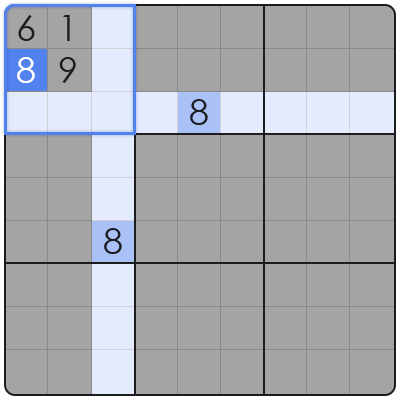
Sudoku, a popular number placement puzzle, challenges players to fill a 9×9 grid with digits so that each column, each row, and each of the nine 3×3 subgrids contains all of the digits from 1 to 9. The ability to fill sudoku quickly is not merely a parlor trick but a testament to refined logical deduction, pattern recognition, and systematic problem-solving, skills highly valued within Logic Puzzles and Cognitive Training. This methodology, rooted in advanced combinatorial logic, transforms a seemingly complex task into an efficient exercise in analytical precision. From a framework perspective, achieving speed in Sudoku resolution addresses the fundamental problem of cognitive overload and inefficient trial-and-error approaches that often plague amateur solvers. Instead of haphazardly guessing numbers, quick Sudoku filling employs a structured hierarchy of techniques designed to rapidly eliminate possibilities and confirm placements with absolute certainty. This shift from intuitive play to strategic execution is critical for consistent, high-speed performance. The significance of mastering how to fill sudoku quickly extends beyond recreational enjoyment; it enhances crucial cognitive functions such as selective attention, working memory, and logical reasoning, which are transferable skills in various professional domains. By dissecting the puzzle’s underlying structure and applying proven algorithms, solvers can dramatically reduce resolution times, demonstrating a profound grasp of constraint satisfaction problems and optimized decision-making processes.
The Foundational Principles of Rapid Sudoku Resolution
Understanding the core mechanics of Sudoku for speed involves internalizing the immutable rules that govern number placement across rows, columns, and 3×3 blocks. Based on structural analysis, every empty cell in a Sudoku grid has a set of ‘candidates’—the numbers from 1 to 9 that are not yet present in its corresponding row, column, and 3×3 block. The journey to quick Sudoku solving begins by identifying these candidates systematically, as they form the bedrock of all subsequent deductions.
The most fundamental principle for quick Sudoku solving is the concept of ‘single candidates,’ which are cells where, after considering all existing numbers in its row, column, and block, only one possible digit remains. This direct answer mechanism allows for immediate and certain placement, providing the first critical steps towards unraveling the puzzle. Prioritizing the identification of these singular opportunities is paramount for accelerating initial progress and building momentum.
A strategic mental shift from searching for numbers to eliminating possibilities is crucial for quick Sudoku completion. Instead of scanning for where a ‘7’ can go, for instance, a rapid solver focuses on what numbers *cannot* go into a specific cell, or conversely, what numbers *must* go into a specific cell within a unit. This proactive elimination strategy, applied across the entire grid, significantly reduces the search space and reveals hidden patterns more effectively.
Strategic Techniques for Expedited Sudoku Completion
Essential methods for identifying and placing numbers swiftly include scanning for ‘Hidden Singles’ and recognizing ‘Naked Pairs/Triples.’ A Hidden Single occurs when a particular number can only be placed in one specific cell within a given row, column, or 3×3 block, even if that cell has other candidates. This technique requires a focused scan for each number (1-9) within each unit to identify its sole possible location.
Naked Pairs and Triples are powerful elimination tools where two or three cells within a row, column, or block contain an identical set of two or three candidates, and *only* those candidates. In practical application, once identified, these numbers can be eliminated as candidates from all other cells within that same unit. For example, if two cells in a row can only be 2 or 5, then 2 and 5 cannot be candidates in any other cell in that row.
Systematic application of these fundamental pattern recognitions is key to consistent speed. From a framework perspective, solvers should iterate through these techniques—first singles, then hidden singles, then naked pairs/triples—continuously updating candidate lists after each placement or elimination. This iterative process ensures that new deductions emerge as the puzzle simplifies, preventing stagnation and maintaining forward progress.
Advanced Tactical Maneuvers for Expert Sudoku Solvers
Implementing complex logic to unblock challenging puzzles often involves techniques such as ‘Pointing Pairs/Triples’ and ‘Box/Line Reduction.’ Pointing Pairs/Triples occur when a candidate number is restricted to only two or three cells within a row or column, and those cells also happen to be contained entirely within a single 3×3 block. This allows the candidate to be eliminated from the remaining cells of that 3×3 block outside that specific row or column.
Box/Line Reduction is the inverse, where a candidate number is restricted to only two or three cells within a single 3×3 block, and those cells also happen to lie entirely along a single row or column. In this scenario, the candidate can be eliminated from the rest of that row or column outside that specific 3×3 block. These linked elimination strategies leverage the intersecting constraints of the Sudoku grid to open up new possibilities.
The X-Wing pattern, a more advanced technique, is crucial for resolving particularly stubborn interdependencies across the grid. An X-Wing involves four cells arranged in a rectangle, where a specific candidate appears in exactly two cells of two different rows (or columns) and these two pairs of cells share the same two columns (or rows). The power of the X-Wing lies in its ability to eliminate the candidate from all other cells in those shared columns (or rows), unlocking significant portions of the puzzle that simpler methods cannot address.
A Step-by-Step Approach to Accelerating Sudoku Solving
A practical application of speed-solving methodologies begins with an initial grid scan and direct placements. Start by systematically checking each row, column, and 3×3 block for obvious single candidates—cells where only one number can logically fit based on existing entries. Placing these initial numbers quickly is vital for reducing the grid’s complexity and providing a foundation for deeper deductions.
Comprehensive candidate marking, often called ‘pencil marks,’ is the next critical step. For every empty cell, meticulously list all possible numbers (candidates) that could legitimately occupy it, based on the numbers already present in its row, column, and 3×3 block. This systematic approach transforms the mental effort into a visual representation, making complex patterns easier to spot and reducing the chance of error.
Iterative application of basic and intermediate techniques follows candidate marking. Continuously re-scan the grid for Naked Singles, Hidden Singles, Naked Pairs/Triples, and Pointing Pairs/Triples. Each time a number is placed or a candidate is eliminated, it changes the candidate lists of neighboring cells, potentially revealing new opportunities. This cyclical process of deduction and candidate update is the engine of rapid Sudoku solving.
Deploying advanced strategies is reserved for persistent challenges where basic techniques yield no further progress. If the grid becomes static, carefully look for X-Wings, Swordfish, or other complex patterns that leverage inter-unit relationships. These methods require a deeper understanding of candidate interactions but can be highly effective in breaking through seemingly impenetrable deadlocks.
Finally, verification and error checking are paramount to ensure quick Sudoku completion is also accurate. After each major deduction or after the puzzle appears to be complete, take a moment to double-check rows, columns, and 3×3 blocks to ensure each contains all digits from 1 to 9 without repetition. Catching an error early saves significant time compared to discovering it near the end of the puzzle.
Comparative Analysis: Speed Sudoku vs. Traditional Methods
Contrasting efficiency in Sudoku solving approaches reveals clear advantages for structured, speed-oriented methodologies over traditional, often intuitive methods. While both aim to complete the grid, their pathways to resolution differ significantly in terms of logical rigor, speed, and cognitive load. The following analysis highlights these distinctions from a strategic perspective.
Based on structural analysis, the primary difference lies in the reliance on systematic candidate elimination versus speculative guessing. Traditional ‘trial-and-error’ approaches, common among beginners, involve placing numbers tentatively and backtracking if an error occurs. This method is highly inefficient and prone to errors, particularly in harder puzzles. In contrast, speed Sudoku techniques prioritize certainty at every step, leveraging a hierarchy of logical deductions to ensure each number placed is unequivocally correct.
The strategic implications of adopting faster methods are profound. They not only reduce the time spent on each puzzle but also enhance the solver’s confidence and enjoyment by minimizing frustration. From a framework perspective, moving beyond basic observation to mastering advanced techniques represents a transition from reactive solving to proactive strategic planning, allowing individuals to tackle a wider range of difficulties with consistent success.
Common Pitfalls and Professional Solutions in Rapid Sudoku Solving
Avoiding obstacles to achieve consistent speed requires an awareness of common mistakes and their professional solutions. One frequent pitfall is inaccurate or incomplete candidate tracking; if pencil marks are missing or incorrect, crucial deductions can be overlooked or lead to errors. The solution is rigorous, double-checked candidate marking, perhaps by systematically reviewing each row, column, and block after initial marking to ensure all possibilities are correctly recorded and updated.
Another common error is tunnel vision, where solvers become fixated on one area of the grid, overlooking simpler deductions elsewhere. This prevents the puzzle from opening up efficiently. Professional advice dictates a dynamic scanning approach, constantly shifting focus between rows, columns, and blocks, and periodically reassessing the entire grid for the easiest next move, rather than forcing complex deductions prematurely. The aim is to find the ‘lowest hanging fruit’ first.
Premature guessing, especially when faced with a difficult juncture, represents a significant setback to rapid Sudoku completion. Guessing undermines the logical foundation of Sudoku and almost invariably leads to backtracking and wasted time. The professional solution is to trust the systematic methods: if no direct deductions are apparent, it signals a need to apply more advanced techniques, such as X-Wings or even a ‘what-if’ scenario test (called ‘forcing chains’ or ‘AIC’ in advanced contexts), rather than resorting to arbitrary placement.
Frequently Asked Questions on Expedited Sudoku Solving
Q1: What is the most effective starting strategy for a new Sudoku puzzle? A1: The most effective starting strategy is to scan the grid for ‘Naked Singles’ and ‘Hidden Singles’ first. These direct deductions provide immediate progress and simplify the grid, laying the groundwork for more advanced techniques. Prioritize cells with the fewest initial candidates.
Q2: How crucial is the use of pencil marks for speed? A2: Using pencil marks is incredibly crucial for speed. They visualize all possible candidates, making it easier to spot patterns like Naked Pairs, Hidden Pairs, and X-Wings. Relying solely on mental tracking becomes inefficient and error-prone as puzzles increase in difficulty.
Q3: Can digital tools or apps genuinely improve my solving speed? A3: Digital tools and apps can improve speed by allowing quick input and often providing ‘hint’ features that explain deductions. However, true speed mastery comes from understanding the logic yourself, not relying on the tool to solve for you. Use them for practice and learning, not just completing.
Q4: What is the role of consistent practice in developing fast Sudoku skills? A4: Consistent practice is paramount. Like any skill, repetition reinforces pattern recognition, speeds up candidate identification, and solidifies technique application. Regular engagement with varied difficulty puzzles builds intuition and improves mental agility for quicker resolution.
Q5: How do ‘Naked Pairs’ and ‘Hidden Pairs’ differ in practical application? A5: Naked Pairs involve two cells in a unit with only two identical candidates, removing those candidates from other cells in that unit. Hidden Pairs involve two numbers that can only be placed in two specific cells within a unit, making those two cells a ‘naked pair’ for those two numbers, eliminating other candidates from those two cells.
In conclusion, the mastery of how to fill sudoku quickly is a sophisticated synthesis of foundational rules, strategic pattern recognition, and advanced logical deduction. Based on structural analysis, the transition from a casual solver to an expedited expert lies in adopting systematic candidate elimination, understanding the interplay of constraints, and diligently applying a hierarchy of techniques. This approach not only slashes resolution times but also cultivates a deeper appreciation for the elegance of combinatorial logic, offering enduring cognitive benefits and a framework for approaching complex problems across various disciplines in Logic Puzzles and Cognitive Training.