

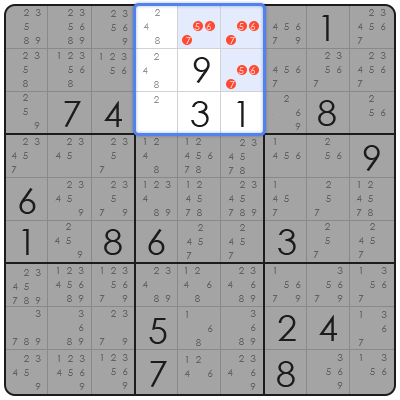
Learning how to play Sudoku puzzles involves more than just filling in numbers; it’s an intricate dance of logical deduction and pattern recognition within a 9×9 grid. At its core, Sudoku is a combinatorial number-placement puzzle where the objective is to fill a 9×9 grid with digits so that each column, each row, and each of the nine 3×3 subgrids contains all of the digits from 1 to 9. This seemingly simple rule set belies a depth of strategy and mental engagement that captivates millions worldwide. For both speed-solvers striving for competitive times and casual players seeking a relaxing yet stimulating mental workout, understanding the foundational principles of how to play Sudoku puzzles is paramount. The journey from a novice, randomly placing numbers, to an expert, methodically eliminating candidates, is paved with the application of systematic techniques. This guide will illuminate the fundamental rules, key strategies, and expert insights necessary to transform your approach to the game, making every puzzle solvable with precision and confidence. Our deep dive into how to play Sudoku puzzles will empower you with the tools to tackle grids of varying difficulty. We will explore the grid topology, the power of candidate elimination, and advanced logical deductions that form the bedrock of efficient solving. By adopting a ‘logic-first’ approach, you’ll not only solve puzzles faster but also cultivate critical thinking skills applicable far beyond the confines of the Sudoku board. Prepare to unlock the full potential of your problem-solving abilities and elevate your Sudoku game.
Understanding the Core Mechanics of How to Play Sudoku Puzzles
The core mechanics of how to play Sudoku puzzles revolve around a singular, elegant constraint: every number from 1 to 9 must appear exactly once in each row, each column, and each of the nine 3×3 blocks. This fundamental rule establishes a robust framework for logical deduction, transforming an empty grid into a solvable mathematical challenge.
Based on logic-chain analysis, the 9×9 grid is subdivided into three distinct constraint zones: rows, columns, and 3×3 blocks. Each zone must be populated with a complete set of unique digits (1-9). This tripartite constraint system is what drives all Sudoku solving techniques, from the most basic single-candidate identification to highly complex pattern recognition like X-Wings or Swordfish. The interplay between these zones creates unique cell constraints, dictating the limited possibilities for each empty square.
Effective play hinges on understanding the implications of these constraints. When a number is placed in a cell, it immediately eliminates that number as a possibility from every other cell in its row, column, and 3×3 block. This process of candidate elimination is the primary engine for progress in any Sudoku puzzle. By systematically tracking these eliminations, players can narrow down the potential numbers for each empty cell, eventually leading to a unique solution. The structural necessity of adhering to these rules forms the mathematical backbone of the game.
A Step-by-Step Approach to Solving Sudoku Puzzles
A systematic approach to solving Sudoku puzzles begins with surveying the given numbers and using them to eliminate possibilities for adjacent empty cells. This initial scan is crucial for identifying immediate ‘naked singles’ or ‘hidden singles’ that can jumpstart the solving process, establishing an early foundation of confirmed digits.
Firstly, begin by focusing on rows, columns, and 3×3 blocks that have the most pre-filled numbers. For competitive solvers, visually scan for a number (1-9) that appears frequently across the grid. For example, if you see many ‘7’s, focus on where the remaining ‘7’s must go by checking which rows, columns, or blocks are missing a ‘7’. By looking at the intersections of these constraints, you can often pinpoint the exact cell for a missing digit. This is the essence of logical deduction.
Next, employ pencil marks (or ‘candidate marks’). This involves writing all possible numbers (1-9) that *could* go into an empty cell, based on the numbers already present in its row, column, and block. As you solve more cells, you’ll eliminate candidates from neighboring cells, often leaving only one possible number—a ‘single candidate’—for a particular cell. The consistent application of pencil marks is an indispensable tool for tackling medium to hard puzzles, as it makes complex deductions visible and manageable, reducing cognitive load and preventing errors stemming from memory lapses. The grid topology becomes clearer through meticulous candidate tracking.
Comparative Analysis: Sudoku Techniques Beyond the Basics
Sudoku solving involves a hierarchy of strategies, from basic candidate elimination to advanced pattern recognition, each with varying levels of difficulty and utility. While the fundamental principles of how to play Sudoku puzzles provide the bedrock, mastery requires integrating more sophisticated techniques.
The table below provides a comparative analysis of common Sudoku strategies, highlighting their attributes in the context of solving different puzzle difficulties:
| Strategy | Difficulty Level | Frequency of Use | Logical Complexity |
|—|—|—|—|
| Candidate Elimination (Basic) | Low | High | Low |
| Naked Pairs/Triples | Medium | Medium | Medium |
| X-Wing | High | Low | High |
Candidate Elimination forms the basis of how to play Sudoku puzzles. Naked Pairs or Triples occur when two or three cells in a row, column, or block contain the exact same two or three candidates, respectively, and no other candidates. Once identified, these candidates can be eliminated from all other cells within that same constraint unit. For instance, if two cells in a block can only be 2 or 5, then 2 and 5 cannot exist anywhere else in that block. X-Wing, a more advanced technique, involves finding two rows (or columns) where a specific candidate appears in only two cells, forming a rectangle. If these cells are in the same two columns (or rows), that candidate can be eliminated from all other cells in those two columns (or rows). These techniques are built upon intricate grid topology understanding and advanced candidate elimination.
Common Pitfalls When Learning How to Play Sudoku Puzzles
Common pitfalls when learning how to play Sudoku puzzles often stem from impatience, a lack of systematic approach, or neglecting the power of pencil marks, hindering progress and leading to frustration. Based on an analysis of player tendencies, these errors are frequently encountered by beginners and intermediate solvers alike.
One of the most frequent mistakes is premature guessing. Sudoku is a game of pure logic; a guess, even if it feels plausible, can lead to a cascade of errors and ultimately an unsolvable puzzle. Always ensure that every number placement is justified by logical deduction, eliminating ambiguity before committing a digit. When faced with an apparent stalemate, re-examine your existing numbers and pencil marks, or try a different scanning pattern, rather than resorting to arbitrary choices.
Another common pitfall is inaccurate or incomplete pencil marks, or overlooking potential candidates. Many players either omit pencil marks entirely or fail to update them consistently as new numbers are placed. This oversight can lead to missed ‘hidden singles’ or ‘naked pairs,’ which are crucial for breaking through tougher puzzles. Always double-check your candidate lists for each cell, ensuring they reflect all current constraints. The structural necessity of precise candidate tracking cannot be overstated. Additionally, tunnel vision, focusing too long on one section, can lead to missing opportunities elsewhere. Regularly scan the entire grid, shifting focus between rows, columns, and blocks to gain a fresh perspective and identify new openings.
Frequently Asked Questions About How to Play Sudoku Puzzles
These FAQs address fundamental queries for beginners and clarify common misconceptions, providing direct and concise answers essential for understanding how to play Sudoku puzzles effectively. Understanding these basics is crucial for building a solid foundation in the game.
Q: What is the primary goal of Sudoku? A: The primary goal of Sudoku is to fill a 9×9 grid with numbers 1 through 9 so that each row, column, and 3×3 block contains every digit exactly once. This requires logical deduction.
Q: Are there any tricks to start a Sudoku puzzle? A: Start by scanning for numbers that appear frequently across the grid. Focus on rows, columns, and 3×3 blocks with many pre-filled numbers to quickly find single candidates. Use candidate elimination systematically.
Q: Can Sudoku be solved by guessing? A: No, Sudoku is a game of pure logic and should not involve guessing. Every number placement must be justifiable through logical deduction based on the grid’s constraints. Guessing often leads to unsolvable puzzles.
Q: What are ‘pencil marks’ in Sudoku? A: Pencil marks are small notations of all possible candidate numbers within an empty cell. They are crucial for visualizing logical deductions and identifying advanced patterns like Naked Pairs or Hidden Singles. Consistent use aids in managing cell constraints.
Mastering how to play Sudoku puzzles fundamentally rests on embracing a ‘logic-first’ approach. By meticulously applying logical deduction, consistently utilizing pencil marks for candidate elimination, and understanding the intricate cell constraints within the grid topology, any puzzle can be systematically solved. The journey from novice to expert is one of refined observation and strategic application, where each solved puzzle reinforces the power of analytical thinking. Continue to challenge yourself, explore advanced techniques, and remember that patience and precision are your greatest allies in the quest for Sudoku mastery. The satisfaction of a perfectly solved grid, achieved purely through intellect, is truly unparalleled.