

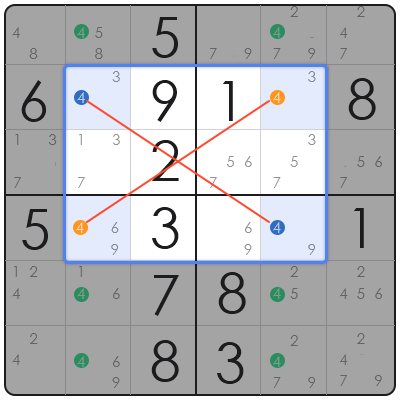
Learning how to solve a Sudoku game efficiently and effectively is a core skill for any logic puzzle enthusiast, transforming a seemingly complex grid into a rewarding exercise in deduction. Sudoku, at its heart, is a numbers game governed by simple rules: place digits 1 through 9 into a 9×9 grid such that each row, each column, and each of the nine 3×3 subgrids contains all of the digits from 1 to 9 without repetition. This definitive guide will equip you with the foundational principles and advanced strategies necessary to conquer any Sudoku puzzle, regardless of its perceived difficulty. For both speed-solvers aiming for competitive times and casual players seeking a satisfying mental workout, understanding the underlying mechanics of Sudoku solving is paramount. It’s not about guessing; it’s a systematic application of logical deduction to identify the unique placement of numbers. Mastery hinges on recognizing patterns, eliminating possibilities, and building a robust mental framework for systematic analysis. Our focus will be on developing a ‘logic-first’ approach that minimizes errors and maximizes solving speed. This article will delve deep into the methodologies, from basic candidate elimination to advanced grid topology analyses, ensuring you gain a comprehensive understanding of how to solve a Sudoku game. We will explore the structural necessities, the power of precise pencil marks, and the beauty of cell constraints that guide every successful solve. Prepare to elevate your Sudoku prowess and approach every puzzle with confidence and strategic insight.
The Fundamental Logic of How to Solve Sudoku Game
Understanding how to solve a Sudoku game begins with its fundamental logical framework, which dictates that every digit from 1 to 9 must appear exactly once in each row, column, and 3×3 block. This principle of unique placement within specific zones is the cornerstone of all Sudoku solving techniques. The 9×9 grid topology is inherently constrained, creating a finite number of possibilities for each cell.
Based on logic-chain analysis, the interaction between these three constraint types (row, column, block) is what generates the solvability of a Sudoku puzzle. When a cell has a value, it immediately eliminates that value as a possibility for all other cells in its row, column, and 3×3 block. This interconnectedness is where initial deductions, often called ‘singles,’ emerge naturally.
The structural necessity of maintaining uniqueness across these three dimensions allows us to systematically narrow down candidates for empty cells. Every move, whether identifying a definite number or simply marking a potential one with pencil marks, feeds into a cascading process of elimination that incrementally reveals the puzzle’s solution. This elegant system ensures that every well-formed Sudoku puzzle has one unique solution discoverable through pure logic.
Essential First Steps: Candidate Elimination and Pencil Marks
The initial approach to how to solve a Sudoku game involves systematically performing candidate elimination and carefully applying pencil marks to each empty cell. Candidate elimination is the process of ruling out numbers that cannot possibly belong in a specific cell based on existing numbers in its row, column, and block. This initial scan is crucial for uncovering easy ‘hidden singles’ or ‘naked singles’.
For competitive solvers, developing an efficient scanning pattern is key. Start by checking each number (1-9) individually across the grid, identifying cells where it can only go in one place within a row, column, or block. Then, for each empty cell, list all possible candidate numbers using small pencil marks. This comprehensive annotation forms the bedrock for applying more advanced logical deduction techniques.
The diligent use of pencil marks is not merely a suggestion but a critical strategic component. These small numbers allow you to visualize all cell constraints and potential interactions at a glance, preventing overlooked opportunities for deduction. Ignoring pencil marks often leads to stagnation, whereas their consistent application reveals the pathways to solving even the most challenging puzzles.
Mastering Basic Techniques: Hidden and Naked Singles
Mastering hidden and naked singles is fundamental to efficiently learning how to solve a Sudoku game, as these are the most frequently encountered and simplest forms of logical deduction. A Naked Single occurs when a cell has only one possible candidate number after all initial eliminations have been made based on its row, column, and block constraints. This is the most straightforward deduction.
Conversely, a Hidden Single appears when a particular number can only be placed in one specific cell within a given row, column, or 3×3 block, even if that cell initially has other candidates. While the cell itself might have multiple pencil marks, the ‘hidden’ number has no other valid placement option within its assigned constraint area, making its position unique.
Identifying these singles forms the iterative core of solving. As each single is placed, it triggers new eliminations in its respective row, column, and block, often leading to the discovery of more singles. This cascading effect highlights the interconnectedness of the grid, making the systematic search for these basic, yet powerful, deductions a continuous process until more complex patterns are required.
Intermediate Strategies: Pairs, Triples, and Quads
Intermediate strategies like Naked Pairs, Hidden Pairs, Naked Triples, and Hidden Triples are essential for progressing in how to solve a Sudoku game by allowing for the elimination of candidates based on groupings within specific areas. A Naked Pair, for instance, involves two cells within the same row, column, or block that contain the exact same two candidate numbers, and no other candidates. These two numbers *must* occupy those two cells, eliminating them as possibilities for other cells in that zone.
Based on logic-chain analysis, Hidden Pairs extend this concept: two candidate numbers are restricted to only two cells within a row, column, or block, even if those cells contain other candidates. Once identified, these ‘hidden’ numbers confirm their placement in those two cells, allowing other candidates within those cells to be eliminated, and other instances of those two numbers to be removed from the rest of the row, column, or block.
The principles further apply to Triples and Quads, where three or four candidates are uniquely tied to three or four cells, respectively, within a specific area. Recognizing these patterns requires meticulous attention to pencil marks and an understanding of cell constraints. Successfully applying these intermediate techniques often unlocks significant portions of a puzzle, bridging the gap between basic deductions and truly advanced strategies.
Advanced Techniques for Complex Puzzles
For challenging puzzles, how to solve a Sudoku game often requires employing advanced techniques that analyze patterns across multiple rows, columns, or blocks, moving beyond simple local deductions. Techniques like X-Wing, Swordfish, and Jellyfish identify situations where a candidate number is constrained to specific rows or columns across multiple blocks, allowing for powerful eliminations.
For instance, an X-Wing occurs when a candidate appears in exactly two cells in two different rows, and those four cells form a perfect rectangle. If the candidate is restricted to the same two columns within those two rows, it can be eliminated from all other cells in those two columns outside the X-Wing. This requires a deeper understanding of grid topology and candidate intersections.
Comparative analysis highlights the increased logical complexity and lower frequency of these advanced strategies compared to basic techniques. While Naked Singles are high-frequency and low-complexity, X-Wings and Swordfish are moderate-to-high complexity and lower frequency. XY-Wings, another potent advanced technique, utilize a chain reaction between three cells (a pivot and two wings) where a common candidate can be eliminated from any cell that ‘sees’ both wings. These methods require significant practice and a keen eye for interconnected cell constraints.
Common Pitfalls in How to Solve Sudoku Game
When learning how to solve a Sudoku game, several common pitfalls can hinder progress and lead to frustration, primarily stemming from errors in observation or application of logic. One major mistake is incomplete or inaccurate pencil marking. Failing to mark all potential candidates, or incorrectly ruling out a candidate, creates a faulty basis for subsequent deductions, leading to dead ends.
Another frequent error is ‘premature guessing,’ where players abandon logical deduction for a speculative placement, especially in difficult sections. This not only violates the ‘logic-first’ approach but also makes it nearly impossible to backtrack and identify where an error occurred. Always exhaust all logical deductions before considering any form of hypothetical scenario, if at all.
Overlooking opportunities for ‘hidden’ numbers, particularly Hidden Singles or Hidden Pairs, is also a common pitfall. Players often focus on what a cell *can’t* be, rather than what a number *must* be within a larger constraint. A thorough sweep for hidden patterns after each significant deduction can prevent these oversights and keep the puzzle moving forward systematically.
Frequently Asked Questions on How to Solve Sudoku Game
Q: What is the very first step in how to solve a Sudoku game?
A: The first step is to scan the grid for ‘naked singles’ and ‘hidden singles’ by systematically checking each number (1-9) in every row, column, and 3×3 block.
Q: Are pencil marks always necessary?
A: Yes, diligent use of pencil marks for all possible candidates in empty cells is crucial. They provide a visual roadmap for logical deduction and prevent errors.
Q: How do advanced techniques differ from basic ones?
A: Advanced techniques (e.g., X-Wing) involve analyzing patterns across multiple rows/columns/blocks, whereas basic techniques (e.g., Naked Single) focus on single cells or small groups within one constraint area.
Q: What if I get stuck in a Sudoku puzzle?
A: If stuck, re-check all your pencil marks for accuracy. Look for ‘hidden’ patterns you might have missed. Sometimes taking a break and returning with fresh eyes helps reveal overlooked deductions.
Mastering how to solve a Sudoku game is a journey that emphasizes a ‘logic-first’ approach, demanding patience, precision, and an ever-evolving understanding of grid topology and cell constraints. From the fundamental principle of unique placement to the intricate dance of advanced patterns, each technique builds upon the last, transforming a daunting grid into a solvable challenge. Embrace systematic candidate elimination, meticulously apply pencil marks, and relentlessly pursue logical deduction to unlock the profound satisfaction of conquering any Sudoku puzzle.