

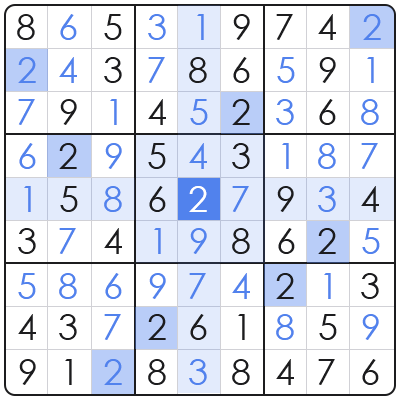
“How to solve any Sudoku” refers to a systematic approach that equips players with the logical deduction tools and strategic thinking necessary to complete any Sudoku puzzle, regardless of its perceived difficulty, by understanding fundamental principles and advanced techniques. This methodology is essential for both competitive speed-solvers aiming for peak efficiency and casual players seeking consistent success, transforming seemingly impossible grids into solvable challenges through pure logic. By delving into the intricacies of candidate elimination, grid topology, and specific pattern recognition, this guide provides a definitive pathway to Sudoku mastery, shifting the focus from trial-and-error to robust, logical certainty.
The Underlying Logic: How to Solve Any Sudoku
The core logic of how to solve any Sudoku is rooted in the principle of ‘unique placement’ within its defined constraints: each number from 1 to 9 must appear exactly once in each row, each column, and each of the nine 3×3 blocks.
This seemingly simple rule underpins all Sudoku strategies. The primary mechanism for how to solve any Sudoku involves `candidate elimination`, where players systematically identify which numbers can or cannot occupy specific cells based on existing numbers in intersecting rows, columns, and blocks. This process gradually reduces the possibilities until a unique digit can be confidently placed.
Understanding `grid topology` is also crucial; the overlapping nature of rows, columns, and 3×3 blocks creates specific intersections and relationships between cells. Based on logic-chain analysis, leveraging this structural necessity allows solvers to deduce placements that might not be immediately obvious, even in complex puzzles.
A Phased Approach: Implementing How to Solve Any Sudoku
Implementing how to solve any Sudoku involves a hierarchical application of techniques, starting with basic deductions and progressing to more complex pattern recognition as the grid fills.
The first critical step involves meticulous `pencil marks`, where every possible candidate number (1-9) for each empty cell is lightly noted. This initial `candidate elimination` phase helps visualize `cell constraints` and is the foundation for all subsequent advanced strategies. Neglecting thorough pencil marking often leads to missing key deductions.
Following initial candidate listing, focus on identifying ‘Singles.’ `Naked Singles` are cells with only one candidate remaining. `Hidden Singles` occur when a candidate appears in only one cell within a specific row, column, or 3×3 block, despite that cell having other potential candidates. For competitive solvers, quickly spotting these is paramount.
As the puzzle progresses, apply more sophisticated `candidate elimination` techniques. These include `Naked Pairs/Triples/Quadruples`, where a set of cells in a row, column, or block contains the same two, three, or four candidates exclusively, allowing those candidates to be eliminated from other cells in that unit. Similarly, `Hidden Pairs/Triples/Quadruples` identify candidates that only appear in a specific set of cells within a unit. Advanced `logic-chain analysis` strategies like `X-Wing` and `Swordfish` look for patterns across multiple rows or columns to eliminate candidates on a larger scale.
Comparative Strategies: How to Solve Any Sudoku in Context
Comparing how to solve any Sudoku’s holistic methodology with individual techniques highlights its comprehensive nature and foundational importance for consistent success.
While specific techniques are components, the ‘how to solve any Sudoku’ approach integrates them into a seamless problem-solving framework. Below is a comparative analysis:
| Strategy | Difficulty Level | Frequency of Use | Logical Complexity |
|—————————|——————-|——————|————————|
| How to Solve Any Sudoku | Foundational-Expert | Constant | Incremental |
| Naked Pairs/Triples | Intermediate | High | Moderate-High |
| X-Wing | Advanced | Moderate | High |
| Guessing (Trial & Error) | Low (Avoid) | Low | Extremely High (Unreliable) |
This comparison underscores that while techniques like `Naked Pairs` or `X-Wing` are powerful, relying solely on them in isolation is insufficient for truly mastering how to solve any Sudoku. The structural necessity of combining these methods within a larger `logic-first` strategy is what ultimately guarantees solvability and efficiency.
Common Pitfalls: Enhancing Your Approach to How to Solve Any Sudoku
Common pitfalls in applying how to solve any Sudoku strategies often stem from incomplete candidate tracking or a rush to guesswork, hindering true logical progression and delaying completion.
One frequent mistake is `incomplete pencil marking`. Solvers might only mark obvious candidates or stop updating `pencil marks` after a few digits are placed. This oversight prevents the identification of `Hidden Singles`, `Naked Pairs`, and other patterns that rely on a complete overview of `cell constraints`. Always ensure your candidate lists are exhaustive and regularly updated.
Another significant pitfall is `premature guessing`. When stuck, players might resort to ‘trying a number’ without a logical basis. This breaks the `logic-chain analysis` and can lead to irreversible errors, necessitating a restart. True mastery of how to solve any Sudoku means trusting that a logical deduction always exists. If you’re stuck, meticulously re-check your `pencil marks` and reconsider `grid topology` rather than guessing.
Finally, overlooking basic `candidate elimination` opportunities is common. Sometimes, the allure of complex `X-Wing` or `Swordfish` patterns makes solvers neglect simpler `Naked Singles` or `Hidden Pairs`. For competitive solvers, these missed opportunities can significantly impact solve times. Always sweep the grid for the easiest deductions first before moving to more intricate `logic-chain analysis`.
FAQs: Your Quick Guide to How to Solve Any Sudoku
This FAQ section addresses common queries about how to solve any Sudoku, providing direct and concise answers for quick comprehension and immediate application.
**Q1: What’s the absolute first step for how to solve any Sudoku?** A1: The absolute first step is to thoroughly scan the grid for `Naked Singles` and use `pencil marks` to record all possible candidates in each empty cell, establishing `cell constraints` systematically.
**Q2: Can I solve difficult Sudoku without guessing?** A2: Yes, based on `logic-chain analysis`, every valid Sudoku puzzle has a unique solution discoverable through pure deduction, eliminating the need for any guessing whatsoever. Trust the process.
**Q3: How important are `pencil marks` in how to solve any Sudoku?** A3: `Pencil marks` are crucial. They visualize `candidate elimination` and `grid topology`, making advanced patterns like `Naked Pairs` or `X-Wing` identifiable and preventing errors during the `logic-chain analysis`.
**Q4: What if I get stuck while trying to solve a Sudoku?** A4: If stuck, re-check your `pencil marks` for errors or omissions. Look for `Hidden Singles` or `Naked Pairs` you might have missed. Re-evaluate `cell constraints` across all rows, columns, and blocks for new deductions.
Ultimately, mastering how to solve any Sudoku is a testament to the power of a ‘Logic-First’ approach. By systematically applying `logical deduction`, understanding `grid topology`, and diligently performing `candidate elimination` with `pencil marks`, even the most formidable grids yield to methodical reasoning. The structural necessity of a single solution underpins every technique discussed, empowering you to approach any puzzle with confidence and a comprehensive toolkit for guaranteed success.