

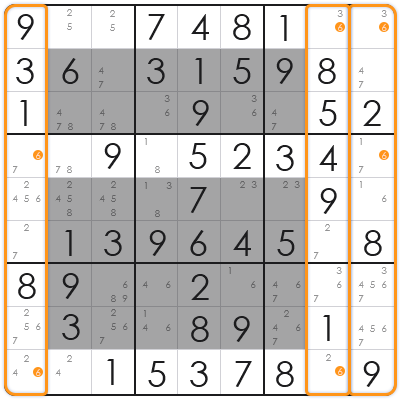
How do you play Sudoku without guessing refers to the systematic application of deductive reasoning and pattern recognition to solve Sudoku puzzles, ensuring every number placed is logically proven rather than assumed. This approach transforms Sudoku from a game of chance into a rigorous exercise in pure logic, providing a satisfying and intellectually stimulating experience that builds verifiable solutions from the ground up. From a framework perspective, the significance of a guess-free methodology extends beyond mere puzzle-solving; it cultivates a highly disciplined mindset essential for complex problem-solving in any analytical field. It compels the solver to meticulously analyze the grid, identify absolute certainties, and systematically eliminate possibilities, mirroring advanced strategic thinking in professional contexts. The primary problem this methodology solves in the current landscape of casual Sudoku play is the frustration and inefficiency caused by trial-and-error. Guessing frequently leads to dead ends, requiring extensive backtracking and often resulting in incorrect solutions or an inability to complete the puzzle. The guess-free approach eradicates these pitfalls, offering a clear, methodical path to resolution based solely on the inherent rules of the game.
The Foundational Principles of Guess-Free Sudoku
The foundational principles of guess-free Sudoku involve understanding and consistently applying basic logical rules to ascertain the correct placement of numbers without any arbitrary choices. This systematic approach ensures that every digit entered into the 9×9 grid is backed by irrefutable logic, adhering to the core Sudoku constraints that each row, column, and 3×3 block must contain the digits 1 through 9 exactly once.
Based on structural analysis, the most fundamental techniques include ‘Naked Singles’ and ‘Hidden Singles.’ Naked Singles are identified when a cell has only one possible candidate number remaining after all other candidates have been eliminated from its row, column, and 3×3 block. Conversely, a Hidden Single occurs when a candidate number can only be placed in one specific cell within a given row, column, or block, even if that cell has other candidates for different numbers.
Furthering candidate elimination, the technique of ‘cross-hatching’ systematically scans rows and columns for a given number to determine its potential placements within each 3×3 block. By eliminating cells that already contain the number in their respective row or column, the remaining possible positions for that number within the block become evident. This method drastically reduces the candidate set for many cells.
From a practical perspective, mastering these foundational elements also involves recognizing ‘Naked Pairs,’ ‘Naked Triples,’ and ‘Naked Quads.’ These occur when two, three, or four cells within a row, column, or block contain an exclusive set of two, three, or four candidate numbers, respectively, allowing these candidates to be eliminated from all other cells within that scope.
Applying Advanced Deductive Strategies
Applying advanced deductive strategies in Sudoku without guessing involves moving beyond basic eliminations to identify more complex patterns and relationships between candidates that lead to further eliminations or direct placements. These strategies require a deeper analytical dive into the grid, often leveraging candidate interactions across multiple units simultaneously.
In practical application, the first crucial step is comprehensive candidate marking and grid annotation. Every empty cell should be filled with all possible candidate numbers. This exhaustive notation forms the basis for identifying intricate patterns, making it easier to spot relationships and apply advanced techniques. Incomplete or inaccurate candidate lists are a frequent mistake that hinders progress.
Advanced techniques often begin with ‘Hidden Pairs’ and ‘Hidden Triples’ which are more subtle than their ‘Naked’ counterparts. A Hidden Pair (or Triple) exists when two (or three) specific candidate numbers are only found in two (or three) particular cells within a row, column, or block, even if those cells also contain other candidates. This allows all other candidates in those specific cells to be eliminated, revealing a ‘Naked Pair’ (or Triple) within those cells.
Building on inter-unit relationships, ‘X-Wing’ and ‘Swordfish’ patterns are powerful strategies. An X-Wing involves two rows (or columns) where a specific candidate number appears in exactly two cells, and these four cells form a rectangle. This pattern allows the candidate to be eliminated from other cells in the two columns (or rows) involved. Swordfish extends this logic to three rows and three columns, identifying a similar exclusionary pattern.
For the most challenging puzzles, ‘Forcing Chains’ and ‘Remote Pairs’ become indispensable. Forcing Chains involve tracing the logical consequences of a candidate being true or false in a cell, propagating these implications across the grid to reveal a contradiction or a certain placement. Remote Pairs are similar to forcing chains, identifying instances where a pair of candidates in two cells must be true in one order or the other, allowing eliminations in cells that ‘see’ both possibilities.
Systematic Sudoku vs. Heuristic Approaches
How systematic Sudoku without guessing compares to heuristic approaches is primarily through its emphasis on provable certainty over intuitive estimation, leading to fundamentally different outcomes in terms of reliability and efficiency. Based on structural analysis, systematic methods strictly adhere to logical deduction, whereas heuristic methods often involve educated guesses or trial-and-error.
From a comparative perspective, their differences manifest across several key dimensions. Regarding **Complexity**, systematic Sudoku is initially higher due to the need for learning and recognizing numerous patterns and relationships, but it simplifies the path to a solution. Heuristic approaches are simpler to start but quickly become complex due to extensive backtracking when errors occur. In terms of **Efficiency**, systematic methods offer a direct, streamlined path to the solution, minimizing wasted effort. Heuristic methods are often inefficient, characterized by circular reasoning and frequent dead ends.
Regarding **Reliability**, the guess-free method provides 100% logical proof for every step, guaranteeing a correct solution without arbitrary choices. Heuristic methods, by their nature, carry a significant risk of introducing errors and often do not guarantee a unique, correct solution. The **Learning Curve** for systematic Sudoku is steeper as it demands a comprehensive understanding of various techniques and their application. Conversely, heuristic approaches have a shallower initial learning curve, relying on intuitive placement, but they fail to equip the solver for harder puzzles or ensure accuracy.
Navigating Challenges in Pure Logical Deduction
Navigating challenges in pure logical deduction for Sudoku involves recognizing common pitfalls that can impede a guess-free resolution and proactively applying strategic solutions to overcome them. These challenges often stem from incomplete analysis or an over-reliance on a limited set of techniques.
One frequent mistake is an over-reliance on basic techniques, such as Naked and Hidden Singles, even when they no longer yield progress on a complex puzzle. Professional advice dictates developing a hierarchical understanding of strategies, progressively moving to advanced techniques like X-Wings or Forcing Chains when simpler methods stall. Failing to transition to higher-level analysis is a critical bottleneck.
Another pitfall is inaccurate or incomplete candidate marking, which can lead to missed opportunities for eliminations or even incorrect placements. In practical application, it’s crucial to double-check all candidate lists for each cell meticulously. Consistent verification of eliminations and thorough candidate generation prevents erroneous deductions. Furthermore, the inability to discern advanced patterns like ‘Turbot Fish’ or ‘Skyscraper’ can be challenging; consistent practice with these specific patterns, perhaps using dedicated pattern recognition exercises, is the solution.
Strategic Benefits: Why Guess-Free Sudoku Elevates Cognitive Acuity
The strategic benefits of adopting a guess-free Sudoku methodology are profound, significantly elevating cognitive acuity by fostering analytical rigor, meticulous attention to detail, and systematic problem-solving skills that transcend the puzzle itself. This approach refines mental processes, making them more robust and efficient.
From a framework perspective, engaging in guess-free Sudoku profoundly enhances one’s analytical thinking capabilities. It demands the identification of subtle patterns, the evaluation of multiple logical paths, and the precise deduction of consequences, all of which strengthen critical reasoning and complex data interpretation. This fosters a heightened attention to detail, as overlooking a single candidate or pattern can halt progress.
In practical application, the disciplined mental exercise inherent in solving Sudoku without guessing develops transferable skills that are invaluable in professional and academic settings. It builds resilience in the face of complex challenges, improves decision-making under constrained conditions, and cultivates the patience required for systematic investigation. These attributes are foundational for any individual operating within a field demanding high-level logical deduction and verifiable outcomes.
Key Queries on Guess-Free Sudoku Methodologies
Common questions regarding how to play Sudoku without guessing often revolve around the feasibility, identification of ‘guesses,’ and the most challenging aspects of this rigorous approach. Addressing these provides clarity for aspiring guess-free solvers.
**Q: Is it possible to solve any Sudoku without guessing?** A: Yes, based on structural analysis, all valid Sudoku puzzles that have a unique solution can be solved entirely through pure logic and deductive reasoning, without the need for any arbitrary guesses or trial-and-error. The challenge lies in identifying the necessary advanced techniques.
**Q: How do I identify a ‘guess’ in Sudoku?** A: A ‘guess’ occurs when you place a number in a cell where multiple valid candidates still exist, and you lack a definitive logical rule or pattern to eliminate all but one. If your placement is not 100% provable by existing grid information, it’s a guess.
**Q: What is the hardest part of guess-free Sudoku?** A: From a framework perspective, the hardest part is often identifying and applying the most advanced elimination patterns (like X-Wings, Forcing Chains, or Jellyfish) when basic techniques yield no further progress. This requires extensive practice and pattern recognition. **Q: Can I use this method for daily puzzles?** A: Absolutely. Applying guess-free strategies consistently will not only improve your accuracy but also significantly enhance your speed, even on easier daily puzzles, by reinforcing strong logical habits.
In conclusion, embracing the methodology of how do you play Sudoku without guessing is far more than a recreational pursuit; it is a profound exercise in logical deduction and systematic problem-solving that yields substantial cognitive benefits. This approach, rooted in verifiable logic and meticulous analysis, eliminates the inefficiencies of guesswork and instills a disciplined mindset applicable across myriad analytical domains. The long-term strategic value lies in cultivating a robust analytical framework, enhancing critical thinking, and fostering an unwavering commitment to provable solutions, positioning individuals to tackle complex challenges with unparalleled precision and confidence within any demanding field of logical deduction strategy.