

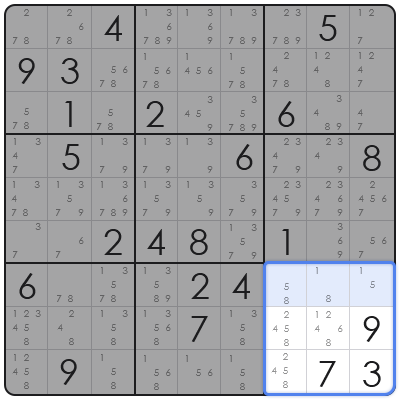
In the realm of analytical problem-solving, understanding the fundamental mathematical properties of popular logic puzzles is crucial. The question, “how much does sudoku add up to,” directly addresses a core numerical characteristic of the ubiquitous 9×9 grid puzzle. This seemingly simple query unlocks deeper insights into the structural integrity and inherent balance designed into every valid Sudoku. A completed standard 9×9 Sudoku grid adheres to a strict set of rules, requiring each row, column, and 3×3 block to contain all digits from 1 to 9 exactly once. This design principle ensures that the sum of the numbers within any given row, column, or 3×3 block is always constant. This consistency is not accidental; it is the mathematical bedrock upon which the entire puzzle’s solvability rests. The primary problem that understanding Sudoku’s inherent sums solves in the current landscape of logical challenges is validation. For enthusiasts and developers alike, knowing these fixed sums provides an immediate and irrefutable method to verify the correctness of a completed puzzle. Furthermore, from a framework perspective, it offers a foundational understanding for generating valid puzzles and for developing algorithmic solutions.
Understanding the Arithmetic Core of Sudoku Sums
Understanding how much a Sudoku grid adds up to begins with its foundational constraints. Each row, each column, and each of the nine 3×3 sub-grids (often called ‘blocks’ or ‘regions’) in a standard 9×9 Sudoku puzzle must contain all the digits from 1 to 9, with no repetitions. Based on structural analysis, this fundamental rule dictates the sum of these elements.
The sum of the digits from 1 to 9 can be calculated using the arithmetic series formula n*(n+1)/2, where n=9. This yields 9 * (9 + 1) / 2 = 9 * 10 / 2 = 45. Therefore, the sum of all digits in any given row, column, or 3×3 block of a completed Sudoku grid is precisely 45. This constant value is a hallmark of a correctly solved puzzle and a critical entity in its design.
Extending this principle, the total sum of all numbers across the entire 9×9 Sudoku grid is also easily derivable. Since there are 9 rows, and each row sums to 45, the total sum is 9 multiplied by 45, which equals 405. Similarly, if we consider the 9 columns or the 9 blocks, the result remains consistent at 405. This numerical consistency is a powerful validation tool.
How to Verify Sudoku Sums: A Step-by-Step Guide
Verifying the sums within a completed Sudoku grid is a straightforward process that confirms its mathematical validity. In practical application, this method serves as an initial check for correctness before delving into individual cell logic. Here’s a numbered guide to execute this verification efficiently.
1. **Calculate Row Sums:** For each of the nine rows, sum all the digits present. A correctly completed Sudoku will show that every row’s sum is exactly 45. Any deviation indicates an error, such as a missing digit, a repeated digit, or an incorrect digit.
2. **Calculate Column Sums:** Similarly, for each of the nine columns, sum all the digits from top to bottom. Every column should also yield a total of 45. This step provides an orthogonal check, ensuring that errors missed in row checks might be caught here.
3. **Calculate 3×3 Block Sums:** Finally, examine each of the nine 3×3 sub-grids. Sum the digits within each block. Just like rows and columns, each block must sum to 45. This is often the most critical check as errors in blocks can be harder to spot visually.
4. **Verify Total Grid Sum:** As an overarching check, sum all the individual sums from the rows (or columns, or blocks). The final grand total should be 405. This confirms that the entire grid adheres to the mathematical properties of a solved Sudoku.
Sudoku Summation: A Comparative Perspective in Grid Logic
When examining how much Sudoku adds up to, it’s beneficial to compare its summation properties with other grid-based logic puzzles. From a framework perspective, while many puzzles involve numbers, the specific fixed-sum characteristic of Sudoku stands out due to its inherent simplicity and elegance. This comparison highlights Sudoku’s unique mathematical identity.
Kakuro, for instance, also involves placing digits in a grid, but its objective is to ensure that digits within designated ‘runs’ (across or down) sum to a specific clue number. Unlike Sudoku, where the sum of 45 is implicit and fixed for all standard rows, columns, and blocks, Kakuro’s sums are explicit and vary across different sections of the puzzle. This difference introduces a higher degree of localized sum calculation complexity.
Magic Squares, an ancient form of numerical puzzle, require that the sum of the numbers in each row, each column, and both main diagonals be the same ‘magic constant.’ While similar to Sudoku’s fixed row/column sums, Magic Squares do not impose the ‘no repetition’ rule within individual rows/columns or 3×3 blocks, nor do they strictly adhere to using only digits 1-9 for a general case. The fixed digit range and repetition constraint are unique to Sudoku, making its sum property universally predictable without explicit clues.
Navigating Misconceptions in Sudoku Sum Calculations
Despite the straightforward nature of Sudoku’s sums, common pitfalls can lead to miscalculations or misunderstandings. Avoiding these mistakes is essential for accurate verification and deeper puzzle comprehension. Based on structural analysis, recognizing these traps allows for more robust analytical problem-solving strategies.
One frequent mistake is assuming the sum applies to partially filled grids. The sum of 45 for rows, columns, and blocks is strictly applicable only to *completed* and *valid* Sudoku grids where all digits from 1 to 9 are present without repetition in the respective segments. An incomplete grid will, by definition, have lower sums, making this a common source of confusion for beginners attempting to use sums as a solving heuristic during the solving process itself.
Another pitfall is misinterpreting the ‘no repetition’ rule. Some might mistakenly think that the sum of 45 is the only critical factor, overlooking the requirement that digits 1-9 must appear *exactly once* in each segment. For example, a row containing ‘1, 1, 1, 1, 5, 5, 5, 5, 21’ would sum to 45 but would not be a valid Sudoku row due to repeated and out-of-range digits. Professional advice: always confirm both the sum and the unique digit constraint simultaneously for full validity.
Frequently Asked Questions About Sudoku Totals
**Q: What is the total sum of numbers in a solved 9×9 Sudoku grid?** The total sum of all numbers in a completely solved standard 9×9 Sudoku grid is 405. This is derived from 9 rows each summing to 45.
**Q: Why does each row, column, and block in Sudoku sum to 45?** Each row, column, and 3×3 block contains all digits from 1 to 9 exactly once. The sum of these digits (1+2+3+4+5+6+7+8+9) is 45.
**Q: Can I use the sum of 45 to solve an incomplete Sudoku puzzle?** While knowing the sum of 45 helps validate a completed puzzle, it is generally not a direct solving strategy for incomplete puzzles. It can, however, be used as a final check or to identify immediate errors.
**Q: Do larger Sudoku grids (e.g., 16×16) have different sums?** Yes, larger Sudoku grids use a different range of numbers and thus have different sums. For example, a 16×16 grid using digits 1-16 would have rows/columns/blocks summing to 16*(16+1)/2 = 136.
**Q: Is the sum of 45 important for all Sudoku variants?** The sum of 45 is specific to standard 9×9 Sudoku. Variants like Killer Sudoku involve explicit sums as part of their rules, while other variants might have different number ranges or rules that alter the expected sums.
In conclusion, the mathematical constant behind “how much does sudoku add up to”—a sum of 45 for each row, column, and 3×3 block, and a grand total of 405 for the entire grid—is far more than a mere numerical fact. It represents the profound elegance and structural integrity of the Sudoku puzzle. From a framework perspective, this inherent arithmetic forms the bedrock of its design, offering robust validation for solutions and a foundational understanding for advanced puzzle generation and algorithmic development. Recognizing these sums transforms the perception of Sudoku from a simple number placement game to a masterclass in logical and mathematical balance, underscoring its enduring value in analytical problem-solving.