

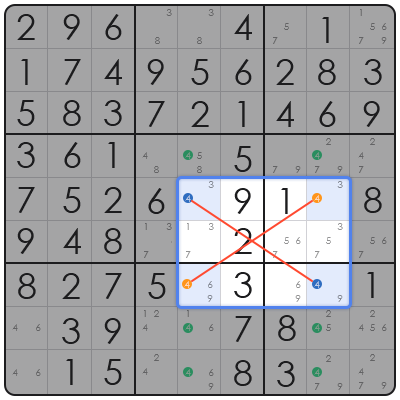
Checking if a Sudoku puzzle is valid fundamentally means verifying that its current state adheres to the game’s intrinsic rules across all dimensions. This validation process is critical in diverse applications, from automated puzzle generators and online game platforms to educational tools, ensuring the integrity and solvability of the presented grid. The primary problem it solves is preventing the presentation of an unsolvable or incorrectly configured puzzle, which would frustrate users and undermine the system’s reliability. A robust validation mechanism guarantees that any given Sudoku grid, whether partially filled or fully completed, meets the fundamental mathematical and logical constraints before any further processing or interaction. From a framework perspective, implementing an efficient Sudoku validation function is a cornerstone of quality assurance in any Sudoku-related software. It establishes the foundational truth of the puzzle’s state, enabling subsequent logic for solving, hint generation, or difficulty assessment to operate on a guaranteed valid dataset. This ensures a consistent and predictable user experience, upholding the game’s inherent challenge without introducing artificial errors.
The Foundational Logic: Deconstructing Sudoku Validity
To check if a Sudoku is valid, one must verify three immutable rules: each row must contain the digits 1-9 exactly once, each column must contain the digits 1-9 exactly once, and each of the nine 3×3 subgrids must contain the digits 1-9 exactly once. Any deviation from these rules, even a single duplicate or missing number within the specified ranges, renders the Sudoku invalid.
Based on structural analysis, the core principle is uniqueness within defined subsets. The 9×9 grid is systematically segmented into these three types of subsets: 9 rows, 9 columns, and 9 blocks. A valid Sudoku state requires absolute adherence to the unique digit constraint (1-9) within each of these 27 distinct subsets, ignoring empty cells if the check is for a partially filled puzzle.
In practical application, an empty cell (often represented by 0 or a null value) in a partially filled Sudoku does not inherently invalidate it. The check focuses on the filled cells, ensuring no conflicts exist among them. If the puzzle is fully completed, then all cells must contain digits 1-9, and all three rules must be satisfied perfectly.
Algorithmic Approaches: A Step-by-Step Validation Process
An effective way to check if a Sudoku is valid involves iterating through each of the 27 subsets (9 rows, 9 columns, 9 3×3 blocks) and applying a uniqueness check. This step-by-step process ensures comprehensive coverage of all validation criteria, often leveraging data structures like hash sets for efficient duplicate detection.
First, initialize three sets of boolean arrays or hash sets, one for rows, one for columns, and one for 3×3 blocks, each capable of tracking digits 1-9. As you iterate through the 9×9 grid (row by row, column by column), for each cell containing a digit (not an empty cell), attempt to add that digit to the corresponding row set, column set, and block set. If any addition fails because the digit is already present, the Sudoku is immediately invalid.
For example, when processing `grid[r][c]`, the digit `d = grid[r][c]` must be checked against `rowSet[r]`, `colSet[c]`, and `blockSet[r/3][c/3]`. If `d` is already in any of these sets, a duplicate is found, and the function can return `false`. If the entire grid is traversed without finding any conflicts, the Sudoku is valid, and the function returns `true`. This approach provides a clear, methodical path for validating any Sudoku grid.
Comparative Analysis of Validation Methods
When considering how to check if a Sudoku is valid, several methodological approaches exist, each with distinct trade-offs in terms of complexity, efficiency, and implementation overhead. The most common methods include direct iteration with auxiliary data structures (like boolean arrays or hash sets), brute-force checking, and advanced bit manipulation techniques, particularly useful in performance-critical environments.
Direct iteration with auxiliary data structures offers a good balance of readability and efficiency. Its time complexity is typically O(N^2) for an N x N Sudoku (where N=9), as it involves a single pass over all cells, with constant-time operations for set insertions and lookups. Space complexity is O(N) for storing the auxiliary sets. This method is widely adopted due to its straightforward implementation and dependable performance.
Conversely, a brute-force approach that re-scans entire rows, columns, and blocks for each cell (without auxiliary structures) would be significantly less efficient, leading to a higher time complexity. While bit manipulation can achieve marginal performance gains by using bitmasks to represent sets of numbers, potentially reducing constant factors and memory footprint, it often comes at the cost of reduced code readability and increased complexity during development and debugging. Thus, for most applications, the auxiliary data structure method represents an optimal blend of efficacy and maintainability.
Navigating Common Pitfalls and Robust Solutions
One frequent mistake when validating Sudoku puzzles is failing to correctly identify the 3×3 subgrid for each cell. The formula for the block index is crucial: `block_row = r / 3` and `block_col = c / 3` (using integer division). Incorrectly mapping cells to their respective blocks will lead to false positives or negatives, rendering the validation unreliable. The solution involves meticulously implementing these index calculations and thorough testing across all block boundaries.
Another common pitfall is mishandling empty cells or invalid input values. If a Sudoku grid can contain empty cells, the validation logic must explicitly ignore these during uniqueness checks, focusing only on the filled digits. Furthermore, if the input might contain digits outside the 1-9 range or non-numeric characters, robust validation requires pre-filtering or error handling for these invalid inputs before proceeding with the core Sudoku rules check, ensuring data integrity.
A third significant oversight is the failure to reset or correctly scope the auxiliary data structures (e.g., hash sets) for each row, column, or block check. Each subset must be evaluated independently. Forgetting to clear a set before checking a new row, for instance, would incorrectly mark a valid Sudoku as invalid due to duplicates found in a *previous* row. The solution lies in careful reinitialization or using distinct data structures for each unique set being checked, as seen in the `rowSet[r]`, `colSet[c]`, `blockSet[r/3][c/3]` example.
Strategic Insights & Best Practices
From a framework perspective, integrating how to check if a Sudoku is valid into a broader application requires considering its role in the overall user flow and system architecture. Implementing this validation as a reusable utility function promotes modularity and reduces redundancy, making it easily callable from various points such as puzzle generation, user input submission, or game state serialization.
In modern software development, adopting a test-driven development (TDD) approach for the validation logic is a best practice. Writing comprehensive unit tests that cover valid grids, invalid grids (with various types of rule violations), partially filled grids, and edge cases ensures the function’s robustness and reliability. This proactive testing minimizes the risk of introducing subtle bugs that could compromise the puzzle’s integrity.
Furthermore, for highly performant systems, such as real-time Sudoku solvers or large-scale puzzle databases, optimizing the validation function is key. While the O(N^2) approach is generally sufficient, understanding the underlying hardware architecture and memory access patterns can inform micro-optimizations. However, priority should always be given to correctness and readability before pursuing marginal performance gains, adhering to the principle of “premature optimization is the root of all evil.”
Frequently Asked Questions on Sudoku Validity
**Q: What exactly makes a Sudoku grid invalid?** A: A Sudoku grid is invalid if any digit (1-9) appears more than once in any row, any column, or any of the nine 3×3 subgrids. Empty cells do not cause invalidity in a partially filled grid.
**Q: Can a partially filled Sudoku be checked for validity?** A: Yes, a partially filled Sudoku can be checked. The validation process focuses only on the filled cells, ensuring no existing conflicts based on the three core rules (rows, columns, 3×3 blocks).
**Q: Is it possible for an unsolvable Sudoku to still be ‘valid’ initially?** A: Yes, an initially valid Sudoku may still be unsolvable if it’s constructed poorly, leading to dead ends without violating the basic rules at the starting point. Validity checks only confirm rule adherence, not solvability.
**Q: What is the most efficient way to implement a Sudoku validity check?** A: The most efficient common method involves a single pass through the grid, using auxiliary data structures like boolean arrays or hash sets to track seen digits for each row, column, and 3×3 block, achieving O(N^2) time complexity.
In conclusion, the ability to accurately check if a Sudoku is valid is more than just a programmatic hurdle; it’s a foundational aspect of maintaining logical consistency and user trust within any Sudoku-centric application. The deep dive into its structural logic, algorithmic implementation, and common pitfalls underscores its strategic value. As the demand for robust and reliable logical puzzle systems grows, mastering this validation process ensures that solutions are not only functional but also inherently sound, setting a high standard for quality assurance in interactive gaming and educational platforms.