

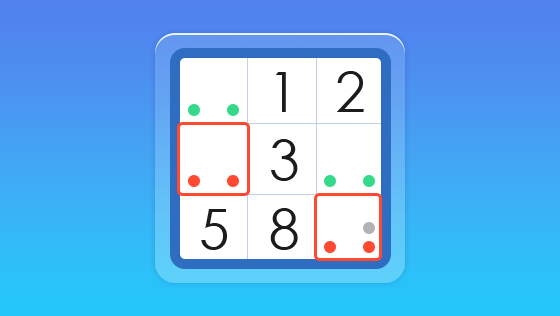
Checking a Sudoku answer is a critical validation process that ensures every digit in the 9×9 grid adheres to the fundamental rules of the puzzle. This process, often overlooked in the pursuit of solving, is paramount for both casual enthusiasts and competitive solvers to confirm the integrity of their solution. From a framework perspective, it’s an exercise in systematic pattern recognition and rule enforcement, providing immediate feedback on the correctness of a completed grid. The primary problem it solves in the current landscape of puzzle-solving is the ambiguity of a ‘solved’ puzzle. Without a robust verification method, a solver might believe they have completed the grid correctly, only to find later that a subtle error invalidates the entire solution. This structured checking procedure eliminates guesswork, transforming an intuitive solve into a verified, logical conclusion. Based on structural analysis, verifying a Sudoku isn’t just about finding mistakes; it’s about reinforcing the core logic that underpins the puzzle itself. It trains the solver to internalize the constraints, thereby improving future solving techniques. This article delves into the meticulous methodology required to confirm a Sudoku solution with absolute certainty, ensuring adherence to every established rule.
Core Principles of Sudoku Verification
Checking a Sudoku answer relies fundamentally on validating three core rules: each row must contain digits 1-9 exactly once, each column must contain digits 1-9 exactly once, and each of the nine 3×3 sub-grids must contain digits 1-9 exactly once. These principles form the bedrock of Sudoku’s logical structure, and any deviation in a single cell invalidates the entire solution.
From an analytical standpoint, the uniqueness constraint within each segment (row, column, and block) means that no digit can be repeated. This isn’t merely about presence but also about exclusivity. If a digit ‘5’ appears twice in a row, for example, that row fails the verification, indicating an error. Conversely, if a digit is missing from a segment, that also constitutes an error, as each segment must contain all digits from 1 to 9.
This verification process is essentially a comprehensive audit of the grid’s numerical distribution. It requires a meticulous, cell-by-cell or segment-by-segment approach, ensuring that every part of the 9×9 matrix adheres to the established logical framework. Understanding these core principles is the first step towards an efficient and accurate Sudoku check.
Understanding the Three Sudoku Rules in Detail
The first rule mandates that every row, from the top-most to the bottom-most, must contain the digits 1 through 9, with no repetitions. In practical application, this means scanning horizontally across each row. If you encounter a duplicate number or a missing number from the 1-9 set, the row is incorrect. For instance, a row containing ‘1,2,3,4,5,6,7,8,8’ is immediately identifiable as flawed due to the repeated ‘8’.
Secondly, each column, from the left-most to the right-most, must also contain the digits 1 through 9, each appearing only once. This vertical inspection mirrors the horizontal one. A common mistake is to fix a row issue and inadvertently create a column issue. Therefore, systematic cross-referencing is crucial. An analytical approach involves temporarily highlighting numbers within a column as you check them off, ensuring no number is duplicated or omitted.
Finally, the grid is divided into nine 3×3 sub-grids, often called ‘blocks’ or ‘regions’. Each of these smaller squares must also contain the digits 1 through 9 exactly once. This rule often catches errors that horizontal and vertical checks might miss, particularly when numbers are correctly placed within a row or column but incorrectly within their respective 3×3 block. Visualizing these nine blocks and checking them individually is an indispensable part of the overall verification strategy.
Systematic Verification Process for Sudoku Answers
The systematic verification process for how to check sudoku answer begins with a clear, methodical approach to examining the grid. First, begin by checking each of the nine rows individually. For each row, quickly scan for duplicate numbers. A visual method involves scanning each row for duplicates, or mentally ticking off numbers 1 through 9 as they are encountered. Any repetition or omission in a row flags an immediate error.
Once all rows have been verified, proceed to check each of the nine columns. This is a crucial second pass. Similar to rows, scan vertically down each column, ensuring that every digit from 1 to 9 appears exactly once. It’s not uncommon for a row-correct solution to be column-incorrect, necessitating this separate verification step. Based on structural analysis, consistency across both axes is fundamental.
Finally, and equally important, verify each of the nine 3×3 sub-grids (blocks). Start with the top-left block, then move across to the middle-top and top-right, before proceeding to the next row of blocks. Within each 3×3 block, confirm that all digits from 1 to 9 are present and unique. This three-pronged approach – rows, then columns, then blocks – is the most reliable way to ensure a complete and correct Sudoku solution.
Digital vs. Manual Verification Techniques
Verifying a Sudoku solution can be accomplished through both manual and digital techniques, each with its own advantages and contexts. Manual verification, typically done with a pen and paper or by eye, relies on the solver’s meticulous attention to detail and ability to systematically apply the three rules. This method enhances cognitive skills and reinforces the understanding of Sudoku logic, but it is prone to human error, especially in complex grids or when fatigue sets in.
Digital verification, conversely, leverages algorithms and software applications to instantaneously check a completed grid. Online Sudoku solvers or dedicated mobile apps often include a ‘check’ or ‘verify’ function that highlights errors immediately. From a framework perspective, these tools parse the grid data and execute predefined checks against the core rules with perfect accuracy and speed, eliminating the risk of oversight inherent in manual methods.
While digital tools offer unparalleled efficiency and reliability for how to check sudoku answer, relying solely on them can diminish the problem-solving benefits of the puzzle. Professional advice often suggests a balanced approach: manual checking for personal growth and immediate feedback, complemented by digital verification for final confirmation or when a persistent error proves elusive. This hybrid strategy combines the best of both worlds, ensuring learning while guaranteeing accuracy.
Comparative Analysis: Sudoku vs. Similar Logic Puzzles
Understanding how to check sudoku answer is illuminated by comparing its verification methods to those of similar logic puzzles. While many puzzles share numerical constraints, the specific rules for verification vary. For instance, Kakuro puzzles involve sums in rows and columns, requiring verification of both number uniqueness within a segment and correct summation. KenKen puzzles add arithmetic operations to the mix, necessitating an additional layer of calculation verification.
Based on structural analysis, Sudoku’s verification is unique in its simplicity of rule application – merely checking for unique digits 1-9 in three distinct segment types. This contrasts with puzzles like Futoshiki, where inequality signs between cells add a directional constraint, or Killer Sudoku, which introduces ‘cages’ with sum requirements. These additional rules introduce more complex points of failure during the checking process.
In practical application, the relative ease of Sudoku checking contributes to its broad appeal. The verification method is straightforward, allowing quick identification of errors without complex calculations. This table provides a comparative overview:
| Puzzle Type | Core Verification Rule | Complexity of Checking | Error Indication (Clarity) | Tools Required |
|————-|————————|————————|————————–|—————-|
| Sudoku | Unique 1-9 in rows/cols/blocks | Low to Medium | High (direct duplicates) | Pen/Paper or App |
| Kakuro | Unique 1-9 and correct sums | Medium to High | Medium (sum or duplicate) | Pen/Paper or App |
| KenKen | Unique 1-N and correct ops | Medium to High | Medium (op or duplicate) | Pen/Paper or App |
| Futoshiki | Unique 1-N and inequalities | Medium | High (direct conflict) | Pen/Paper or App |
Common Verification Pitfalls and Expert Solutions
One of the most frequent mistakes when learning how to check sudoku answer is ‘tunnel vision,’ where a solver focuses too intently on one type of rule check (e.g., only rows) and neglects others. This often leads to solutions that appear correct horizontally but contain glaring errors vertically or within blocks. The professional advice for this is to always perform all three checks—rows, columns, and 3×3 blocks—in a systematic, sequential manner. Do not assume correctness in one dimension implies correctness in others.
Another common pitfall is ‘confirmation bias,’ where a solver subconsciously wants their solution to be correct and therefore overlooks subtle errors. This manifests as rushing through the checks or not double-checking digits that ‘look right.’ A solution to this is to approach verification with a critical, almost skeptical mindset. Treat the grid as if it were solved by someone else and meticulously hunt for errors. Using a different colored pen for verification marks can also help create a psychological separation from the solving process.
A third significant error is ‘incomplete checks’ – failing to check every single row, column, or block. This usually occurs when a solver grows impatient or is overconfident in their abilities. In practical application, ensure you have a method for tracking which segments have been checked. This could be a mental checklist, crossing off rows/columns on a printout, or using a digital tool’s progress indicator. Based on structural analysis, thoroughness is non-negotiable for true verification.
Frequently Asked Questions About Sudoku Checking
What is the fastest way to check a Sudoku answer? The fastest way to check a Sudoku is to systematically scan all rows, then all columns, and finally all 3×3 blocks for duplicates or missing numbers 1-9. Digital tools offer instant verification.
Can a Sudoku have multiple correct solutions? No, a well-posed Sudoku puzzle, by definition, has only one unique solution. If you find multiple valid solutions, the original puzzle was ill-formed or you made an error.
Is it necessary to check every single cell? Yes, checking every cell implicitly by verifying all rows, columns, and 3×3 blocks is absolutely necessary. Even a single incorrect digit invalidates the entire solution.
What if I can’t find the error? If you’ve manually checked multiple times and can’t find an error, use an online Sudoku solver or app’s check function. It will highlight specific incorrect cells, guiding your correction.
Does checking my answer improve my solving skills? Yes, the process of how to check sudoku answer reinforces the puzzle’s rules and common patterns of error, which can significantly enhance your ability to solve future puzzles more accurately.
In conclusion, the methodical approach to how to check sudoku answer is not merely a formality but a foundational element of sound puzzle-solving strategy. By systematically applying the three core rules—uniqueness in rows, columns, and 3×3 blocks—solvers can transition from mere completion to verified correctness. This process, whether performed manually or digitally, cultivates a disciplined approach to problem-solving and reinforces the logical underpinnings of the game. The long-term strategic value lies in fostering meticulousness and analytical rigor, skills transferable far beyond the Sudoku grid. As the industry evolves towards more complex logic puzzles, the ability to perform robust self-verification remains an indispensable asset, ensuring that solutions are not just found, but rigorously proven.