

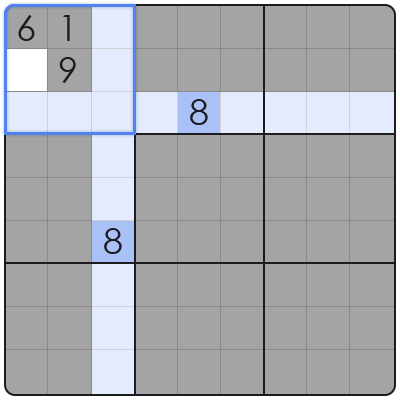
“How to do a very hard Sudoku easily” refers to the application of sophisticated logical deduction and pattern recognition techniques that transform seemingly intractable Sudoku puzzles into solvable challenges, moving beyond basic single-candidate eliminations to advanced grid manipulation. This methodology is less about brute-force speed and more about the systematic reduction of complexity through intricate inference. In an era demanding robust problem-solving capabilities, understanding how to approach complex logical systems, such as hard Sudoku, provides a transferable framework for analytical thinking across various professional domains. It cultivates essential cognitive skills like patience, precision, and the ability to identify subtle interdependencies, which are crucial for effective decision-making in any high-stakes environment. The primary problem this approach solves is the profound frustration and perceived impossibility often associated with high-difficulty Sudoku puzzles, offering a structured pathway to solution where simple trial-and-error or blind guessing inevitably fail. This structured methodology mirrors how complex challenges in data analysis, system diagnostics, or engineering are systematically dismantled and resolved through verifiable logical steps.
Unpacking the Core Mechanics of Advanced Sudoku Solving
Based on structural analysis, the essence of how to do a very hard sudoku easily lies in moving beyond simple candidate elimination to identifying complex patterns and dependencies within the grid. This involves a hierarchical approach to deduction, starting with foundational techniques and progressively escalating to more intricate strategies. Fundamental to this process are techniques like ‘Naked Pairs’ or ‘Hidden Triples,’ where the presence of specific candidate numbers within a unit (row, column, or 3×3 block) restricts their placement, allowing for the elimination of those candidates from other cells within that unit.
From a framework perspective, advanced techniques like ‘X-Wing’ and ‘Swordfish’ exemplify the power of multi-unit analysis, revealing how to do a very hard sudoku easily by leveraging symmetrical candidate distributions. An X-Wing, for instance, involves identifying a candidate number that appears in exactly two cells across two different rows, with those cells also aligning in the same two columns. This structural symmetry allows for the definitive elimination of that candidate from any other cell within those two columns. Similarly, a Swordfish extends this logic to three rows and three columns, creating more extensive candidate eliminations based on an intricate numerical dance across multiple units.
Furthermore, the integration of ‘Forcing Chains’ or ‘Alternating Inference Chains (AIC)’ represents the pinnacle of sophisticated Sudoku strategy, directly addressing how to do a very hard sudoku easily by systematically exploring logical consequences. These chains involve tracing a series of strong and weak links between candidate cells, allowing a solver to deduce the true state of a cell (filled or empty with a specific number) by following a logical path of implications. This iterative process of hypothesis and validation is akin to debugging complex algorithms, where each deduction progressively constrains the solution space until the correct and verified answer emerges.
Systematic Application: A Guided Approach to Complex Grids
In practical application, mastering how to do a very hard sudoku easily requires a disciplined, multi-stage methodology. The initial step always involves a comprehensive scan for basic eliminations, such as ‘Naked Singles’ and ‘Hidden Singles,’ which are often overlooked in the rush to find complex patterns but can dramatically simplify the grid. This foundational pass establishes a critical baseline for all subsequent advanced deductions, ensuring no obvious opportunities are missed before delving into more intricate analysis.
Following the initial comprehensive scan, the solver must systematically apply intermediate techniques, which form the bedrock of how to do a very hard sudoku easily. This includes diligently searching for ‘Naked Pairs/Triples/Quads’ and ‘Hidden Pairs/Triples/Quads’ within each row, column, and 3×3 block. These patterns enable significant candidate reductions. Concurrently, identifying ‘Pointing Pairs/Triples’ and ‘Claiming Pairs/Triples’ helps eliminate candidates from cells outside the containing block, row, or column, further narrowing down possibilities and preparing the grid for more complex operations.
The next crucial phase in how to do a very hard sudoku easily involves deploying pattern-based strategies such as ‘X-Wing,’ ‘Swordfish,’ and their extended forms. These require a broader perspective, often spanning multiple units and demanding careful visualization of candidate flow. A systematic approach means meticulously checking for these patterns for each candidate number across the entire grid. The final stage, when other methods stall, involves employing ‘Forcing Chains’ or ‘Nishio’ techniques, which are essentially educated “what-if” scenarios where a temporary assumption is made about a cell’s value to see if it leads to a contradiction elsewhere in the grid. If a contradiction arises, the initial assumption is proven false, and the alternative value must be correct, thereby advancing the solution logically.
Advanced Sudoku Strategies vs. Heuristic Problem-Solving Paradigms
To truly grasp how to do a very hard sudoku easily, it is beneficial to compare its underlying strategies with other problem-solving paradigms. While basic Sudoku can often be solved through simple brute-force elimination, advanced Sudoku requires sophisticated logical inference, mirroring complex analytical tasks in fields like data science or engineering. The distinction lies in moving from purely deductive, direct implications to inferential reasoning that requires evaluating multiple potential states simultaneously with rigorous certainty.
Consider the efficacy across different problem-solving approaches in the context of complexity and reliability, particularly when addressing how to do a very hard sudoku easily. The following comparative table highlights key dimensions:
| Dimension | Basic Deduction | Brute Force (Guessing) | Advanced Sudoku Techniques |
|—|—|—|—|
| Complexity | Low (Direct) | Medium (Trial & Error) | High (Pattern Recognition & Chains) |
| Efficiency | High (for easy puzzles) | Low (for hard puzzles) | High (for hard puzzles) |
| Cost (Effort/Time) | Low | High (with frequent errors) | Medium-High (initial learning curve) |
| Frequency (Applicability) | Universal (basic grids) | Low (unreliable for hard) | Specific (complex grids) |
This table illustrates that while simple deduction is universally applicable, its efficiency wanes dramatically with increasing complexity. Brute-force guessing, though seemingly low effort initially, quickly escalates in cost due to errors and dead ends. Advanced techniques, despite a higher initial learning curve, offer superior efficiency and reliability for genuinely hard puzzles, proving themselves as the definitive method for how to do a very hard sudoku easily. Based on structural analysis, the “cost” dimension in advanced Sudoku refers not to monetary expense but to the cognitive load and time investment in mastering and applying intricate logical sequences. Unlike heuristic problem-solving, which might rely on educated guesses or rules of thumb, advanced Sudoku demands verifiable, step-by-step logical certainty. This methodical rigor ensures that every move is justified, making the process of how to do a very hard sudoku easily robust and repeatable.
Navigating Obstacles: Mitigating Common Errors in Hard Sudoku
A frequent mistake when learning how to do a very hard sudoku easily is “candidate oversight,” where a solver fails to accurately list all possible candidates for a cell or misses an opportunity for elimination. This often stems from rushing or not systematically checking all three units (row, column, block) for each cell. Professional advice dictates a meticulous, iterative scanning process, perhaps using pencil marks or digital tools to track all candidates explicitly. Periodically re-scanning the entire grid for ‘easy’ eliminations after applying a complex technique can often reveal missed opportunities and prevent logical dead ends.
Another critical pitfall is “chain misinterpretation,” particularly when dealing with advanced techniques like X-Wings, Swordfish, or Forcing Chains. Solvers might incorrectly identify the necessary conditions for these complex patterns or misapply the resulting eliminations. This can lead to logical inconsistencies that only become apparent much later, invalidating significant portions of the work. To avoid this, based on structural analysis, it is essential to re-verify each link in a chain or pattern. A strong recommendation is to verbally articulate the logic (“If this is true, then this must be false, which means…”) to solidify understanding and catch errors before they propagate.
Finally, “premature guessing” is a major impediment to how to do a very hard sudoku easily. When faced with a seemingly stuck grid, the temptation to guess a number and proceed is high. However, truly hard Sudoku puzzles are designed to be solvable through pure logic without arbitrary assumptions. From a framework perspective, guessing introduces an unknown variable that can lead to multiple incorrect branches, wasting valuable time and effort. The solution is to cultivate patience and rigorously search for overlooked patterns or apply a higher-level technique. If an assumption must be made (e.g., in a Nishio technique), ensure it is part of a controlled, verifiable process that allows for immediate backtracking upon contradiction, not a blind leap of faith.
Frequently Asked Questions on Mastering Difficult Sudoku
**Q: What is the single most important skill for how to do a very hard sudoku easily?**
A: The most important skill is systematic candidate tracking. Accurately listing and updating all possible numbers for each empty cell allows complex patterns like X-Wings and Forcing Chains to be identified and applied effectively and efficiently.
**Q: How long does it typically take to learn advanced Sudoku techniques?**
A: The learning curve varies, but with dedicated practice, understanding the mechanics of techniques like X-Wing or Swordfish can take a few weeks. Mastery for how to do a very hard sudoku easily, however, requires consistent application and problem-solving over several months.
**Q: Are there any specific tools recommended for solving very hard Sudoku?**
A: While paper and pencil are traditional, digital Sudoku apps with robust candidate tracking features or “hint” functions (used sparingly for learning) can be highly beneficial. Some even visualize complex patterns to aid in educational and analytical understanding.
**Q: Can how to do a very hard sudoku easily skills be applied to other areas?**
A: Absolutely. The logical deduction, pattern recognition, and systematic problem-solving developed through hard Sudoku are directly transferable to complex analytical tasks in fields such as programming, engineering, data analysis, and strategic planning, enhancing overall cognitive flexibility.
**Q: What is the difference between a “hard” and “very hard” Sudoku?**
A: A “hard” Sudoku might primarily require intermediate techniques like Hidden Pairs or Pointing Pairs to solve. A “very hard” Sudoku for how to do a very hard sudoku easily typically demands advanced strategies like X-Wings, Forcing Chains, or Jellyfish, where basic methods alone will not suffice for a solution.
The journey towards how to do a very hard sudoku easily is less about innate genius and more about cultivating a rigorous, analytical mindset. By systematically applying advanced logical frameworks, individuals can demystify seemingly impossible puzzles, transforming complex grids into solvable challenges with precision and confidence. This mastery extends far beyond the realm of numerical puzzles, offering profound implications for enhancing critical thinking, intricate problem-solving, and strategic planning in any professional domain. The strategic value lies in building resilience against complexity, an invaluable asset in an increasingly intricate world, ensuring a forward-looking industry insight into robust analytical methodologies.