

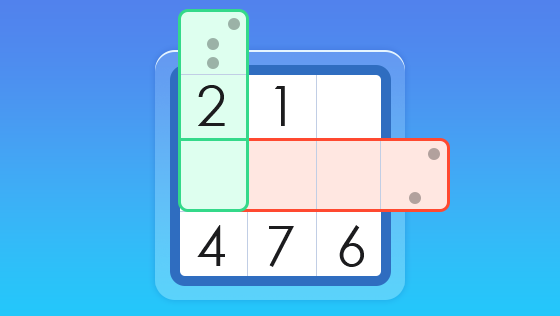
To figure out a Sudoku puzzle is to engage in a sophisticated exercise of deductive reasoning, pattern recognition, and systematic elimination within a predefined grid framework. Originating from Switzerland and popularized in Japan, Sudoku has transcended its recreational roots to become a recognized tool for enhancing cognitive flexibility and problem-solving skills across various demographics, making it a compelling subject for strategic analysis. From a cognitive strategy perspective, the primary problem Sudoku addresses is the human inclination towards heuristic biases and incomplete logical pathways, offering a structured environment to hone meticulous analytical processing. It demands the application of precise rules, encouraging the development of methodical thinking that can be extrapolated to complex decision-making scenarios in professional environments. Based on structural analysis, mastering Sudoku involves more than mere number placement; it requires a deep understanding of logical dependencies and the anticipation of future states within the puzzle. This article will deconstruct the methods and underlying principles for solving Sudoku, providing a definitive guide for practitioners seeking to elevate their logical reasoning capabilities.
Foundational Principles of Sudoku Resolution
Foundational principles of Sudoku resolution involve understanding the core rules and structural elements that govern the puzzle’s constraints and possibilities. A standard Sudoku grid is a 9×9 matrix, subdivided into nine 3×3 smaller blocks, requiring that each row, each column, and each of these nine 3×3 blocks contain all digits from 1 to 9 exactly once.
From a framework perspective, these three fundamental constraints—row, column, and block uniqueness—form the immutable logical boundaries within which all deductions must occur. Identifying ‘naked singles’ or ‘hidden singles’ is often the initial step; a naked single is a cell where only one possible digit can be placed, given its row, column, and block constraints, while a hidden single is a digit that can only appear in one specific cell within a given row, column, or block.
In practical application, the ability to rapidly scan the grid for these fundamental opportunities is paramount. This initial pass eliminates a significant number of possibilities, simplifying the grid and revealing further deductions. Understanding the interplay between these core constraints allows for the systematic reduction of candidate numbers for each empty cell.
Systematic Approach to Sudoku Implementation
A systematic approach to Sudoku implementation involves a series of progressively advanced techniques designed to methodically fill the grid when basic singles are no longer apparent. After identifying all obvious singles, the next step typically involves ‘cross-hatching’ or ‘scanning,’ where one focuses on a specific digit and eliminates its possible positions across rows, columns, and blocks.
Based on structural analysis, ‘candidate listing’ is a critical technique where every empty cell is annotated with all possible digits it could contain, given the existing numbers in its row, column, and block. This comprehensive overview often reveals patterns such as ‘naked pairs,’ ‘naked triplets,’ or ‘hidden pairs,’ where two or three specific digits can only occupy two or three specific cells within a confined area (row, column, or block), thus eliminating those digits as candidates from other cells in that same area.
From a framework perspective, implementing these advanced strategies requires persistent iterative analysis. When one set of candidates is eliminated, it often creates new opportunities for singles or other deductions. This recursive process, combined with careful notation and back-tracking for errors, forms the backbone of efficient Sudoku resolution.
Comparative Analysis of Puzzle-Solving Techniques
A comparative analysis of puzzle-solving techniques reveals that while Sudoku emphasizes pure deductive logic, other puzzles introduce different dimensions of complexity and efficiency. For example, KenKen puzzles, while also number-based and grid-constrained, add arithmetic operations (addition, subtraction, multiplication, division) within ‘cages,’ requiring both logical deduction and mathematical calculation.
In terms of complexity, Sudoku’s primary challenge lies in its branching logical paths and the need for meticulous candidate tracking, offering a relatively high efficiency for skilled solvers once the initial grid is set. KenKen, by contrast, often introduces a higher initial cognitive load due to the arithmetic, potentially reducing efficiency for those not adept at mental math, but can sometimes offer more direct paths to solution through its unique cage constraints.
From a framework perspective, another puzzle type, Nonograms (Picross), involves visual logic, where solvers deduce pixel patterns from numerical hints along rows and columns. This type differs significantly from Sudoku’s number-placement, focusing on spatial reasoning and pattern recognition over numerical deduction, leading to a different problem-solving rhythm and set of optimal strategies. Sudoku’s strength lies in its universal logical structure, making it highly accessible and purely dependent on deductive prowess.
Navigating Common Sudoku Solving Pitfalls
Navigating common Sudoku solving pitfalls requires disciplined attention to detail and adherence to systematic methodology to avoid errors that can lead to incorrect solutions. A frequent mistake is rushing through the initial scan, leading to missed ‘naked’ or ‘hidden singles’ and making the puzzle appear harder than it is, thus wasting valuable time on more complex techniques prematurely.
Based on structural analysis, another significant pitfall is the failure to maintain an accurate and up-to-date list of candidate numbers for each cell. When candidates are not properly eliminated or updated after each new digit placement, it can lead to incorrect deductions or contradictory placements later in the solving process, necessitating a full restart or extensive backtracking.
From a framework perspective, the most challenging pitfall for many is guessing when stuck, rather than employing advanced logical techniques or systematically reviewing previous steps. Professional advice dictates that guessing should always be avoided; instead, one should return to earlier stages, re-examine rows, columns, and blocks for overlooked patterns, or meticulously review candidate lists for ‘pairs,’ ‘triplets,’ or ‘pointing/claiming’ techniques that might have been missed.
Frequently Asked Questions on Sudoku Mastery
Q: What is the most effective initial step in solving a Sudoku puzzle? A: The most effective initial step is to systematically scan for ‘naked singles’ and ‘hidden singles’ by checking each row, column, and 3×3 block for cells where only one digit can logically fit, filling these in first.
Q: How can I improve my speed in solving Sudoku puzzles? A: Improving speed comes from consistent practice, developing rapid visual scanning techniques, and mastering advanced patterns like ‘naked pairs’ or ‘x-wing’ strategies, reducing the need for extensive candidate listing.
Q: Is there a specific method for hard Sudoku puzzles? A: For hard puzzles, a combination of candidate listing for every cell, systematic application of ‘naked/hidden pairs/triplets,’ and ‘pointing’ or ‘claiming’ techniques are crucial before considering more advanced (and often less intuitive) methods.
Q: What are ‘pointing’ and ‘claiming’ in Sudoku? A: ‘Pointing’ is when a candidate digit in a block is confined to a single row or column, allowing that digit to be eliminated from other cells in that row/column outside the block. ‘Claiming’ is the reverse, where a candidate in a row/column is confined to a single block, eliminating it from other cells in that block.
Q: Can Sudoku help with real-world problem-solving skills? A: Absolutely. The structured logical deduction, error identification, and systematic approach required for Sudoku directly translate to enhanced analytical thinking and methodical problem-solving in various professional and personal contexts.
Based on structural analysis, figuring out a Sudoku puzzle is more than a pastime; it’s a rigorous exercise in applied logic and cognitive strategy that cultivates critical analytical skills. The systematic identification of patterns, the meticulous elimination of possibilities, and the disciplined adherence to rules foster a mindset valuable in any field demanding precision and methodical problem resolution. From a framework perspective, continued engagement with Sudoku can serve as a potent, accessible tool for maintaining and enhancing cognitive acuity, underscoring its long-term strategic value in personal development and intellectual training, aligning with evolving demands for robust analytical capabilities in an increasingly complex world.