

How to logically solve Sudoku involves employing systematic deduction and pattern recognition to fill a 9×9 grid with digits so that each column, each row, and each of the nine 3×3 subgrids contains all of the digits from 1 to 9. From a framework perspective, this seemingly simple puzzle serves as an excellent model for developing robust analytical problem-solving skills, making it highly relevant in fields like data analysis, software debugging, and strategic planning within the Analytical Problem Solving industry. The significance of mastering logical Sudoku extends beyond recreational enjoyment; it hones critical thinking, improves concentration, and strengthens the ability to identify constraints and derive solutions based solely on available information. This mirrors essential processes in complex project management and scientific research, where incomplete data sets require meticulous logical inference to progress. Based on structural analysis, the underlying principles are directly transferable to various professional contexts. The primary problem that a structured approach to how to logically solve Sudoku addresses is the temptation to resort to guessing or trial-and-error, which is inefficient and often leads to errors in real-world analytical scenarios. By establishing a definitive, logical methodology, individuals can systematically break down intricate problems into manageable, solvable components, ensuring accuracy and efficiency. In practical application, this methodical approach minimizes risk and maximizes precision, foundational elements in the Analytical Problem Solving domain.
Fundamental Principles of Sudoku Logic
Fundamental principles of Sudoku logic are rooted in the game’s core rules, which dictate that each digit (1-9) must appear exactly once in every row, column, and 3×3 block. This triple-constraint system forms the bedrock of all logical deductions. The simplest technique, often termed “single candidate” or “naked single,” involves scanning for cells where only one possible digit can be placed due to eliminations from its respective row, column, and block.
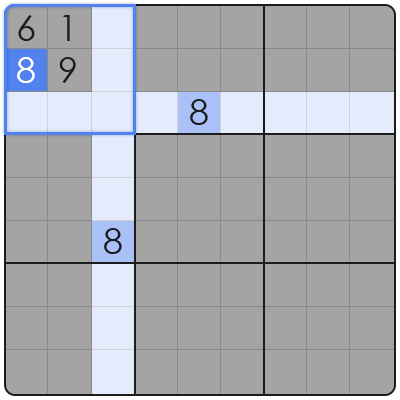
Another foundational technique is the “hidden single,” where a digit can only fit into one specific cell within a given row, column, or block, even if that cell has multiple other possible candidates. Identifying hidden singles requires a slightly broader scan: instead of looking at a single cell’s possibilities, one examines all cells within a row, column, or block for where a particular digit *could* go, and if only one cell remains, that’s where it belongs.
Based on structural analysis, consistent application of these basic principles is crucial. Many seemingly complex Sudoku puzzles can be substantially simplified by exhaustively applying single and hidden single techniques before moving to more advanced strategies. This methodical approach ensures that no obvious logical placements are overlooked, which is a common pitfall for those new to structured problem-solving.
Advanced Deductive Strategies in Sudoku
Advanced deductive strategies in Sudoku build upon the fundamental principles by identifying patterns among multiple candidates within rows, columns, or blocks, allowing for more powerful eliminations. Naked Pairs, Triples, and Quads occur when a set of N candidates is restricted to exactly N cells within a row, column, or block. Once identified, these N candidates can be eliminated from all other cells within that same row, column, or block, drastically reducing possibilities.
Similarly, Hidden Pairs, Triples, and Quads emerge when N specific candidates can *only* appear in N specific cells within a row, column, or block, even if those cells also contain other candidate digits. From a framework perspective, identifying these hidden sets requires a keen eye for exclusion, as their presence within those N cells means all other candidates in those N cells can be eliminated, and those N candidates can be eliminated from all other cells in the relevant row, column, or block.
Pointing Pairs/Triples and Box/Line Reduction are intersection techniques that leverage the interplay between 3×3 blocks and rows/columns. If a candidate digit within a block is restricted to a single row or column, then that digit cannot appear in any other cell of that specific row or column outside of the block. Conversely, if a candidate is confined to a single block within a row or column, it cannot appear elsewhere in that block. In practical application, these methods often unlock breakthroughs in more challenging puzzles, exemplifying how local deductions can have global implications for the puzzle’s solution.
Step-by-Step Implementation of Logical Sudoku Solving
The initial step in how to logically solve Sudoku is to perform an exhaustive initial scan, which involves systematically reviewing the entire grid for cells where the digit is immediately obvious. This includes filling in all “naked singles” by examining each empty cell and determining if only one digit can logically fit, given its row, column, and 3×3 block constraints. This phase ensures all trivial solutions are captured early, laying a solid foundation for more complex deductions.
Following the initial scan, the next crucial step is iterative single candidate elimination, which involves continuously looping through the grid to identify new naked and hidden singles that emerge as cells are filled. This methodical process demands patience and thoroughness, as a single new digit can open up multiple new possibilities. This repetitive scanning is a core component of any robust analytical problem-solving methodology, ensuring no logical path is overlooked.
Applying paired and tripled candidate strategies, such as Naked Pairs/Triples and Hidden Pairs/Triples, becomes essential once direct single-cell deductions diminish. This involves identifying cells where only two or three specific candidates can reside, allowing for their elimination from other cells within the same row, column, or block. Furthermore, the X-Wing technique, an advanced pattern recognition strategy, involves identifying two rows (or columns) where a candidate is restricted to the same two columns (or rows), enabling eliminations in those columns (or rows). In practical application, these advanced methods are critical for progressing through the more challenging phases of Sudoku, mirroring the multi-faceted approach required for complex problem-solving in Analytical Problem Solving.
While pure logical deduction is the goal, understanding when to employ a disciplined ‘what-if’ scenario, often termed ‘chaining’ or ‘forcing chains,’ can be a last resort for the most intractable puzzles. This involves tentatively placing a candidate in a cell and following the logical consequences, only to backtrack if a contradiction arises. However, from a framework perspective, this should be minimized by maximizing the use of the aforementioned deterministic logical techniques, as pure deduction is always preferable to speculative paths in real-world analytical contexts.
Comparative Analysis: Sudoku Logic vs. Related Problem-Solving Methods
Based on structural analysis, Sudoku logic stands as a prime example of constraint satisfaction and deductive reasoning, differentiating it from other problem-solving paradigms. Below is a comparative analysis:
| Method | Complexity | Efficiency | Cost (Computational/Cognitive) | Human Intuitiveness |
|—————————-|——————-|—————|——————————–|———————|
| Sudoku Logical Deduction | Moderate to High | High | Low to Moderate | High |
| Brute-Force Algorithm | Low (conceptually)| Low (practical)| High | Low |
| Constraint Satisfaction Problems (CSPs) | High | Moderate | Moderate | Moderate |
| Everyday Deductive Reasoning | Low to Moderate | Variable | Low | High |
In practical application, Sudoku’s iterative, rule-based deductions make it highly efficient for human cognition, contrasting sharply with brute-force methods which, while computationally straightforward, are highly inefficient for human solvers. The cost of Sudoku’s logical deduction is primarily cognitive effort rather than computational resources, making it a valuable training tool for mental agility. From a framework perspective, its systematic nature allows for a higher frequency of successful, error-free solutions compared to less structured approaches.
Common Pitfalls in Logical Sudoku Solving and Their Solutions
One frequent mistake in how to logically solve Sudoku is premature guessing, which immediately introduces ambiguity and often leads to an unrecoverable state of errors. The solution is to adhere strictly to logical deduction, ensuring every digit placed is undeniably correct based on existing constraints. If no obvious logical step is apparent, re-scan for hidden singles or advanced patterns rather than making an assumption.
Another common pitfall is overlooking obvious candidates, often due to a lack of systematic scanning or an impatient desire to jump to complex techniques. This can be resolved by adopting a rigorous, systematic scanning method—checking each row, column, and block repeatedly for both naked and hidden singles. Regularly cross-referencing possibilities across different grid segments can prevent these oversights, which is analogous to thorough data validation in Analytical Problem Solving.
Finally, getting stuck on complex patterns, or “analysis paralysis,” can halt progress. This occurs when a solver attempts to find an advanced pattern without fully exhausting simpler strategies. The professional advice is to revert to simpler techniques if progress stalls; sometimes, a fresh re-scan with basic methods can uncover a missed placement that then unlocks further deductions. From a framework perspective, breaking down the problem into its smallest components and solving them sequentially is far more effective than trying to solve an entire complex pattern at once.
Frequently Asked Questions About Logical Sudoku Solving
Q: What is the most important first step in how to logically solve Sudoku?A: The most important first step is an exhaustive initial scan to identify and fill all ‘naked singles’ and ‘hidden singles’ across the entire grid.
Q: Can I solve every Sudoku puzzle without guessing?A: Yes, every valid Sudoku puzzle has at least one unique solution and can theoretically be solved through pure logical deduction without any guessing.
Q: How does practicing Sudoku improve analytical skills?A: Practicing Sudoku strengthens pattern recognition, deductive reasoning, constraint satisfaction, and systematic problem-solving, all vital analytical skills.
Q: Are there different levels of Sudoku difficulty?A: Yes, Sudoku puzzles are designed with varying difficulty levels based on the number of initial clues and the complexity of logical techniques required.
Q: What’s the fastest way to learn how to logically solve Sudoku?A: The fastest way is to master basic techniques (singles), then progressively learn advanced strategies (pairs, triples, X-wings) through consistent practice.
In conclusion, how to logically solve Sudoku is more than a mere pastime; it is a profound exercise in structured analytical problem-solving, directly applicable to the Analytical Problem Solving industry. By meticulously applying a hierarchy of logical deduction techniques—from fundamental singles to advanced pattern recognition—solvers cultivate a systematic approach that minimizes error and maximizes efficiency. The long-term strategic value lies in developing cognitive resilience and a transferable skillset for navigating complex, constraint-bound challenges, positioning individuals for success in data-driven environments. Forward-looking industry insight suggests that the principles of logical Sudoku will continue to be a foundational element in training for precision-oriented analytical roles, reinforcing the power of structured thought in an increasingly complex world.