

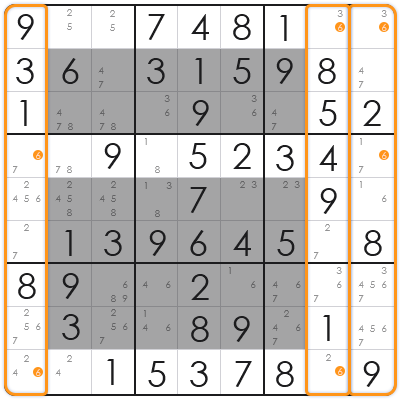
Sudoku, at its core, is a logic-based, combinatorics number-placement puzzle. The objective is to fill a 9×9 grid with digits so that each column, each row, and each of the nine 3×3 subgrids contains all of the digits from 1 to 9. While the premise is simple, its underlying mechanics offer a robust framework for developing critical thinking skills. The significance of engaging with how to play beginner sudoku extends beyond mere entertainment; it serves as an accessible and engaging tool for enhancing logical reasoning, pattern recognition, and systematic problem-solving capabilities. From a Cognitive Strategy and Logical Reasoning perspective, it trains the brain to process constraints and deduce solutions iteratively, a fundamental skill applicable across numerous analytical domains. This structured puzzle primarily solves the problem of providing an accessible entry point to structured analytical thinking for individuals new to logical challenges. By beginning with puzzles featuring more pre-filled numbers, how to play beginner sudoku reduces initial cognitive overload, allowing learners to gradually grasp the fundamental rules and iterative deduction processes, thereby building a strong foundation for more complex problem-solving scenarios.
Dissecting the Grid: The Foundational Rules of Beginner Sudoku
The foundational understanding of how to play beginner sudoku revolves around its unique grid structure and a concise set of rules. The puzzle consists of a 9×9 grid, which is further subdivided into nine 3×3 smaller grids, often referred to as ‘blocks’ or ‘regions’. The objective is to populate every empty cell with a digit from 1 to 9.
Based on structural analysis, the core mechanics dictate three primary constraints: each digit (1-9) must appear exactly once in each row, exactly once in each column, and exactly once in each of the nine 3×3 blocks. For beginners, puzzles typically feature a higher number of pre-filled cells, offering more immediate deductions and reducing the initial search space, which simplifies the entry barrier to this logical exercise.
Understanding these immutable rules is paramount. Every placement decision must respect all three constraints simultaneously. A number placed in a cell not only occupies that spot in its row and column but also within its specific 3×3 block, thereby influencing subsequent placement possibilities across the entire grid. This interconnectedness is what makes Sudoku a powerful exercise in constraint satisfaction.
Identifying Certainties: Initial Digit Placement Strategies for Novices
The initial phase of how to play beginner sudoku involves systematic scanning and identifying ‘certainties’ — digits that can only occupy one specific cell based on the existing numbers. This process begins by methodically examining each row, column, and 3×3 block for missing numbers and evaluating their potential positions. In practical application, this is often the most intuitive starting point.
A key technique for novices is the ‘Single Candidate’ method. This involves selecting a specific number (e.g., ‘1’) and scanning the entire grid, looking for a row, column, or 3×3 block where that number can only be placed in one empty cell. For example, if ‘1’ exists in two rows within a 3×3 block, the ‘1’ in the third row of that block must be in the only remaining empty cell not blocked by a ‘1’ in its corresponding column.
Another fundamental strategy is identifying ‘Naked Singles’. This occurs when a specific empty cell, upon examination of its intersecting row, column, and 3×3 block, can only logically contain one possible digit. By eliminating all other 1-9 possibilities for that single cell, the remaining digit becomes its ‘Naked Single’ and can be confidently placed. These initial certainties cascade, opening up new deduction opportunities across the puzzle.
Refining Your Approach: Intermediate Techniques for Consistent Progress
As proficiency in how to play beginner sudoku grows, players can transition to slightly more advanced, yet equally systematic, techniques. From a framework perspective, these methods build upon the foundational scanning, requiring a deeper look into the possibilities within specific rows, columns, and blocks rather than just isolated cells. This iterative refinement is crucial for tackling puzzles with fewer initial clues.
One such technique is locating ‘Hidden Singles’. This occurs when a specific digit can only be placed in one particular cell within a given row, column, or 3×3 block, even if that cell initially appears to have multiple possible candidates. For example, if you are looking for the number ‘7’ in a row, and after listing all candidates for all empty cells in that row, ‘7’ only appears as a candidate in one specific cell, then that cell must contain ‘7’.
The systematic use of ‘Pencil Marking’ or ‘Candidate Listing’ is an invaluable tool in this phase. This involves lightly noting all possible candidate digits for each empty cell. While time-consuming initially, this explicit documentation allows for visual elimination as new numbers are placed. When a new digit is placed, its effect on surrounding cells (eliminating it as a candidate) becomes immediately clear, leading to further deductions and often revealing Hidden Singles or other patterns that are harder to spot mentally.
Sudoku in Context: A Comparative Analysis with Related Logic Challenges
To understand the unique positioning of how to play beginner sudoku within the landscape of logic puzzles, a comparative analysis with related cognitive challenges is beneficial. Sudoku’s strengths lie in its universal numerical language and clear, unambiguous rules, making it highly accessible globally. This contrasts with puzzles that rely on linguistic knowledge or complex visual patterns.
From a comparative standpoint, while all logic puzzles stimulate cognitive function, they do so through different primary mechanisms. Sudoku emphasizes pure deductive reasoning and pattern recognition based on numerical constraints. Crosswords, conversely, lean heavily on lexical knowledge and contextual understanding, while Nonograms (Picross) engage spatial reasoning and sequential deduction to reveal images.
Below is a comparison highlighting how beginner Sudoku aligns with and differs from other popular logic puzzles across key dimensions, providing insight into its specific cognitive benefits and accessibility profile.
| Feature | Beginner Sudoku | Crosswords | Nonograms |
|—|—|—|—|
| Complexity (Entry) | Low | Medium | Medium |
| Efficiency (Solve Time) | Moderate (Deductive Iterations) | High (Lexical Recall) | High (Pattern Recognition) |
| Cognitive Focus | Deductive Logic, Constraint Satisfaction | Lexical Knowledge, Contextual Reasoning | Spatial Reasoning, Inductive Logic |
| Accessibility | High (Universal Numbers) | Medium (Language Dependent) | High (Visual Interpretation) |
Navigating Challenges: Common Obstacles and Professional Solutions in Sudoku
Even with a clear understanding of how to play beginner sudoku, players frequently encounter common pitfalls that can hinder progress. One prevalent mistake is rushing through placements without thoroughly checking all three constraints (row, column, and 3×3 block). This often leads to early errors that propagate through the puzzle, making it seemingly unsolvable later on. Based on structural analysis, such errors are highly disruptive.
The professional solution to this is to cultivate a habit of meticulous verification. Before committing a digit, always mentally (or physically with pencil marks) confirm that the number does not violate any rule in its immediate environment. If you find yourself stuck, the first professional advice is to backtrack and systematically re-check your last few placements. Often, a single misplaced digit is the root cause of subsequent blockages. Taking a short break and returning with fresh eyes can also highlight overlooked errors or obvious placements.
Another common pitfall is ‘guessing’ when faced with multiple candidates for a cell. For a true how to play beginner sudoku puzzle, pure guessing should never be necessary; every digit can be deduced through logical elimination. In practical application, if you are resorting to guessing, it indicates that you have either missed an earlier deduction or made an error. The solution is to step back, re-evaluate existing numbers, and meticulously list all candidates for the challenging cells, looking for Hidden Singles or patterns you might have overlooked. Patience and methodical deduction are far more effective than speculative placement.
Quick Answers: Essential FAQs for Beginner Sudoku Players
Q: Is Sudoku good for my brain? A: Yes, it actively stimulates logical reasoning, memory, and concentration, enhancing cognitive flexibility for problem-solving across various contexts.
Q: How often should I play Sudoku? A: Consistent engagement, even for 10-15 minutes daily, can significantly bolster logical thinking skills and mental agility over time.
Q: What if I get stuck on a puzzle? A: When stuck, review previous placements for errors, or focus on areas with many pre-filled numbers. Taking a short break often helps reset perspective.
Q: Are there different levels of Sudoku? A: Absolutely. Puzzles range from beginner to expert, typically indicated by the number of pre-filled cells and the complexity of required solving techniques.
Q: Can children play Sudoku? A: Yes, Sudoku is excellent for developing logical reasoning and numerical literacy in children, with simplified versions available for younger learners.
In conclusion, how to play beginner sudoku is more than just a casual pastime; it is a foundational exercise in structured logical deduction, critical pattern recognition, and systematic problem-solving. Its clear rules and accessible entry point make it an invaluable tool for developing cognitive skills that extend far beyond the puzzle grid itself. The strategic value lies in its ability to train the mind to process constraints, identify certainties, and iterate towards a solution, fostering mental agility and precision. From a forward-looking perspective, as industries increasingly demand precise analytical thinking and problem-solving, the mental discipline cultivated by engaging with Sudoku offers a tangible advantage in an ever-complex professional landscape.