

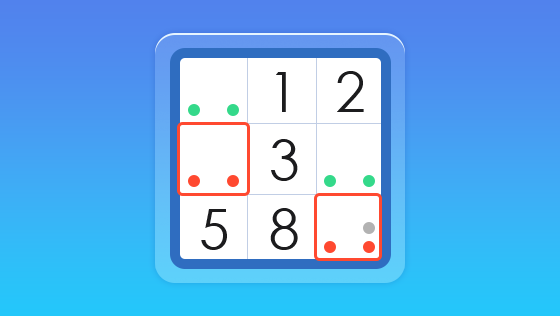
Ice Breaker Sudoku represents a significant evolution in the realm of cognitive gaming and strategic problem-solving, introducing a unique layer of complexity to the classic Sudoku framework. From a framework perspective, this variant fundamentally challenges traditional deductive reasoning by integrating an additional, critical constraint. It is designed to address the problem of familiarity and predictable deduction paths found in standard Sudoku, offering enthusiasts a more intricate and engaging mental exercise. In essence, Ice Breaker Sudoku builds upon the foundational rules of its predecessor: every row, column, and 3×3 block must contain the digits 1 through 9 exactly once. However, its defining characteristic, the ‘ice breaker’ rule, prohibits consecutive numbers from being placed in adjacent cells, whether horizontally or vertically. This seemingly subtle addition creates a profound impact on the puzzle’s solvability, demanding a sophisticated blend of numerical logic and spatial awareness. Based on structural analysis, the significance of this variant lies in its capacity to elevate analytical skills. Players must not only track number placements within traditional Sudoku constraints but also simultaneously monitor the immediate numerical environment of each cell. This dual-constraint environment fosters enhanced pattern recognition, improves constraint satisfaction abilities, and refines strategic foresight, making it a powerful tool in advanced cognitive training within the Cognitive Gaming & Strategic Problem-Solving industry.
Fundamental Mechanics of Ice Breaker Sudoku
The fundamental mechanics of Ice Breaker Sudoku are rooted in a dual system of constraints: the classic Sudoku rules combined with a unique adjacency prohibition. The standard rules dictate that each of the nine rows, nine columns, and nine 3×3 sub-grids must contain all digits from 1 to 9 without repetition. This forms the bedrock of all Sudoku variants, establishing a baseline for numerical placement and elimination.
The defining ‘ice breaker’ rule introduces a critical layer: no two cells sharing a border (i.e., horizontally or vertically adjacent) can contain consecutive numbers. For instance, if a cell contains the digit ‘5’, then its direct neighbors cannot be ‘4’ or ‘6’. This rule acts as a powerful eliminator of candidates, often providing immediate deductions that might not be apparent under standard Sudoku logic alone. Understanding this interaction is paramount for effective play.
From a computational logic perspective, this adjacency rule transforms the puzzle’s solution space. Each candidate number for a given cell must not only satisfy the row, column, and block constraints but also pass a ‘neighbor check’. This significantly reduces the pool of valid numbers for many cells, especially those in highly populated areas of the grid, demanding a constant mental ledger of both placed numbers and their ‘forbidden’ adjacent values. In practical application, this means a solved cell offers deductions far beyond its immediate 3×3 block or line.
Step-by-Step Strategy for Playing Ice Breaker Sudoku
A systematic approach to playing Ice Breaker Sudoku involves integrating the adjacency rule into every stage of deduction, moving beyond a purely standard Sudoku mindset. The initial step, as with any Sudoku, involves a thorough scan for ‘givens’ and obvious single-candidate cells based on row, column, and block constraints. However, immediately after identifying a ‘given’, analyze its neighbors for new eliminations facilitated by the ice breaker rule.
The next crucial step is leveraging the ‘ice breaker’ rule actively to eliminate candidates. When you place a number, say a ‘3’, immediately mark ‘2’ and ‘4’ as invalid candidates for all its adjacent cells. This proactive elimination significantly narrows down possibilities. Pay close attention to cells with few initial candidates from standard Sudoku rules; the ice breaker rule often reduces these candidates to a unique solution far quicker than traditional methods.
Advanced players employ a ‘chain reaction’ strategy. A deduction from the ice breaker rule in one cell can create new conditions for its neighbors, leading to further eliminations and placements. For example, if placing a ‘7’ in a cell eliminates ‘6’ and ‘8’ from its neighbors, and one neighbor already had ‘6’ eliminated by another rule, then ‘8’ becomes the sole remaining consecutive number to eliminate, potentially leading to a placement if other numbers are already absent. This iterative process is central to solving more complex grids. In practical application, this requires a dynamic mental map of the grid, continually updated with new constraints and possibilities.
Comparative Analysis: Ice Breaker Sudoku vs. Other Variants
To contextualize Ice Breaker Sudoku within the broader landscape of cognitive gaming, a comparative analysis against other popular Sudoku variants highlights its unique strategic positioning.
| Variant | Complexity | Efficiency (Deduction Power) | Frequency (Availability) |
|——————–|———————-|——————————|————————–|
| Classic Sudoku | Low | Moderate | Very High |
| Ice Breaker Sudoku | Moderate to High | High | Moderate |
| Killer Sudoku | High (arithmetic) | Moderate | Moderate |
| Jigsaw Sudoku | Moderate (shape-based)| Moderate | High |
From this analysis, Ice Breaker Sudoku stands out for its relatively high efficiency in deduction power once the core rule is mastered. The adjacency constraint offers powerful, often immediate, eliminations that can quickly break open a puzzle, contrasting with the more incremental deductions of Classic Sudoku or the arithmetic-heavy calculations of Killer Sudoku. This efficiency makes it particularly engaging for players seeking a deeper logical challenge without excessive reliance on trial-and-error.
Common Pitfalls and Strategic Solutions in Ice Breaker Sudoku
Navigating Ice Breaker Sudoku effectively requires awareness of common pitfalls that can hinder progress and professional strategies to circumvent them. One frequent mistake is **ignoring the ‘ice breaker’ rule or applying it inconsistently** until later stages of the puzzle. This leads to missed early deductions and prolonged solving times. The solution is to integrate the adjacency rule from the very first numbers placed, treating it with equal importance to the row, column, and block constraints.
Another common pitfall is **over-relying on standard Sudoku logic alone**, failing to fully exploit the unique opportunities presented by the consecutive number prohibition. Players might spend too much time on traditional candidate elimination when the ice breaker rule could offer a quicker path to a solution. The professional advice is to prioritize cells where the adjacency rule creates immediate and powerful eliminations, particularly those next to low or high numbers (e.g., ‘1’ or ‘9’) which have fewer consecutive neighbors.
Finally, **tunnel vision on individual cells or single constraint types** can be detrimental. Players might focus solely on a row or a block, neglecting the cross-pollination of information offered by the ice breaker rule across cell borders. A strategic solution involves developing a holistic view of the grid, consistently scanning for how a number in one cell impacts the candidates in all its direct neighbors, and then how those changes ripple further. Based on structural analysis, this multi-faceted consideration of constraints is key to mastering Ice Breaker Sudoku. In practical application, regular visual sweeps of the entire grid for ‘consecutive threats’ are far more effective than isolated cell analysis.
Frequently Asked Questions About Ice Breaker Sudoku
What defines an Ice Breaker Sudoku? Ice Breaker Sudoku is a variant where, in addition to standard Sudoku rules, no two horizontally or vertically adjacent cells can contain consecutive numbers. This additional constraint dramatically alters solution strategies.
Is Ice Breaker Sudoku harder than regular Sudoku? Generally, yes. The ‘ice breaker’ rule adds a significant layer of logical deduction, requiring players to consider more constraints simultaneously, thus increasing the puzzle’s complexity and requiring enhanced strategic thinking.
Are there online tools for Ice Breaker Sudoku? Yes, various dedicated puzzle websites, mobile applications, and online logic game platforms offer Ice Breaker Sudoku, catering to enthusiasts seeking this advanced variant. Many allow custom difficulty settings.
What’s the best starting strategy for Ice Breaker Sudoku? The optimal starting strategy is to first apply standard Sudoku logic to initial ‘givens’, and then immediately leverage the ‘ice breaker’ rule to eliminate candidates in adjacent cells. This dual approach accelerates deductions from the outset.
How does the ‘ice breaker’ rule benefit cognitive skills? From a cognitive gaming perspective, the ‘ice breaker’ rule significantly sharpens spatial reasoning, enhances pattern recognition, and improves complex constraint satisfaction abilities, fostering a deeper level of analytical thought.
Based on structural analysis, mastering how to play Ice Breaker Sudoku transcends mere puzzle-solving; it represents a robust exercise in advanced logical reasoning and strategic problem-solving. This variant’s unique adjacency constraint elevates it beyond the predictable patterns of classic Sudoku, compelling players to adopt a more integrated and dynamic deductive methodology. The strategic value derived from engaging with such complex cognitive puzzles lies in their capacity to hone critical thinking, adaptability, and foresight—skills highly transferable to real-world challenges in any analytical field. Looking forward, the increasing popularity of specialized Sudoku variants like Ice Breaker Sudoku underscores a growing demand for more intricate and stimulating cognitive engagements within the evolving landscape of intellectual recreation and cognitive training.