

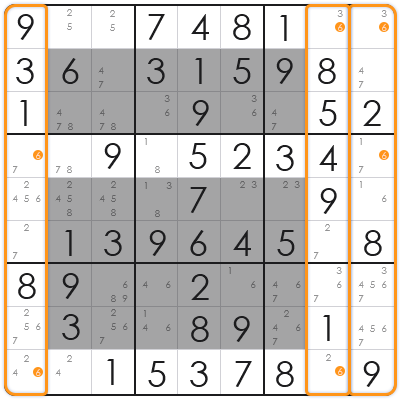
Math Sudoku, often recognized as Killer Sudoku or Sum Sudoku, is a sophisticated numerical logic puzzle that integrates the grid-filling principles of classic Sudoku with a crucial layer of arithmetic constraints. Unlike its traditional counterpart, this variant demands not only logical deduction for number placement but also precise mental arithmetic to satisfy defined sums within specific cell groupings. From a framework perspective, Math Sudoku’s significance in cognitive development and EdTech lies in its ability to foster advanced problem-solving skills, numerical fluency, and combinatorial thinking, moving beyond simple pattern recognition to encompass a deeper engagement with mathematical relationships. It serves as a potent tool for sharpening analytical capabilities in a challenging yet engaging format. The primary problem Math Sudoku addresses in the current landscape is the need for more integrated cognitive challenges that simultaneously engage multiple facets of intelligence. It bridges the gap between pure logic puzzles and arithmetic exercises, offering a holistic brain training experience that enhances both deductive reasoning and computational accuracy, essential skills across various disciplines.
The Underlying Principles of Math Sudoku: Structural Elements and Constraints
Math Sudoku operates on the fundamental rules of classic Sudoku—where each row, column, and 3×3 block must contain digits 1 through 9 exactly once—but introduces ‘cages’ with target sums, which are sets of cells that must add up to a specific number without repeating digits within the cage itself.
Based on structural analysis, the puzzle utilizes a standard 9×9 grid, further divided into nine 3×3 subgrids. The unique layer of complexity emerges from the irregularly shaped, dashed-line enclosures, or cages, that span multiple cells across the grid, each prominently displaying a numerical sum that its constituent digits must achieve.
A critical constraint distinguishing Math Sudoku is the absolute prohibition of repeating digits within any single cage, even if those digits do not belong to the same row, column, or 3×3 block. This rule demands careful consideration of possible digit combinations, preventing solutions based solely on arithmetic without adherence to uniqueness.
This intricate framework necessitates the simultaneous application of standard Sudoku logic and arithmetic deduction. The interplay between these two rule sets significantly elevates the cognitive load and strategic depth required, presenting a more robust challenge for enthusiasts and learners alike.
Step-by-Step Methodology for Solving Math Sudoku
To effectively play Math Sudoku, one should begin by identifying ‘certainty points’ within cages, rows, or columns, gradually expanding the known digits through a systematic process of deduction and elimination. This initial phase focuses on high-probability placements that have few possible combinations.
In practical application, start by seeking cages with small sums involving few cells (e.g., a two-cell cage summing to 3 must be 1+2, irrespective of order) or cages that predominantly occupy cells within a single row, column, or 3×3 block. These offer the quickest initial deductions.
Next, leverage the classic Sudoku rules: once a digit is definitively placed, immediately eliminate it as a possibility in its respective row, column, and 3×3 block. This cross-referencing often reveals new certainty points within adjacent cages or clarifies remaining possibilities for other cells.
From a framework perspective, continuous iteration between arithmetic deduction for cages and standard Sudoku logic is crucial. Players should use pencil marks to note all possible digits for a cell, meticulously ruling out options as new information emerges, thereby systematically filling the grid to uncover the solution.
Advanced Strategies and Navigating Complexity
Advanced Math Sudoku strategies involve employing ‘cage combination analysis’ and ‘sum elimination’ to narrow down possibilities in complex scenarios, moving beyond simple single-cell deductions to consider broader numerical interactions. These techniques are vital for tackling higher-difficulty puzzles.
Based on structural analysis, expert players frequently identify ‘overlapping cages’ or cages that share common cells. By understanding how these shared cells influence the sums of both cages, they can deduce digits more efficiently, often resolving ambiguities that individual cage analysis cannot.
Another sophisticated technique is ‘row/column/block sum analysis’. Since each complete row, column, and 3×3 block must sum to 45 (the sum of digits 1 through 9), knowing the sum of digits already placed or accounted for outside a cage within that particular line or block can help determine the missing sum for cells within the cage.
Furthermore, recognizing ‘unique combinations’ for a given sum and cell count is paramount. For example, a three-cell cage summing to 6 (without repeats) has only one possible combination: 1+2+3. Identifying such unique sets dramatically accelerates progress, especially in intricate sections of the grid.
Common Pitfalls and Strategic Remedies
Common pitfalls in playing Math Sudoku include neglecting to cross-reference classic Sudoku rules with cage sums, making premature digit placements without sufficient confirmation, and miscalculating cage sums or overlooking the unique digit requirement within cages. These errors can quickly lead to an unsolvable state.
A frequent mistake is focusing too heavily on either cage sums or classic Sudoku rules in isolation. Based on structural analysis, the most effective solution is to constantly switch between considering both sets of constraints. If a digit perfectly fits a cage’s arithmetic but violates a row, column, or block rule, it is unequivocally incorrect.
Another pitfall is the premature placement of a digit, assuming it is the only possibility without verifying all intersecting constraints. In practical application, professional advice dictates using pencil marks for all potential digits in a cell. Only ‘ink in’ a digit when it is absolutely confirmed by multiple, undeniable deductions, thereby avoiding cascading errors.
Miscalculating a cage’s sum or forgetting the crucial ‘no repeats within a cage’ rule can derail an entire puzzle. From a framework perspective, double-checking all arithmetic operations and consistently ensuring digit uniqueness within each cage is a fundamental safeguard against errors. Develop a habit of vocalizing or mentally confirming each sum and placement.
Frequently Asked Questions for Math Sudoku Mastery
What is the main difference between Math Sudoku and regular Sudoku? Math Sudoku adds arithmetic ‘cages’ where cells must sum to a specific total, in addition to regular Sudoku’s uniqueness rules in rows, columns, and 3×3 blocks.
Can digits repeat within a cage in Math Sudoku? No, a crucial rule of Math Sudoku is that all digits placed within a single cage must be unique, even if they would otherwise sum correctly.
What’s a good starting strategy for a beginner? Beginners should first look for cages with few cells and small sums, as these often have only one possible combination of unique digits (e.g., 1+2 for a sum of 3).
How does Math Sudoku help with cognitive skills? It significantly enhances numerical reasoning, logical deduction, combinatorial thinking, and mental arithmetic through its combined constraints, fostering holistic brain development.
Is ‘Killer Sudoku’ the same as Math Sudoku? Yes, ‘Killer Sudoku’ is a widely recognized alternative name for Math Sudoku, referring to the exact same type of arithmetic-based logic puzzle.
Math Sudoku transcends a mere pastime; it represents a powerful and comprehensive tool for cognitive enhancement within the realms of cognitive development and EdTech. Its intricate blend of arithmetic and classic logic principles establishes it as a definitive challenge that not only entertains but also significantly sharpens critical thinking, numerical agility, and systematic problem-solving skills. Looking forward, the increasing appreciation for such integrated puzzles underscores a pivotal shift towards more holistic and demanding approaches in brain training and educational gaming, solidifying Math Sudoku’s place as a cornerstone for mental acuity.