

Sudoku Triples represent a cornerstone in advanced Sudoku solving, shifting the strategy from simple candidate eliminations to recognizing intricate patterns within a ‘house’ – be it a row, column, or 3×3 block. From a framework perspective, these advanced techniques are crucial for progressing beyond basic singles and pairs, unlocking complex puzzles that appear to be deadlocked. The primary problem that Sudoku triples solve in the landscape of strategic problem-solving is the stalemate encountered when traditional logic yields no further direct eliminations. They provide a systematic method to reduce the candidate pool by identifying groups of three numbers confined to three specific cells within a unit, thereby enabling crucial breakthroughs. Based on structural analysis, understanding how to play sudoku triples is not just about memorizing a pattern; it’s about internalizing a fundamental principle of logical deduction. This article will delve into the mechanics, application, and strategic significance of triples, empowering solvers to approach even the most challenging Sudoku grids with newfound precision and efficiency.
The Foundational Logic of Sudoku Triples Underpins advanced elimination strategies by identifying three cells in a row, column, or block that collectively contain the same three candidate numbers, allowing for their elimination from other cells in that unit.
At its core, a Sudoku Triple leverages the principle of uniqueness within a confined set. If three specific candidate numbers (e.g., 1, 2, 3) can only exist within three specific cells in a particular house, then those three candidates are ‘owned’ by those three cells. This ownership implies that these candidates cannot exist in any other cell within that same house.
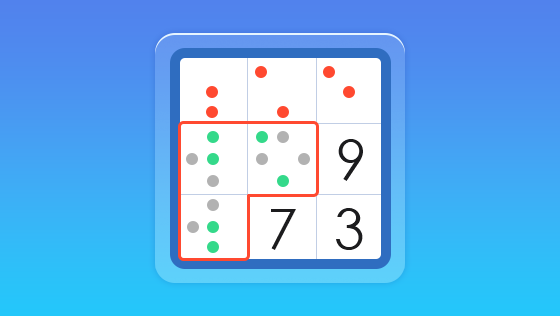
Triples typically manifest in two forms: Naked Triples and Hidden Triples. A Naked Triple is the most straightforward, where three cells in a house explicitly contain only three unique candidates among them (e.g., Cell A has {1,2}, Cell B has {1,3}, Cell C has {2,3}). Once identified, these three candidates (1,2,3) can be eliminated from all other cells in that house.
Hidden Triples, conversely, require a more nuanced approach. In this scenario, three candidates are confined to three specific cells within a house, but those cells may also contain other candidates. The ‘hidden’ aspect means that these three candidates (e.g., 4,5,6) appear only in three particular cells within that house, even if those cells also have other possibilities. All other candidates in those three cells, besides the hidden triple, can then be eliminated.
Applying Sudoku Triples involves a meticulous step-by-step process of scanning, identifying, and eliminating candidates to simplify complex puzzle states.
In practical application, the initial step involves a thorough scan of all rows, columns, and 3×3 blocks for candidate numbers. It is crucial to have all potential candidates for each empty cell filled in to effectively identify triple patterns. This forms the analytical baseline for any advanced strategy.
The systematic identification process begins by looking for cells with two or three candidates. For Naked Triples, you’re searching for three cells within a single house that, when combined, contain only three unique candidate numbers. For example, if cells in a row are ({1,2}, {1,3}, {2,3}), those form a Naked Triple. For Hidden Triples, the focus shifts to three specific candidates; observe if these three candidates appear *only* within three particular cells in a given house, regardless of other candidates present in those cells.
Once a triple is confidently identified, the elimination phase commences. For a Naked Triple (e.g., 1,2,3 in cells A, B, C), candidates 1, 2, and 3 are removed from all other cells in that house. For a Hidden Triple (e.g., 4,5,6 exclusively in cells X, Y, Z), any candidate *other than* 4, 5, or 6 is removed from cells X, Y, and Z. This precise pruning of the candidate list is what drives progress in challenging puzzles.
Sudoku Triples, when compared to simpler techniques like Naked Pairs or more complex strategies, offer a balanced blend of efficiency and depth in solving intricate Sudoku puzzles.
Based on structural analysis, understanding where Sudoku Triples fit within the broader spectrum of solving techniques is vital for a comprehensive strategy. They represent an evolution from basic subset logic, providing more potent eliminations than pairs but often being more accessible than highly complex techniques like X-Wings or Chains.
From a framework perspective, comparing triples with other common strategies highlights their distinct advantages and ideal application scenarios:
| Strategy | Complexity | Efficiency in Mid-Game | Frequency of Appearance | |——————–|————|————————|————————-| | Naked Pairs | Low | High | High | | Sudoku Triples | Medium | High | Medium | | X-Wing | High | Medium-High | Low |
This comparative analysis reveals that while Naked Pairs are more frequent and simpler, triples provide a significant leap in eliminating power for intermediate difficulty puzzles. X-Wings, though powerful, are less frequent and demand more intricate pattern recognition, positioning triples as an optimal bridge in a solver’s strategic toolkit. Their medium complexity and good frequency make them highly efficient for breaking mid-game stalemates.
Navigating common challenges in Sudoku triple implementation requires meticulous attention to detail and a disciplined approach to candidate tracking.
One frequent mistake is overlooking Hidden Triples, as solvers often prioritize the more visually apparent Naked Triples. The solution involves a dual-scanning approach: first, actively seek out Naked Triples, then systematically review candidates within each house to identify which three numbers are exclusively confined to three specific cells, regardless of other candidates they might share. This systematic review is critical for comprehensive analysis.
Another common pitfall is the misidentification of triples, confusing them with a random assortment of three cells or a larger subset like a Quad. From a framework perspective, strict adherence to the definition is paramount: for a Naked Triple, the three cells *must* collectively contain only the three specific candidates and no others. For a Hidden Triple, the three candidates *must* exclusively appear in those three cells within the house. Professional advice emphasizes verification of exclusivity before making eliminations.
Finally, incorrectly updating the candidate grid post-elimination can undermine the entire process. After identifying a triple and performing eliminations, it’s essential to meticulously re-check all affected cells in the house. This diligent verification prevents errors from propagating and ensures the integrity of the puzzle state, laying a solid foundation for subsequent strategic moves.
Essential FAQs on Sudoku Triples clarify common queries, providing quick insights for strategic players aiming to master this advanced technique.
Q: What exactly defines a Sudoku Triple? A: A Sudoku Triple identifies three cells within a single house (row, column, or block) that contain the same three candidate numbers, or three specific candidates that only appear in three particular cells within that house, allowing for eliminations elsewhere.
Q: Are there different types of triples? A: Yes, the primary types are Naked Triples and Hidden Triples. Naked Triples are easier to spot as the three candidates are explicitly limited to those three cells, while Hidden Triples require finding three candidates exclusive to three cells.
Q: When should I look for triples in a Sudoku puzzle? A: Triples become particularly useful in intermediate to advanced Sudoku puzzles when basic strategies like singles and pairs no longer yield immediate progress, typically in the mid-game phase.
Q: Can triples lead to multiple eliminations? A: Absolutely. Identifying a triple can lead to significant eliminations of the involved candidates from other cells within the same row, column, or 3×3 block, often unlocking further progress.
In conclusion, understanding how to play sudoku triples fundamentally elevates a solver’s capabilities, transforming complex, seemingly intractable puzzles into solvable challenges. Based on structural analysis, these patterns are more than just advanced tricks; they are integral components of logical deduction that enhance efficiency and precision. Mastering triples instills a deeper appreciation for the intricate design of Sudoku, paving the way for further exploration of advanced techniques and fostering a more analytical mindset in strategic problem-solving scenarios beyond the puzzle grid itself.