

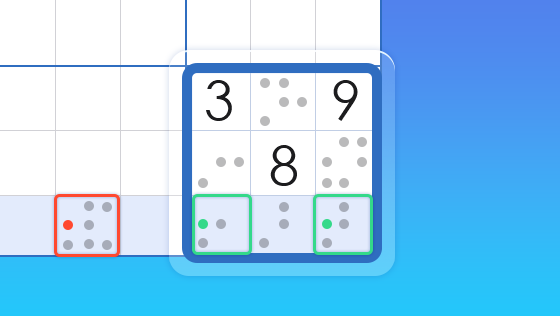
In the intricate world of advanced Sudoku, mastering specific solving techniques is paramount for tackling complex puzzles. Among these, the ‘Hidden Pairs’ strategy stands out as a sophisticated yet fundamental method for making progress when simpler approaches falter. This technique requires a keen eye for detail and a systematic approach to candidate evaluation within individual units of the Sudoku grid, allowing solvers to unveil crucial eliminations. The primary problem that understanding how to sudoku hidden pairs solves is the common deadlock encountered in higher-difficulty puzzles. Often, a solver can fill many initial numbers and apply basic strategies, only to find themselves with multiple possibilities in various cells, leading to a standstill. Hidden Pairs offer a powerful mechanism to cut through this ambiguity by definitively assigning candidates to specific cells, thereby reducing the solution space dramatically. This article will provide a definitive, deep-dive exploration into the ‘how to sudoku hidden pairs’ technique. We will meticulously break down its underlying logic, offer a practical step-by-step implementation guide, compare it with related advanced strategies, highlight common pitfalls to avoid, and address frequently asked questions. By the conclusion, you will possess a robust understanding and actionable framework for applying this essential Sudoku skill.
Deconstructing Hidden Pairs: The Core Mechanics
Understanding how to sudoku hidden pairs fundamentally relies on the principle of exclusivity within a Sudoku unit—be it a row, a column, or a 3×3 block. A Hidden Pair occurs when two specific candidate numbers (e.g., 2 and 5) appear *only* in two particular cells within that chosen unit, even if those cells also contain other candidate numbers. The key distinction is that these two candidates do not appear in any other cell within that unit.
Based on structural analysis, the essence of a hidden pair lies in its ‘hidden’ nature. Unlike Naked Pairs, where two numbers are the *only* candidates in two cells, Hidden Pairs are obscured by the presence of additional candidate numbers in those two specific cells. The insight comes from recognizing that because these two numbers *must* occupy those two cells, all other candidates in those two cells can be safely eliminated. This action often triggers a cascade of further deductions.
From a framework perspective, identifying a Hidden Pair is a process of elimination on a larger scale before a localized one. First, you list all possible candidates for every empty cell within a unit. Then, you systematically scan for any two numbers that, collectively, only appear in two identical cells within that unit. Once identified, these two cells are ‘claimed’ by the hidden pair, and any other candidate numbers within those two cells must be removed, clarifying the puzzle’s structure.
Implementing Hidden Pairs: A Practical Guide
In practical application, mastering how to sudoku hidden pairs requires a structured, methodical approach. The first step involves selecting a single unit—a row, a column, or a 3×3 block—and meticulously listing all possible candidate numbers for every empty cell within that unit. This exhaustive candidate listing is crucial as it forms the basis for pattern recognition.
The second step is to methodically examine each candidate number from 1 to 9 across your selected unit. For each number, identify all the cells in that unit where it is a possible candidate. The goal is to find two specific candidate numbers that, when considered together, are *only* valid possibilities in the *exact same two cells* within that unit. For example, if ‘2’ can only go in cells R2C3 and R2C7, and ‘5’ can also only go in R2C3 and R2C7 within Row 2, then ‘2’ and ‘5’ form a hidden pair in R2C3 and R2C7.
Once you have identified such a pair of numbers and the two cells they exclusively occupy within the chosen unit, the third step is to confirm the exclusivity. Ensure that no other cell in that row, column, or block contains either of those two candidates. This verification is critical for the integrity of the strategy.
The fourth and most impactful step is to perform the eliminations. For the two cells that form the hidden pair, remove all other candidate numbers from those cells. These two specific cells must contain the hidden pair numbers, meaning no other number can reside there. This action significantly reduces the complexity of those cells and the overall unit, often revealing new single candidates or other advanced patterns.
Finally, after making these eliminations, it is imperative to re-evaluate the entire Sudoku grid. The newly confirmed candidates or reduced candidate lists will almost certainly unlock further deductions, potentially revealing more single candidates, Naked Pairs, or other advanced strategies that were previously obscured. Consistent re-evaluation is key to sustained progress in complex puzzles.
Hidden Pairs in Context: A Comparative Analysis of Advanced Sudoku Techniques
From a framework perspective, understanding how to sudoku hidden pairs is often best illuminated by comparing it to other established advanced Sudoku solving techniques. While all advanced strategies aim to reduce candidate lists, their complexity, efficiency, and frequency of appearance vary significantly. This comparative analysis positions Hidden Pairs within the broader landscape of expert-level solving.
When comparing Hidden Pairs with Naked Pairs, the distinction lies in visibility and discovery. Naked Pairs (e.g., {2,5} in two cells and nowhere else in those cells) are generally easier to spot due to their direct presence. Hidden Pairs (e.g., {2,5} in two cells, but those cells also contain other candidates, and the {2,5} only appear in those two cells within the unit) require more thorough candidate scanning. Both techniques offer high efficiency in reducing candidate lists once identified, but Naked Pairs typically have a higher frequency in early to mid-game puzzles, while Hidden Pairs become more prevalent in harder stages.
Contrasting Hidden Pairs with more complex techniques like the X-Wing pattern reveals differences in scope and complexity. Hidden Pairs operate within a single unit (row, column, or block), making them a localized strategy. An X-Wing, conversely, is a global technique that involves four cells in two different rows and two different columns, allowing for eliminations across two units simultaneously. While X-Wings can lead to massive breakthroughs, they are significantly more complex to identify and appear less frequently than Hidden Pairs, which serve as a more accessible yet powerful intermediate advanced strategy.
Navigating Challenges: Common Pitfalls in Identifying Hidden Pairs
Even experienced solvers can encounter obstacles when applying how to sudoku hidden pairs. One frequent mistake is **overlooking candidates** during the initial setup. If the full list of potential numbers for each cell is not meticulously recorded, a hidden pair—or any advanced pattern—will remain invisible. The professional advice here is to adopt a consistent pencil-marking system, either manually or using digital tools, to ensure every possible candidate is documented for every empty cell.
Another common pitfall is **confusing Hidden Pairs with Naked Pairs**, leading to incorrect eliminations. The critical difference is that in a Naked Pair, the two numbers are the *only* candidates in the two cells. In a Hidden Pair, other candidates might be present in those two cells, but the hidden pair numbers are exclusive to those two cells *within that unit*. To avoid this, always confirm that the two candidate numbers you’ve identified appear *nowhere else* in the unit, regardless of what other numbers are in the two specific cells themselves.
Finally, **premature elimination** is a significant error. Rushing to remove candidates before fully verifying the conditions for a hidden pair can lead to an invalid puzzle state, making it unsolvable. This often stems from failing to check if the two numbers truly appear *only* in the identified two cells within the unit. The solution is rigorous verification: before any eliminations, meticulously scan the entire row, column, or block to ensure the two candidates you’ve found are indeed exclusive to the two cells you’ve identified.
Frequently Asked Questions About How to Sudoku Hidden Pairs
Q: What makes a pair ‘hidden’ in Sudoku? A: A pair is ‘hidden’ when two specific candidate numbers appear exclusively in two particular cells within a single row, column, or 3×3 block, making them unique to those positions despite other candidates also being present in those cells.
Q: Why is knowing how to sudoku hidden pairs important? A: Identifying hidden pairs is crucial for solving advanced Sudoku puzzles, as it allows for significant candidate eliminations that often unlock further progress when simpler techniques have been exhausted, breaking persistent deadlocks.
Q: Can hidden pairs involve more than two numbers? A: Yes, the principle extends to Hidden Triplets, Quads, and so forth. In these cases, three or more candidates are exclusively confined to three or more cells within a unit, following the same logical framework as hidden pairs.
Q: How often do hidden pairs appear in Sudoku puzzles? A: Hidden pairs frequently appear in medium to expert-level Sudoku puzzles. They are less common than Naked Pairs but significantly more prevalent and crucial than extremely advanced techniques like X-Wings or Swordfish, making them a cornerstone strategy.
Mastering how to sudoku hidden pairs represents a significant leap in a solver’s ability to tackle complex puzzles, moving beyond basic strategies to truly analyze the intricate logical relationships within a grid. This technique is not merely about finding numbers; it’s about understanding the foundational constraints that govern Sudoku, enabling systematic elimination and progressive refinement of candidate lists. The strategic value of this skill is immense, offering solvers the satisfaction of conquering puzzles that once seemed impenetrable and providing a robust toolset for future challenges in the realm of logic puzzles.