

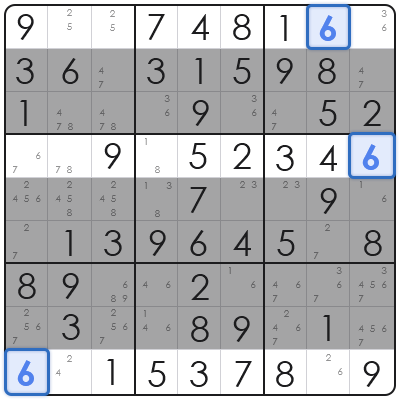
The wooden sudoku board game offers a tactile and aesthetically pleasing alternative to paper-based puzzles, providing a durable and engaging platform for both casual enthusiasts and competitive speed-solvers. This article delves into the core mechanics, strategic applications, and unique advantages of the wooden sudoku board game, positioning it as a superior tool for honing logical deduction skills and understanding the intricate cell constraints of Sudoku. While the digital age has introduced numerous Sudoku apps, the physical presence of a wooden board game enhances the cognitive experience, encouraging deliberate thought and a deeper appreciation for the underlying mathematical structure of the 9×9 grid.
The Logic Behind the Wooden Sudoku Board Game: A Structural Imperative
The wooden sudoku board game, at its core, is a physical manifestation of the abstract rules governing Sudoku, demanding adherence to fundamental constraints: each row, column, and 3×3 subgrid must contain the digits 1 through 9 without repetition.
Mathematically, the game’s solvability relies on combinatorial principles and graph theory, where each cell’s value is a variable constrained by its row, column, and block. The physical board with its inscribed grid topology serves as a tangible representation of these relationships, facilitating the visualization of candidate elimination and logical deduction chains.
The structural necessity of maintaining unique digits within these three sets of units—rows, columns, and blocks—is the bedrock upon which all Sudoku strategies are built, and the wooden board makes these necessities visually apparent, guiding the solver through a systematic process of discovery.
Step-by-Step: Applying Advanced Strategies on Your Wooden Sudoku Board
To effectively utilize a wooden sudoku board game for advanced play, begin by systematically scanning the grid for obvious placements, filling in any ‘1’, ‘2’, or ‘3’ based on direct Naked Singles. For instance, if a row, column, and block are missing a ‘5’, and you can identify the single cell within that block that isn’t blocked by a ‘5’ in its row or column, place it.
Next, engage in candidate marking, often referred to as ‘pencil marks’, directly on the wooden board using a small pencil or erasable marker in the corner of each cell. This is crucial for identifying potential pairs, triplets, and quads. Look for instances where two cells within the same row, column, or block can only contain two specific candidates, such as ‘4’ and ‘7’. This is a Naked Pair, allowing you to eliminate ‘4’ and ‘7’ as candidates from all other cells in that row, column, or block.
Advanced techniques like the X-Wing strategy become more intuitive on a wooden board. Identify rows that contain a specific candidate (e.g., ‘3’) in exactly two cells, and find another row where that same candidate appears in the exact same two columns. If these conditions are met, the candidate ‘3’ can be eliminated from all other cells in those two columns, a powerful logical leap facilitated by the visual clarity of the board.
Comparing Wooden Sudoku Board Games to Other Strategies
When evaluating the wooden sudoku board game as a strategic tool, it stands out for its direct engagement and multi-sensory feedback, which aids in memory retention and pattern recognition, particularly beneficial for visual learners.
The physical act of moving pieces or marking cells on a wooden board can enhance focus and reduce distractions compared to digital interfaces, making it ideal for developing foundational skills and for players who benefit from kinesthetic learning.
While strategies like basic elimination or hidden singles are foundational across all platforms, the wooden board’s robustness encourages the consistent application of complex techniques like Swordfish or Jellyfish, which involve pattern recognition across multiple rows and columns. The inherent limitations of marking on a physical board necessitate a more deliberate and less error-prone approach to candidate elimination.
Common Pitfalls When Using a Wooden Sudoku Board Game
A frequent mistake players make is ‘over-candidateing,’ where too many numbers are marked in cells, leading to visual clutter and confusion on the wooden board. To avoid this, be rigorous: only mark candidates that are logically possible after eliminating direct conflicts from rows, columns, and blocks. If a candidate is eliminated, erase it immediately to maintain clarity.
Another common pitfall is rushing the process of logical deduction. Unlike speed-solving on digital platforms, the wooden sudoku board game encourages a more measured approach. Resist the urge to guess; instead, trust in the chain of logic. If you encounter a block, step back, re-examine the existing numbers and candidates, and look for a new starting point or a pattern you might have missed.
Finally, players sometimes neglect to systematically scan the entire board for new singles or pairs after making a placement. Every time a number is placed or a candidate is eliminated, it creates new opportunities. Develop a habit of re-scanning all rows, columns, and blocks after each significant move to capitalize on these emergent constraints.
Frequently Asked Questions about Wooden Sudoku Board Games
What makes a wooden sudoku board game different from a paper version? The primary difference is the tactile experience and durability, offering a reusable and engaging platform for repeated play and strategy practice.
Are wooden sudoku boards suitable for beginners? Absolutely, they provide a clear visual layout that simplifies understanding the grid topology and basic constraints.
Can advanced techniques be effectively applied on a wooden board? Yes, the physical manipulation and clear display of numbers and candidates on a wooden board can actually enhance the application of complex strategies like Naked Pairs and X-Wings.
How do I mark candidates on a wooden sudoku board game? Typically, a small pencil or erasable marker is used to write potential numbers lightly in the corners of each cell.
What is the main advantage of a wooden board for Sudoku? The key advantage is the enhanced focus and deliberate thinking fostered by the physical, non-distracting nature of the game, promoting deeper logical analysis.
The wooden sudoku board game is more than just a collection of wooden pieces; it is a powerful pedagogical tool that reinforces the ‘Logic-First’ approach to mastering Sudoku. By engaging directly with the grid and its inherent cell constraints, players develop a profound understanding of logical deduction, candidate elimination, and strategic application that transcends the medium itself. Embracing the tangible nature of the wooden board game cultivates patience, sharpens analytical skills, and ultimately leads to a more rewarding and masterful Sudoku experience.