

The wooden sudoku game is a tangible, often beautifully crafted, version of the classic number-placement puzzle, designed to offer a tactile and engaging experience beyond digital interfaces. It involves a grid, typically 9×9, where the objective is to fill each cell with digits so that each row, column, and 3×3 subgrid contains all of the digits from 1 to 9 without repetition. Its significance spans a wide spectrum of players; for speed-solvers, a well-designed wooden set can offer a satisfying physical interaction that enhances focus and reduces the distraction of digital notifications. For casual players, the tactile nature can make the learning process more intuitive and enjoyable, fostering a deeper appreciation for the underlying logical deduction required. The inherent constraints of a physical board also encourage a more deliberate and methodical approach, which is foundational to mastering more complex Sudoku strategies. This guide delves into the strategic underpinnings and practical application of techniques commonly employed when playing with a wooden sudoku game, aiming to elevate your problem-solving prowess. By understanding the fundamental principles and common pitfalls, players can transform their gameplay from mere number-filling to a sophisticated exercise in logical deduction and spatial reasoning.
The Logic of the Wooden Sudoku Game: A Structural Deep Dive
The logic behind any Sudoku puzzle, including those played on a wooden sudoku game board, is rooted in combinatorics and constraint satisfaction, specifically within a Latin Square framework. The 9×9 grid is divided into nine 3×3 subgrids, creating a unique structural topology. The core rule—that each row, column, and 3×3 box must contain the digits 1 through 9 exactly once—establishes a set of interdependent cell constraints. Mathematically, each cell has a potential domain of 9 digits, but the placement of a single digit in any row, column, or box immediately eliminates that digit from the possible candidates of other cells within those same sets. This cascading effect of eliminations forms the basis for all Sudoku-solving techniques, from basic scanning to advanced logical chains.
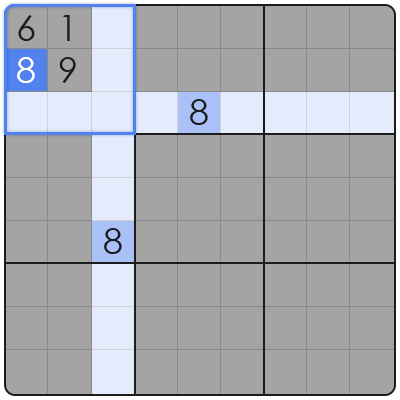
Understanding this structural necessity is paramount for efficient gameplay. Every number placed, whether given or deduced, reduces the ambiguity in the grid. For instance, if a ‘5’ is placed in a particular row, no other cell in that row can be a ‘5’. Similarly, if a ‘5’ is placed in a column, no other cell in that column can be a ‘5’. The 3×3 subgrid constraint further refines these restrictions. The interplay between these three constraint types—row, column, and box—is what creates the puzzle’s solvability. Without these interconnected rules, the grid would be trivial, offering no challenge.
Based on logic-chain analysis, the difficulty of a Sudoku puzzle directly correlates with the complexity of the deduction chains required to resolve the cell constraints. Simpler puzzles can be solved by direct scanning and candidate elimination, while harder puzzles necessitate identifying patterns and relationships between multiple cells, often across different constraint sets. This is where techniques like Naked Pairs or X-Wing become critical, as they leverage the logical consequences of a limited set of candidates within specific row, column, or box configurations.
Step-by-Step Implementation: Navigating the Grid with Precision
To effectively apply logical deduction on a wooden sudoku game, begin with a systematic scan of rows, columns, and 3×3 boxes to identify cells with only one possible candidate (Single Candidate technique). This is the most fundamental step for any solver. Circle or mark all given numbers clearly on your wooden board, and if it’s a dry-erase or whiteboard surface, begin pencil-marking potential candidates in empty cells.
Next, move to candidate elimination. For each cell, list the digits (1-9) that are not already present in its corresponding row, column, and 3×3 box. If a cell has only one possible candidate remaining after this elimination process, confidently place that number. This step is crucial for building momentum and unlocking further deductions. For example, if a cell is in a row that already contains 1, 2, 3, 4, 6, 7, 8, 9, and in a column that contains 1, 3, 4, 5, 7, 8, 9, and within a 3×3 box that contains 1, 2, 3, 4, 6, 7, 8, 9, then the only remaining candidate for that cell is ‘5’.
As you progress, look for more advanced patterns. Techniques like Naked Pairs involve identifying two cells within the same row, column, or box that share the exact same two candidates. Once identified, those two candidates can be eliminated from all other cells in that same row, column, or box. Similarly, Hidden Singles occur when a candidate appears in only one cell within a given row, column, or box, even if that cell has other candidates. Recognizing these patterns, such as the interplay of candidate elimination and structural logic, is key to solving increasingly difficult puzzles on your wooden sudoku game.
Comparative Analysis of Sudoku Strategies
The wooden sudoku game provides a physical platform for exploring various Sudoku strategies. While basic scanning and candidate elimination are universally applicable, more advanced techniques offer different levels of complexity and utility.
The strategy often referred to as ‘Wooden Sudoku Game’ or related positional techniques, relies heavily on the grid’s topology and candidate interdependencies. It’s not a single named technique but rather an approach to systematic application of logic on a physical board. Let’s compare it to a few other common strategies:
| Strategy/Technique | Difficulty Level | Frequency of Use | Logical Complexity | Description |
|—|—|—|—|—|
| Basic Scanning / Single Candidates | Very Easy | Very High | Low | Identifying cells with only one possible valid number based on row, column, and box constraints. |
| Naked Pairs | Easy | High | Medium | Finding two cells in the same unit (row, column, or box) that contain only the same two candidates, allowing elimination of those candidates from other cells in that unit. |
| X-Wing | Medium | Medium | High | A more advanced technique involving two rows (or columns) and a specific candidate. If the candidate appears in exactly two cells in each of the two rows, and these cells form a rectangle, the candidate can be eliminated from all other cells in the two columns (or rows) involved. |
| Wooden Sudoku Game (Approach) | Varies (Easy to Hard) | High | Varies (Low to High) | Refers to the methodical, tactile application of all Sudoku logic techniques (basic to advanced) on a physical wooden board, emphasizing direct interaction and focused deduction. |
| Hidden Singles | Easy | High | Medium | Identifying a candidate that can only appear in one specific cell within a given unit (row, column, or box), even if that cell has other potential candidates. |
Common Pitfalls and How to Avoid Them
One of the most common mistakes when playing with a wooden sudoku game is premature placement of numbers without exhaustive candidate elimination. This can lead to incorrect deductions that cascade through the puzzle, forcing you to backtrack significantly or even restart. To avoid this, always double-check that a cell has only one possible candidate before committing to placing a number, especially when using pencil marks on a dry-erase board. Treat each pencil mark as a hypothesis that must be rigorously tested against all constraints.
Another frequent pitfall is inconsistent application of techniques. Players might correctly apply candidate elimination in one area but then resort to guessing or inefficient scanning in another. For competitive solvers, developing a consistent workflow—such as always completing a full scan for singles before attempting pairs, or systematically checking each candidate’s placement across all rows, columns, and boxes—is crucial. The structural necessity of logic means that a consistent approach ensures all available deductions are found.
Finally, beginners often overlook the power of ‘killer’ cages or other specialized rules that might be present on certain themed wooden sudoku game boards. Even on standard boards, failing to fully utilize the information provided by existing numbers is a common oversight. Always perform a thorough initial analysis of the grid, noting which numbers are scarce in which rows, columns, and boxes, as this can provide valuable clues for applying more advanced logical relationships and entity-based deductions.
Frequently Asked Questions About Wooden Sudoku Game
Q: Is a wooden sudoku game better for beginners than a digital version?
A: A wooden sudoku game offers a tactile experience that can make understanding basic Sudoku rules more intuitive. The physical manipulation of pieces can aid learning, though digital versions offer undo functions and automatic error checking.
Q: How does playing on a wooden sudoku game improve logical deduction skills?
A: The physical act of placing numbers and visually scanning the grid on a wooden board encourages a slower, more deliberate thought process, fostering deeper concentration and a more robust understanding of candidate elimination and cell constraints.
Q: Can advanced Sudoku techniques like X-Wing be applied to a wooden sudoku game?
A: Yes, advanced techniques can absolutely be applied. The wooden board serves as a visual aid for identifying patterns. Players may use pencil marks or a separate notation system to track candidates for complex strategies like X-Wing or Naked Pairs.
Q: What are the key differences between a wooden sudoku game and a standard printed puzzle?
A: The primary difference is tactility and reusability. Wooden sets offer a satisfying feel and can often be used repeatedly, whereas printed puzzles are typically single-use unless photocopied or written on with erasable markers.
Mastering the wooden sudoku game is not merely about filling in numbers; it’s about cultivating a ‘Logic-First’ mindset that permeates every aspect of problem-solving. The tactile nature of a wooden board enhances focus and encourages a methodical application of deduction techniques, transforming the puzzle from a simple pastime into a rigorous mental exercise. By understanding the structural topology of the grid, diligently applying candidate elimination, and recognizing the interplay of cell constraints, solvers of all levels can elevate their game. Remember that consistent practice and an analytical approach are the cornerstones of Sudoku mastery, enabling you to tackle even the most challenging puzzles with confidence and precision.