

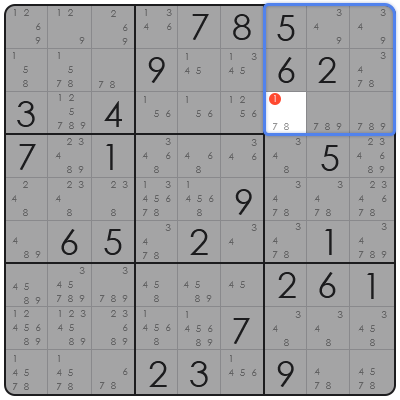
The sudoku wooden game represents a unique and engaging intersection of classic Sudoku strategy and tangible play, offering a sophisticated yet accessible approach to logical deduction for enthusiasts of all levels. This tactile variant of the ubiquitous number-placement puzzle provides a physical dimension that can enhance concentration, aid in visualizing grid topology, and offer a refreshing alternative to digital interfaces for both speed-solvers aiming for personal bests and casual players seeking a more immersive experience. For competitive solvers, the physical interaction with a wooden Sudoku board can sometimes facilitate quicker pattern recognition and the physical manipulation of candidates, akin to using physical pencil marks. Casual players, on the other hand, often find the tactile feedback and aesthetic appeal of a wooden Sudoku game to be a significant draw, making the process of logical deduction more enjoyable and less abstract. Understanding the core principles of how a sudoku wooden game operates, even within its physical construct, is key to appreciating its strategic depth. The significance of the sudoku wooden game lies not just in its material but in how it encourages a deeper engagement with the fundamental rules of Sudoku: each row, column, and 3×3 subgrid must contain the digits 1 through 9 without repetition. This foundational principle, when applied to a physical wooden board, reinforces the concepts of cell constraints and candidate elimination, making it an excellent tool for both learning and refining advanced Sudoku techniques. It transforms abstract logic into a concrete problem-solving exercise.
Unpacking the Logic Behind the Sudoku Wooden Game
The sudoku wooden game functions on the same mathematical and structural principles as any standard Sudoku puzzle, relying on the inherent logic of unique digit placement within a 9×9 grid. The ‘game’ aspect, often referring to the physical board and pieces, doesn’t alter the underlying Sudoku logic but rather provides a different medium for its application. This means that techniques like candidate elimination, logical deduction, and identifying cell constraints remain paramount, regardless of whether you’re using a pen on paper or wooden tiles on a board.
Structurally, the 9×9 grid is divided into nine 3×3 subgrids, and the core logic dictates that no digit can repeat within any row, column, or subgrid. The physical nature of a wooden Sudoku game can be particularly helpful for visualizing these constraints. For instance, placing a wooden tile in a specific cell immediately removes that digit as a possibility for other cells in the same row, column, and 3×3 block. This direct, physical feedback loop reinforces the concept of constraint propagation, a fundamental aspect of solving Sudoku puzzles efficiently.
For competitive solvers, the efficiency of applying these logical steps is crucial. A well-designed sudoku wooden game often features distinct pieces for digits, possibly with clear markings for ‘pencil marks’ or candidate numbers. This allows players to physically ‘place’ potential candidates and then remove them as they resolve conflicts or confirm digits, mimicking the pencil marking process but with a more defined tactile interaction. This methodical approach, based on logical deduction and systematic elimination, is what transforms a simple number puzzle into a rigorous exercise in logical reasoning.
Step-by-Step Implementation: Applying Logic on a Wooden Board
To effectively apply Sudoku logic using a sudoku wooden game, begin by understanding the initial setup and identifying the most constrained cells or digits. The first step involves scanning the grid to find rows, columns, or 3×3 subgrids that are already populated with the most digits. This initial assessment is crucial for pinpointing where logical deduction can be most immediately applied, often leading to the placement of the first few obvious numbers.
Next, focus on ‘candidate elimination’ for the empty cells. For a specific empty cell on your wooden board, identify all the digits (1-9) that are already present in its corresponding row, column, and 3×3 subgrid. Physically gather the wooden tiles representing these ‘excluded’ digits. The remaining digits are the ‘candidates’ for that cell. Many wooden Sudoku games are designed to allow for the placement of these candidate tiles, or you can use a separate area on the board or a notation system to keep track. This process is fundamental to most advanced Sudoku techniques.
Thirdly, look for ‘single candidates’ or ‘naked singles’. If, after eliminating candidates for a specific cell, only one possible digit remains, then that digit must belong in that cell. Place the corresponding wooden tile definitively. Then, and this is critical, immediately update the candidates for all other cells in that row, column, and subgrid by removing the digit you just placed. This cascading effect of logical deduction is the engine that drives Sudoku solving. Continue this process iteratively, seeking out cells with only one remaining candidate, until the grid is complete. For more complex puzzles, you might need to employ advanced strategies like Naked Pairs or Hidden Singles, which involve analyzing sets of cells and candidates.
Comparative Analysis of Sudoku Wooden Game vs. Other Strategies
The tactile nature of a sudoku wooden game offers a distinct experience compared to purely digital or paper-based Sudoku. While the underlying logical principles of candidate elimination and grid topology remain consistent, the method of application and the perceived difficulty can vary.
For instance, compared to the standard ‘pencil marks’ method on paper, a physical sudoku wooden game allows for direct manipulation of candidate tiles. This can reduce the cognitive load associated with keeping track of multiple possibilities mentally or on paper, potentially making it feel less complex for some users. However, the physical space required and the potential for misplacing tiles can introduce a different kind of complexity.
When contrasted with online Sudoku platforms, a wooden game offers a sensory engagement that digital interfaces cannot replicate. While online platforms often have built-in solvers or hints, a wooden game forces the player to rely solely on their own logical deduction skills. This self-reliance can lead to a more rewarding sense of accomplishment for players who value pure problem-solving. The frequency of use for advanced techniques like X-Wing or Swordfish might be slightly lower in a casual wooden game setting due to the emphasis on direct candidate placement and elimination, but the fundamental process of logical reasoning is equally applicable and can be honed effectively.
Common Pitfalls When Applying Sudoku Logic on a Wooden Board
One common pitfall when using a sudoku wooden game is ‘candidate overcrowding’ or losing track of potential numbers for a given cell. Unlike digital Sudoku which often has features to manage candidates, with a physical board, if you place too many candidate tiles around a cell or in a general area, it can become visually overwhelming and lead to errors in logical deduction. To avoid this, focus on one cell at a time for candidate placement, or use a systematic notation method that clearly separates definitive placements from potential candidates.
Another frequent mistake is the failure to ‘propagate constraints’ immediately after placing a definitive number. Once you’ve determined a digit for a cell and placed its tile, it’s crucial to instantly update the candidate possibilities for all other affected cells in the same row, column, and 3×3 subgrid. Neglecting this step means you’re not fully leveraging the logical consequences of your placement, significantly slowing down progress and increasing the chance of making future errors based on incomplete information. Always physically clear or remove candidate tiles from affected cells as soon as a number is confirmed.
A third common pitfall is ‘over-reliance on visual appeal over logic’. While the tactile and aesthetic qualities of a sudoku wooden game are a major advantage, players can sometimes become so engrossed in the physical act of moving pieces that they neglect the rigorous application of logical deduction. Remember that the wooden pieces are tools to aid your logical process, not a replacement for it. Ensure each placement, whether a definitive number or a candidate, is based on sound reasoning derived from cell constraints and candidate elimination principles, rather than intuition alone.
Frequently Asked Questions About the Sudoku Wooden Game
Q: What is a sudoku wooden game? A: A sudoku wooden game is a physical, tactile version of the Sudoku puzzle, typically featuring a wooden board and movable tiles or blocks representing numbers 1-9, used for solving the logic puzzle.
Q: Is a sudoku wooden game easier than paper Sudoku? A: It can be perceived as easier or more intuitive due to tactile feedback, but the underlying logical difficulty remains the same as a paper puzzle of equivalent cell constraints. It aids visualization and candidate management.
Q: Can a sudoku wooden game help improve my Sudoku skills? A: Yes, by reinforcing logical deduction, candidate elimination, and grid topology visualization through physical interaction, it can be an excellent tool for skill development for both beginners and experienced players.
Q: What are the main benefits of playing Sudoku with a wooden game? A: Benefits include enhanced concentration, reduced reliance on digital distractions, improved spatial reasoning, and a more engaging, sensory-rich problem-solving experience.
Q: Are there specific Sudoku techniques best suited for a wooden game? A: While all techniques apply, the physical manipulation inherent in a wooden game lends itself well to visualizing and managing candidates, aiding in direct application of strategies like Naked Singles and Pairs.
Mastering the sudoku wooden game, like any form of Sudoku, is fundamentally about embracing a ‘Logic-First’ approach. The physical medium of wood and tiles serves as a powerful aid to visualization and tactile engagement, but the engine of progress remains unwavering logical deduction. By understanding and systematically applying principles of candidate elimination, constraint propagation, and pattern recognition, players can unlock the full potential of this engaging puzzle format. Whether you are a speed-solver honing your efficiency or a casual player seeking a deeper connection with the puzzle, the sudoku wooden game offers a rewarding path to cognitive enhancement and problem-solving mastery.