

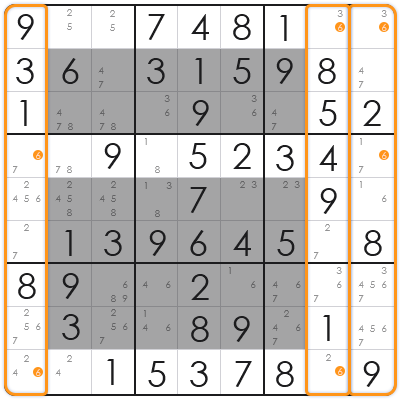
Playing Sudoku for kids is an ingenious adaptation of the classic number puzzle, meticulously designed to introduce foundational logical reasoning and numerical sequencing skills to younger audiences. In the field of Cognitive Development and Educational Psychology, this simplified approach is recognized as a powerful tool for early intellectual stimulation, carefully crafted to be age-appropriate and engaging without sacrificing the core challenge of deduction. The primary significance of introducing Sudoku to children lies in its ability to foster critical thinking, enhance pattern recognition, and cultivate essential problem-solving strategies from an early age. This structured play effectively addresses the common educational challenge of making abstract logical concepts tangible and accessible for young learners, bridging the gap between intuitive understanding and formal reasoning. From a pedagogical standpoint, how do you play sudoku kids establishes a crucial groundwork for future academic success and advanced analytical prowess. By engaging children in a systematic process of elimination and deduction, it not only reinforces basic numerical literacy but also builds neural pathways for complex thought, ultimately contributing to a more robust and agile cognitive framework.
The Fundamental Mechanics of how do you play sudoku kids: Simplified Grids and Core Rules
Playing Sudoku for kids fundamentally involves placing numbers or symbols into a grid, typically scaled down from the standard 9×9 format, with the critical constraint that each element appears only once in every row, column, and designated sub-grid. Based on structural analysis, this scaled-down complexity ensures that the puzzle remains manageable and encouraging for developing minds, allowing for gradual mastery of its inherent logical principles.
Common grid sizes tailored for children range from 4×4 to 6×6, a deliberate simplification designed to reduce cognitive load and visual overwhelm. For very young children, visual cues such as colors, shapes, or even simple animal figures can effectively replace numbers, thereby introducing the pattern-based logic without requiring advanced numerical recognition. From a framework perspective, this scaffolding approach is paramount, allowing educators and parents to progressively transition to number-based puzzles as a child’s numerical literacy and abstract thinking skills mature.
The game’s integrity, regardless of its simplified form, is maintained by three universal rules: each row must contain unique elements, each column must contain unique elements, and each defined sub-grid (often 2×2 or 2×3 for kid-friendly versions) must also feature unique elements. In practical application, these explicit constraints form the core logical boundaries that players must systematically navigate, providing a clear objective for every move and reinforcing the concept of deduction through elimination.
Applying how do you play sudoku kids: A Step-by-Step Approach for Young Learners
To effectively play Sudoku for kids, the most strategic starting point is to identify rows, columns, and sub-grids that contain the greatest number of pre-filled elements, as these areas offer the most immediate and numerous clues for initial deductions. This initial assessment strategy is a cornerstone of efficient problem-solving, teaching children to prioritize high-information zones within the puzzle.
Step 1 involves a thorough visual scan of the entire grid to pinpoint which numbers or symbols are already present within each individual row, column, and sub-grid. Concurrently, Step 2 requires focusing on an empty cell and systematically eliminating numbers or symbols that are already present in its corresponding row, column, and sub-grid. The remaining number(s) or symbol(s) then represent the possible candidates for that particular cell.
Proceeding to Step 3, if only a single candidate remains for a specific empty cell after the elimination process, that number or symbol can be definitively placed. This definitive placement is a crucial ‘breakthrough’ moment, often unlocking further deductions across the grid. Step 4 involves a more advanced technique: if multiple candidates exist for a cell, look for ‘single candidates’ within a row, column, or sub-grid – meaning a particular number can logically fit into only one specific empty cell within that line or block, even if that cell initially had other possible options.
Throughout this process, emphasizing patience and encouraging a systematic, unhurried approach is vital. It is highly beneficial to allow children to use a pencil for tentative placements, promoting a comfort with error correction and reinforcing the understanding that mistakes are an inherent and valuable part of the learning and problem-solving journey. This iterative process of trying, checking, and correcting builds resilience and analytical rigor.
Comparative Landscape: how do you play sudoku kids Against Related Cognitive Puzzles
While how do you play sudoku kids precisely targets logical deduction within a constrained numerical or symbolic grid, its rich array of cognitive benefits can be insightfully compared with other popular puzzles such as jigsaw puzzles, memory matching games, and word searches, each cultivating distinct yet complementary developmental pathways for young minds.
Based on structural analysis, the comparative landscape reveals how each puzzle type uniquely contributes to a child’s cognitive growth:
| Puzzle Type | Complexity (for kids) | Efficiency (skill development) | Cost (resources) |
|————————-|———————–|——————————–|——————|
| Sudoku Kids | Low to Medium | High (Logic, deduction, focus) | Low |
| Jigsaw Puzzles | Low to Medium | Medium (Spatial reasoning, fine motor) | Medium |
| Memory Matching Games | Low | Medium (Recall, concentration) | Low |
| Word Search Puzzles | Low | Medium (Vocabulary, pattern recognition) | Low |
From a framework perspective, how do you play sudoku kids excels in developing systematic logical deduction, a skill less directly emphasized by the spatial reasoning of jigsaw puzzles or the rote recall of memory games. While word searches boost vocabulary and visual scanning, Sudoku’s unique strength lies in its non-linguistic, pure logical challenges. The consistently low resource cost associated with Sudoku for kids, requiring only a printed grid and a pencil, makes it an exceptionally accessible and high-impact educational tool for a wide range of socio-economic contexts.
Navigating Challenges: Common Pitfalls and Expert Solutions in how do you play sudoku kids
Common pitfalls encountered when guiding or playing Sudoku for kids frequently include a tendency to rush placements, inadvertently overlooking conflicting numbers, and becoming easily overwhelmed by grids that exceed their current cognitive capacity; however, these prevalent challenges are readily overcome through the implementation of structured guidance and consistent, encouraging practice.
One frequent mistake is rushing or guessing, where children might randomly fill cells rather than engaging in the required process of systematic deduction. Solution: To counteract this, encourage children to vocalize their reasoning for each placement and to rigorously check every proposed number or symbol against all three governing rules—row, column, and sub-grid—before making a definitive mark. Employing visual aids, such as circling numbers already used, can significantly reduce impulsive placements.
Another common pitfall is inadvertently overlooking conflicts, leading to the placement of a number that duplicates one already existing in its corresponding row, column, or sub-grid. Solution: Implement a systematic scanning routine. Teach children to consciously verify each new number against its entire context (its row, column, and sub-grid) immediately after placement, thereby cultivating a habit of thorough verification before moving to the next cell. This reinforces careful observation and attention to detail.
The third significant challenge involves grid size overwhelm, often occurring when children are introduced to grids that are too large or complex for their current developmental stage. Solution: It is critical to initiate play with the simplest forms, such as 4×4 grids or even 3×3 grids using symbols for very young learners, and gradually increase complexity as their mastery and confidence grow. Providing strategic hints initially, then gradually reducing assistance, helps scaffold their learning process effectively.
Frequently Asked Questions About how do you play sudoku kids
Q: At what age can children realistically start playing simplified Sudoku puzzles?
A: Children can typically begin engaging with simplified versions of Sudoku, often utilizing shapes or colors, around ages 4-6. Number-based Sudoku is generally suitable for ages 7-8 and up, contingent upon individual cognitive development and numerical familiarity.
Q: Does consistent engagement with Sudoku for kids genuinely improve mathematical abilities?
A: Yes, consistent engagement with Sudoku for kids significantly enhances logical reasoning, sharpens pattern recognition skills, and improves numerical fluency, all of which are critical foundational components for developing stronger, more intuitive mathematical aptitude.
Q: Are there varying levels of difficulty specifically designed for kid’s Sudoku puzzles?
A: Absolutely. Kid’s Sudoku puzzles are thoughtfully designed with a wide range of difficulty levels, from very easy (e.g., 4×4 grids with numerous pre-filled cells) to moderately challenging (e.g., 6×6 grids with fewer starting numbers), allowing for a progressive skill-building journey.
Q: Can playing Sudoku for children positively impact their concentration and attention span?
A: Indeed. The intense focused attention and sustained mental effort required to accurately solve Sudoku puzzles actively helps children develop improved concentration, lengthens their attention spans, and fosters greater patience, all of which are crucial cognitive traits benefiting overall learning.
Q: What basic materials are necessary for a child to start playing Sudoku?
A: Minimal materials are typically needed: usually, a printed puzzle grid and a pencil. For enhanced accessibility and portability, numerous online platforms and mobile applications also offer digital versions of Sudoku for kids, making it widely available.
In conclusion, how do you play sudoku kids transcends being a mere recreational activity; it stands as a strategically valuable and deeply insightful tool in the broader landscape of cognitive development, offering a playful yet rigorously structured introduction to the foundational principles of logical deduction. Its inherent emphasis on systematic problem-solving, pattern recognition, and careful verification lays a robust and enduring foundation for analytical thinking, a cornerstone skill in an increasingly complex world. This structured approach fosters not only immediate intellectual gains in numerical and logical fluency but also cultivates a resilient, adaptive problem-solving mindset that is indispensable for navigating both academic challenges and real-world complexities, unequivocally underscoring its profound long-term strategic value and forward-looking impact on a child’s cognitive architecture.