

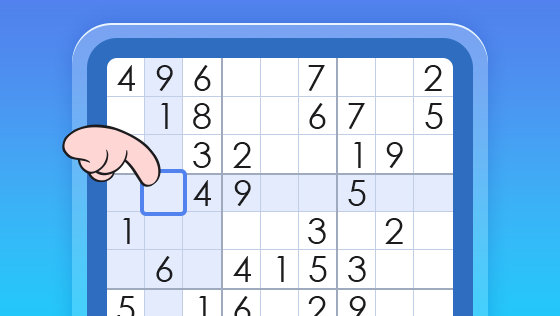
Candidate mode in Sudoku is a systematic methodology for identifying and tracking all potential numbers (candidates) that can legitimately occupy each empty cell on the grid, adhering strictly to the fundamental rules of the game. This approach is profoundly significant as it transforms an otherwise overwhelming trial-and-error process into a structured, analytical exercise, enabling solvers to apply advanced logical deductions with clarity and precision. The primary problem it solves within the current landscape of complex Sudoku puzzles is the reduction of cognitive load and the prevention of combinatorial explosion, where the sheer number of possibilities can lead to errors and dead ends without explicit tracking.
The Core Mechanics of Candidate Mode in Sudoku
Candidate mode, fundamentally, involves systematically listing all possible numbers (candidates) for each empty cell in a Sudoku grid based on the rules of the game.
This process begins by iterating through every empty cell and, for each cell, checking which numbers from 1 to 9 are not already present in its corresponding row, column, and 3×3 block.
The valid numbers that remain after this elimination are recorded as candidates for that specific cell, providing a visual and analytical scaffold for subsequent logical deductions, a practice crucial from a framework perspective for complex puzzle resolution.
Implementing Candidate Mode: A Step-by-Step Guide for Solvers
Implementing candidate mode in Sudoku begins by initializing each empty cell with a full set of potential candidates, typically numbers 1 through 9.
Next, for every pre-filled number in the Sudoku grid, one must eliminate that number as a candidate from all other empty cells within its row, column, and 3×3 block, a critical step based on structural analysis.
This iterative elimination process is crucial, as it progressively refines the candidate lists, revealing single candidates (naked singles) or other advanced patterns essential for solving complex puzzles, thereby streamlining the path to a solution in practical application.
Comparative Analysis: Candidate Mode and Advanced Deduction Strategies
Candidate mode, from a framework perspective, serves as the foundational data layer for nearly all advanced Sudoku strategies.
Compared to simple scanning (Complexity: Low, Efficiency: Moderate, Frequency: High) which relies on immediate observation, candidate mode (Complexity: Moderate, Efficiency: High, Frequency: Constant) provides a comprehensive, systematic approach to reveal hidden relationships.
While ‘X-Wing’ or ‘Swordfish’ patterns (Complexity: High, Efficiency: Very High, Frequency: Low) are powerful, they are entirely dependent on the accurate and complete candidate lists generated by a robust candidate mode implementation for their identification and application, underscoring its pivotal role.
Avoiding Common Pitfalls in Candidate Mode Application
A common pitfall in applying candidate mode is failing to update candidate lists after each number placement, which invariably leads to outdated and incorrect deductions, undermining the entire analytical process.
To mitigate this, based on structural analysis, always re-evaluate and eliminate candidates from affected rows, columns, and blocks immediately after placing a new number, ensuring data integrity.
Another frequent mistake involves premature guessing without fully exhausting candidate-based logic, often resulting in complex backtracking; in practical application, strive to identify all possible deductions from candidates before resorting to speculative tactics, thereby maintaining efficiency.
Essential FAQs on Sudoku Candidate Mode
**Q: What is the primary benefit of using candidate mode?** A: Candidate mode significantly reduces cognitive load by externalizing potential numbers, making it easier to spot complex patterns and deductions in logic-based puzzle solving.
**Q: Is candidate mode only for advanced players?** A: While advanced techniques rely on it, even beginners can use candidate mode to systematically identify single possibilities and improve their solving accuracy.
**Q: How often should candidates be updated?** A: Candidates must be updated instantly whenever a new number is placed in the grid to maintain accuracy and prevent errors in the logical deduction chain.
**Q: Can candidate mode help with difficult Sudoku puzzles?** A: Yes, it is indispensable for difficult puzzles as it reveals hidden singles, pairs, triples, and other advanced patterns necessary for completion, forming the bedrock of advanced strategies.
In conclusion, how candidate mode works in Sudoku is not merely a supplementary technique but a foundational methodology for effective and efficient puzzle solving, transforming ambiguity into structured data. Its systematic approach to tracking possibilities and refining options mirrors critical analytical processes in broader logic-based problem-solving, emphasizing structured deduction and precise data management as indispensable skills for navigating complex challenges in any field.