

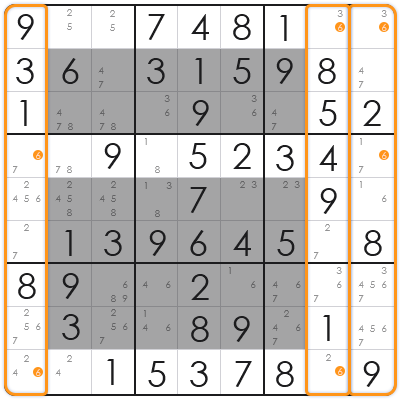
The question of how many possible Sudoku variations exist delves deep into the fascinating realm of combinatorics and computational mathematics. Based on structural analysis, a ‘Sudoku variation’ fundamentally refers to a completed, valid 9×9 Sudoku grid, where each row, column, and 3×3 block contains the digits 1 through 9 exactly once. This exploration is not merely an academic exercise; it underpins the theoretical limits of puzzle generation and highlights the vastness of structured combinatorial designs. From a framework perspective, calculating this number requires a rigorous systematic approach, moving beyond simple permutations to account for intricate constraint satisfaction across multiple dimensions. The significance of this number, often cited as 6,670,903,752,021,072,936,960 (approximately 6.67 x 10^21), lies in its illustration of extreme complexity within a seemingly simple set of rules. It quantifies the ‘Sudoku universe’ and establishes a benchmark for evaluating algorithms designed to solve or generate these puzzles. The primary problem this analysis addresses in the current landscape is the common misconception that this number is easily derivable or that all permutations are equally valid. It clarifies that the vast majority of arbitrary 9×9 grids do not satisfy Sudoku’s stringent rules, and that enumerating only the valid grids requires sophisticated combinatorial techniques, often involving extensive computational power to verify intermediate steps. This precise quantification provides a foundational understanding for researchers and enthusiasts alike, preventing oversimplification of a profound mathematical challenge.
Quantifying the Sudoku Universe: The Foundational Calculation
The total number of valid 9×9 Sudoku grids, often cited as approximately 6.67 x 10^21, represents the sheer scale of arrangements that adhere to the game’s fundamental rules. This monumental figure is derived through a combination of combinatorial enumeration and computational verification, building upon initial permutations of the top band and subsequently accounting for the highly restrictive nature of Sudoku’s cell-filling rules. Unlike a simple factorial, the Sudoku count is a testament to complex constraint propagation across the grid.
Based on structural analysis, the calculation typically begins by considering the permutations of the first row (9! possibilities). However, the immediate challenge arises when filling subsequent cells, as each placement is heavily dependent on values already present in its row, column, and 3×3 block. This interdependence is what elevates the complexity beyond basic combinatorial methods, demanding a nuanced approach that factors in conditional probabilities and valid continuations for each cell placement. The foundational calculation therefore considers not just arbitrary arrangements but only those that are ‘legal’ at every step.
In practical application, the initial breakthrough in deriving this exact number involved breaking down the grid into smaller, manageable units. Researchers like Bertram Felgenhauer and Frazer Jarvis utilized sophisticated algorithms to count the number of valid ways to fill the first three rows (the ‘top band’), then extended this logic to the remaining bands and the full grid. This hierarchical approach, while computationally intensive, was crucial for navigating the immense search space and arriving at a precise figure for the total number of distinct, completed Sudoku grids.
Unpacking the Combinatorial Process: From Top Band to Full Grid
The combinatorial process of enumerating Sudoku grids is an intricate dance of permutations and constraint satisfaction, moving systematically from initial placements to a fully valid board. From a framework perspective, the most common method starts by fixing the first row (e.g., 1-2-3-4-5-6-7-8-9), which reduces the 9! possibilities for the first row to just one canonical form for initial counting purposes. All other first-row permutations are accounted for by multiplying the final result by 9!.
Step one involves determining the number of ways to complete the first 3×3 block (the ‘top-left’ block) given a fixed first row. This itself is a complex sub-problem, as the remaining two rows of that block must also contain unique digits while respecting their column and row constraints. Subsequent steps then focus on filling the remaining two 3×3 blocks in the top band, which introduces even more constraints from overlapping column sets. The key insight here is that once the top band is filled, a significant portion of the grid’s structure is determined, heavily influencing the valid placements in the lower bands.
Finally, the process extends to completing the middle and bottom bands, where the choices for each cell become increasingly limited due to the accumulated constraints from the rows, columns, and blocks above. The enumeration of valid grids often relies on exhaustive computer searches for partial grids, combined with mathematical symmetries and pruning techniques to avoid redundant calculations. This multi-stage combinatorial process, though detailed, is the only way to accurately quantify the immense Sudoku solution space.
Symmetries and Essentially Distinct Sudoku Grids
While the total number of valid Sudoku grids is astronomically large, many of these grids are fundamentally the same when considering various symmetry operations. Based on structural analysis, an ‘essentially distinct’ Sudoku grid refers to a grid that cannot be transformed into another by a sequence of symmetry operations. These operations include rotations (90, 180, 270 degrees), reflections (horizontal, vertical, diagonal), permutations of symbols (e.g., swapping all 1s for 2s), and permutations of rows/columns within their respective bands/stacks, as well as entire bands/stacks themselves.
From a framework perspective, understanding these symmetries is crucial because it reduces the number of truly unique Sudoku puzzles. The full symmetry group for a Sudoku grid is quite large, allowing for a vast number of transformations that yield a ‘new’ grid that is merely a re-labeling or spatial reorientation of an existing one. For example, if you swap the digits ‘1’ and ‘2’ throughout a valid grid, you get another valid grid. Similarly, rotating a grid by 90 degrees produces a different, but structurally identical, solution.
In practical application, identifying the number of essentially distinct Sudoku grids (which is much smaller, roughly 5.47 x 10^12) is vital for puzzle creators and theoretical mathematicians. This figure represents the true ‘diversity’ of Sudoku solutions, rather than just the raw count of all possible arrangements. This significantly reduces the conceptual search space for unique puzzles and allows for a deeper analysis of their underlying mathematical properties, independent of arbitrary labeling or orientation.
Comparative Analysis: Sudoku Grids vs. Related Combinatorial Structures
Understanding how many possible Sudoku variations exist benefits from a comparative analysis with related combinatorial structures, providing context to its unique complexity. This comparative approach, based on structural analysis, highlights the specific constraints that make Sudoku enumeration a distinct challenge within recreational mathematics and computer science. We can compare it against broader categories like Latin squares and the concept of minimal Sudoku puzzles.
From a framework perspective, the following table illustrates key distinctions across relevant dimensions:
| Feature | How Many Possible Sudoku Variations | Valid Latin Squares (9×9) | Essentially Distinct Sudoku Grids |
|—|—|—|—|
| Mathematical Complexity | High (Constraint Satisfaction) | Moderate (Row/Column Constraints) | Very High (Symmetry Group Analysis) |
| Research Effort | Significant | Extensive | Highly Specialized |
| Practical Relevance (Beyond Puzzles) | Algorithm Design, Constraint Programming | Scheduling, Experimental Design | Theoretical Mathematics, Symmetry Studies |
In practical application, this comparison reveals that while all Sudoku grids are Latin squares, the inverse is not true. Latin squares only require each digit to appear once per row and column, lacking the additional 3×3 block constraint. This additional constraint is precisely what makes Sudoku enumeration significantly more complex. Furthermore, the concept of ‘essentially distinct’ grids introduces an extra layer of abstraction, moving from sheer quantity to fundamental uniqueness, which is a common analytical pursuit in advanced combinatorial fields.
Common Misconceptions in Sudoku Enumeration
When calculating how many possible Sudoku variations, several common pitfalls can lead to incorrect conclusions, based on structural analysis. One frequent mistake is confusing the total number of valid grids with the much smaller number of ‘essentially distinct’ grids. The initial large number (6.67 x 10^21) counts every unique arrangement, even if it’s a rotated or symbol-swapped version of another grid. Professional advice: Always clarify whether you are referring to the total count or the count after accounting for symmetries; these represent fundamentally different aspects of the Sudoku universe.
Another pitfall involves underestimating the impact of Sudoku’s rules on the number of valid permutations. Many might begin by calculating 81! (the permutations of 81 cells) or 9! (for each row/column/block), which are astronomically larger numbers that do not account for the immediate and cascading constraints. The rule that each digit (1-9) must appear exactly once in each row, column, and 3×3 block dramatically prunes the search space. From a framework perspective, it’s critical to understand that the constraints are interdependent and multiplicative in their reductive effect, not simply additive.
A third common error is attempting to derive the number of valid grids through simplistic factorial calculations without incorporating constraint satisfaction algorithms. The number of valid grids cannot be found by merely multiplying factorials or by a straightforward combinatorial formula, unlike some simpler puzzle types. Instead, it requires sophisticated enumeration techniques, often leveraging backtracking algorithms and computational verification. In practical application, relying on published, verified numbers from combinatorial research is far more reliable than attempting a naive calculation without deep expertise in graph theory and constraint programming.
Frequently Asked Questions on Sudoku Grid Counts
Q: What is the total number of valid 9×9 Sudoku grids? A: There are precisely 6,670,903,752,021,072,936,960 valid 9×9 Sudoku grids. This number accounts for all possible complete and correct puzzle solutions.
Q: How many unique *starting* Sudoku puzzles exist? A: This is a much harder problem, with no universally agreed-upon exact number. Estimates are vast, as a puzzle requires a minimal number of clues for a unique solution, and different clue sets lead to different puzzles.
Q: What is a Latin Square in relation to Sudoku? A: A Latin Square is an N x N grid where each row and column contains each symbol exactly once. Every Sudoku grid is a Latin Square, but not all Latin Squares are Sudoku grids because Sudoku has additional 3×3 block constraints.
Q: Why is calculating the number of Sudoku grids so difficult? A: The difficulty stems from the complex, interdependent constraints of Sudoku (rows, columns, and 3×3 blocks). Each digit placement significantly limits subsequent choices, making a direct combinatorial formula impractical.
Q: Has the number of valid Sudoku grids been definitively proven? A: Yes, the number 6,670,903,752,021,072,936,960 was definitively calculated and verified by independent researchers using extensive computational methods, making it an established constant in combinatorics.
In conclusion, the quantification of how many possible Sudoku variations—standing at an impressive 6.67 x 10^21 valid grids—represents more than just a large number; it is a profound testament to the power of combinatorial mathematics and computational problem-solving. This structural analysis provides critical insight into the intricate nature of constraint satisfaction problems and the methods required to enumerate complex systems. The long-term strategic value of this understanding extends beyond recreational puzzles, informing algorithm design in areas such as scheduling, resource allocation, and artificial intelligence, where discrete optimization under numerous constraints is paramount. From a forward-looking industry insight, this figure continues to serve as a benchmark for evaluating the efficiency of new combinatorial algorithms and a source of inspiration for exploring the limits of mathematical complexity.