

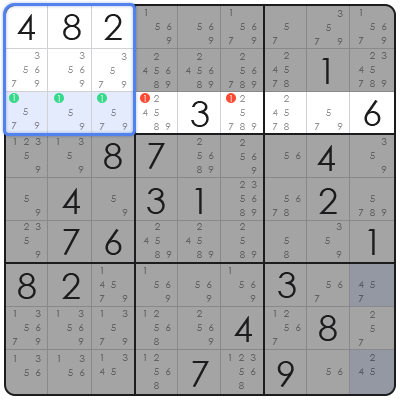
Determining if a Sudoku board possesses a unique solution is a critical aspect of puzzle design, algorithmic validation, and ensuring a fair challenge for enthusiasts. This process goes beyond merely finding *a* solution; it rigorously tests whether there is only *one* possible way to fill the empty cells while adhering to all Sudoku rules. From a framework perspective, this verification is fundamental for maintaining the integrity and quality of Sudoku puzzles across all platforms. The primary problem solved by understanding how to check if a Sudoku board has a unique solution is the prevention of ambiguous or unsolvable puzzles. An ambiguous puzzle, one with multiple valid completions, frustrates players and undermines the puzzle’s intended difficulty. An unsolvable puzzle, conversely, can lead to endless futile attempts, equally diminishing the user experience. For developers and puzzle generators, this check is an essential quality control mechanism, ensuring that generated content meets professional standards. In practical application, the method for uniqueness verification often involves a deeper dive into combinatorial search algorithms. It requires a systematic exploration of the solution space, counting every valid configuration rather than stopping at the first successful attempt. This analytical approach, rooted in computational logic, provides definitive proof of a board’s uniqueness, elevating the puzzle from a mere set of numbers to a precisely engineered challenge.
The Algorithmic Foundation of Unique Sudoku Solutions
Checking if a Sudoku board has a unique solution fundamentally involves exploring the solution space and counting valid completions, typically leveraging a backtracking algorithm. Based on structural analysis, the core principle is to systematically try placing numbers into empty cells, ensuring each placement adheres to the classic Sudoku rules: each row, column, and 3×3 block must contain all digits from 1 to 9 exactly once.
This method utilizes a depth-first search strategy, where the algorithm attempts to place a number in an empty cell. If the placement is valid, it recursively moves to the next empty cell. If a placement leads to a dead end (no valid numbers can be placed), the algorithm backtracks to the previous cell and tries a different number. The crucial modification for uniqueness testing is that instead of stopping at the first complete and valid board found, the algorithm continues its search to ascertain if any *other* valid solutions exist.
The process counts how many times a complete and valid Sudoku board is generated. If this count is exactly one, then the initial board has a unique solution. If the count is zero, the board is unsolvable. If the count is greater than one, the board possesses multiple solutions, rendering it non-unique. This rigorous exploration ensures that all possibilities are considered, providing a definitive answer to the uniqueness query.
Implementing Unique Solution Verification: A Step-by-Step Guide
Verifying Sudoku uniqueness in practice requires a structured approach leveraging a robust solving algorithm capable of systematic exploration. From a framework perspective, the process begins with an accurate digital representation of the Sudoku grid, typically a 2D array where zeros or a special character denote empty cells. Ensuring this representation is correct is the first critical step.
The next step involves developing or integrating a backtracking solver. This solver’s primary function is to iterate through empty cells, attempting to place digits from 1 to 9. For each digit, it must validate whether its placement is legal according to row, column, and 3×3 block constraints. If legal, the solver makes the placement and recursively calls itself for the next empty cell. If the placement is illegal or leads to an impossible state, it ‘undoes’ the placement and tries another digit.
Crucially, the standard backtracking solver must be modified to count solutions instead of stopping at the first one. When the solver successfully fills all empty cells to form a valid Sudoku grid, it increments a global solution counter. Instead of returning ‘true’ and terminating, it then backtracks to explore alternative paths that could lead to other solutions. If, after exploring all possibilities, the solution counter registers exactly one, the board has a unique solution. If the counter reaches two, the process can often terminate early, as uniqueness has already been disproven. Zero solutions indicate an unsolvable puzzle.
Comparative Landscape: Sudoku Solvability vs. Uniqueness
Unique solution verification distinguishes itself from simple solvability checks or brute-force enumeration by its specific objective of confirming singular determinism within the puzzle. While related, these concepts serve different analytical purposes in the realm of Sudoku. An understanding of their differences is essential for accurate assessment.
A basic Sudoku solvability check merely ascertains if *any* valid solution exists for a given board. This process can typically terminate as soon as the first solution is found, making it less computationally intensive than a full uniqueness check. Its complexity and efficiency are optimized for finding a single path, providing a quick ‘yes’ or ‘no’ answer to whether the puzzle can be completed. This is often the first step in validating any Sudoku problem.
Brute-force solution enumeration, on the other hand, aims to find *all* possible solutions. While similar to the uniqueness check in its exhaustive nature, its goal is comprehensive listing rather than mere counting. This approach often involves higher computational cost and lower efficiency if the sole objective is uniqueness, as it may continue processing long after the second solution (disproving uniqueness) has been identified. Unique solution verification, therefore, can be seen as an optimized form of solution enumeration, tailored to stop early once non-uniqueness is confirmed, striking a balance between exhaustive search and targeted efficiency.
Navigating Common Pitfalls in Sudoku Uniqueness Checks
Common pitfalls in verifying unique Sudoku solutions often stem from inefficient algorithms, incorrect rule application, or misinterpretation of results, leading to flawed assessments of puzzle quality. Recognizing and addressing these issues is paramount for accurate analysis.
One frequent mistake is inefficient solution counting, where the algorithm continues to search for all possible solutions even after two or more have been found. This significantly increases computational time unnecessarily when the goal is merely to confirm uniqueness. The professional solution involves implementing a condition to terminate the search immediately once the solution counter reaches two, as finding a second solution is sufficient proof of non-uniqueness. This optimization drastically improves efficiency, especially for boards with many solutions.
Another pitfall is errors in the core Sudoku rule validation logic (i.e., the `isValid` or `isSafe` function). Incorrectly checking for duplicates in rows, columns, or 3×3 blocks can lead to false positives for uniqueness (missing valid solutions) or false negatives (identifying non-solutions as valid). From a framework perspective, rigorously testing this validation function with various known valid and invalid configurations is crucial. Modularizing this logic also aids in easier debugging and verification. Ensuring every constraint is precisely implemented is non-negotiable for reliable results.
Finally, misinterpreting the results, particularly when zero solutions are found, is a common error. A board with zero solutions is inherently unsolvable, not uniquely solvable. Confusing ‘unsolvable’ with ‘unique solution not found’ can lead to incorrect conclusions about puzzle quality. Clearly distinguishing between these outcomes is vital: uniqueness only applies when exactly one solution is found, while zero solutions indicate a flawed or impossible initial state.
Frequently Asked Questions on Sudoku Unique Solutions
Q: Why is a unique solution important for a Sudoku puzzle? A: A unique solution ensures fairness and a definitive challenge, preventing ambiguity for solvers. It’s a hallmark of well-designed puzzles, confirming there’s only one correct path.
Q: Can a valid Sudoku board have no solutions? A: Yes, if the initial clues are contradictory or lead to an impossible state that violates Sudoku rules, the board may have zero valid completions.
Q: Is checking for uniqueness computationally expensive? A: It can be. It often requires exploring a significant portion of the solution space, which is more intensive than finding just one solution.
Q: Does the number of initial clues guarantee a unique solution? A: No. While more clues generally reduce ambiguity, some puzzles with many clues can still have multiple solutions, and some with few can be unique.
Q: What’s the smallest known number of clues for a unique solution? A: The current consensus in combinatorial mathematics is 17 clues, though finding and proving these minimal puzzles is a complex research area.
In conclusion, the ability to accurately check if a Sudoku board has a unique solution is not merely a technical exercise but a foundational requirement for anyone involved in the design, development, or analysis of these ubiquitous puzzles. This process, rooted in systematic algorithmic exploration, ensures the integrity and strategic value of each Sudoku. As the landscape of algorithmic puzzle generation evolves, sophisticated uniqueness verification remains critical, not just for confirming a single answer, but for upholding the fundamental principles of fair play and intellectual challenge. Moving forward, integrating these robust validation methods will continue to be a benchmark for quality and innovation in the puzzle industry.