

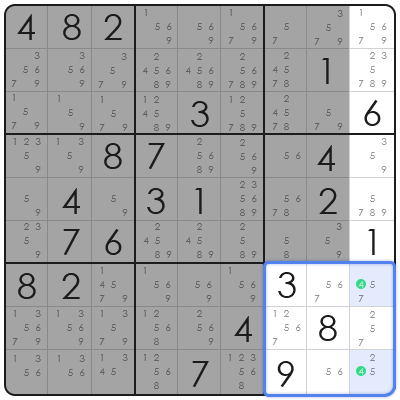
Finishing a hard Sudoku puzzle is not merely a test of patience but a profound exercise in applied logic and strategic deduction. Unlike their easier counterparts, hard Sudoku grids demand a sophisticated understanding of advanced patterns and inference techniques that extend far beyond simple candidate elimination. This article delves into the methodologies and structural insights necessary to systematically dismantle even the most formidable Sudoku challenges. From a framework perspective, approaching hard Sudoku involves transitioning from direct observations to indirect logical deductions. The significance of mastering these techniques lies in their ability to cultivate superior analytical thinking, pattern recognition, and systematic problem-solving skills, which are highly transferable to complex challenges in various professional domains, particularly within logical problem solving and cognitive strategy development. The primary problem hard Sudoku solves in the current landscape of cognitive exercises is pushing the boundaries of typical deductive reasoning. It forces enthusiasts to develop robust, multi-layered strategies rather than relying on superficial scanning. By dissecting the architectural intricacies of these puzzles, we can unlock a methodical approach that transforms seemingly insurmountable grids into solvable logic sequences, enhancing cognitive agility and strategic foresight.
Foundational Principles of Advanced Sudoku Deduction
Based on structural analysis, the first step in how to finish hard sudoku is to move beyond basic singles (naked and hidden). Hard puzzles often obscure these direct deductions, requiring a deeper dive into the interdependencies of cells, rows, columns, and 3×3 blocks. Understanding candidate lists for each empty cell is paramount, forming the bedrock upon which all advanced techniques are built.
From a framework perspective, every number from 1 to 9 must appear exactly once in each row, column, and 3×3 block. This fundamental constraint generates the initial set of possible candidates for every empty cell. The challenge in hard puzzles is that many cells will have multiple candidates, making direct placement impossible without further logical steps. Therefore, meticulous tracking of these candidates is not just a suggestion; it is a critical requirement.
In practical application, consistent cross-referencing of candidate lists across intersecting rows, columns, and blocks allows for the initial pruning of possibilities. While this might only yield a few direct placements, it sets the stage by simplifying the grid and revealing patterns that are prerequisites for identifying more complex elimination strategies. This iterative process of candidate reduction is the very essence of how to finish hard sudoku efficiently.
Unveiling Intermediate Strategies: Pairs and Triples
To finish hard Sudoku effectively, one must recognize ‘Naked Pairs’ and ‘Hidden Pairs’. A Naked Pair exists when two cells within the same house (row, column, or block) share exactly the same two candidates, and no other candidates are possible for these cells. Based on structural analysis, these two numbers can only exist in those two cells within that house, allowing us to eliminate those candidates from all other cells in the same house.
Similarly, ‘Hidden Pairs’ occur when two candidates appear in only two cells within a house, regardless of what other candidates those two cells may contain. From a framework perspective, once a Hidden Pair is identified, all other candidates in those two specific cells can be eliminated, as the pair’s numbers must occupy them. This technique is often harder to spot but yields significant breakthroughs in hard puzzles.
The principle extends to ‘Naked Triples’ and ‘Hidden Triples’. A Naked Triple involves three cells in a house that, between them, only contain a set of three specific candidates (e.g., {1,2,3}). These three numbers must occupy those three cells, enabling elimination from other cells in that house. Hidden Triples, though rare, are identified when three candidates are restricted to only three cells within a house, allowing elimination of other candidates from those three cells. Mastering these intermediate patterns is crucial for navigating the middle stages of how to finish hard sudoku.
Advanced Deductions: X-Wing and Swordfish Patterns
Based on structural analysis, the ‘X-Wing’ is a powerful advanced technique in how to finish hard sudoku. An X-Wing exists when a candidate appears in exactly two cells in each of two rows (or columns), and these four cells form a rectangle. The key insight is that the candidate must occupy either both cells in the first row’s pair or both cells in the second row’s pair. This allows for the elimination of that candidate from any other cells in the two columns that intersect these rows.
From a framework perspective, the ‘Swordfish’ extends the X-Wing logic to three rows and three columns. If a candidate is restricted to at most three cells in three different rows, and these cells all align within three different columns, then that candidate can be eliminated from any other cells in those three columns. Identifying these patterns requires a systematic scanning of candidate possibilities across multiple houses simultaneously.
In practical application, identifying X-Wings and Swordfish patterns demands a keen eye for symmetrical candidate placements. These techniques are often pivotal in how to finish hard sudoku grids where direct candidate elimination has stalled. They unlock new pathways by significantly reducing candidate lists in multiple cells, leading to a cascade of further deductions. Consistent practice in visualizing these patterns is key to their successful implementation.
Strategic Overlays: Chaining and Forcing Chains
Chaining is an exceptionally potent method for how to finish hard sudoku, involving the establishment of ‘strong’ and ‘weak’ links between candidates. A strong link means if one candidate is false, the other must be true. A weak link means if one candidate is true, the other must be false. By chaining these links, often alternating between strong and weak, one can infer the truth or falsity of a distant candidate based on an initial assumption.
From a framework perspective, ‘Forcing Chains’ involve making an assumption about a cell’s candidate (e.g., ‘What if R1C1 is 5?’). This assumption leads to a series of forced eliminations and placements. If this chain of deductions leads to a contradiction (e.g., two 5s in a row, or a cell with no possible candidates), then the initial assumption must be false. This method is often called ‘Nishio’ or ‘Trial and Error with Proof’.
In practical application, while seemingly complex, chaining is a systematic way to test hypotheses. The process demands meticulous record-keeping of assumptions and their consequences. Identifying ‘Almost Locked Candidates’ (ALC) and applying ‘Naked Quads’ or ‘Hidden Quads’ are also part of this advanced logical overlay. These strategies are often the last resort, but frequently the most effective, when an otherwise intractable hard Sudoku puzzle presents itself.
Practical Application: A Step-by-Step Methodology
**1. Initial Scan and Candidate Marking:** Based on structural analysis, begin by filling in all obvious singles. For every empty cell, meticulously list all possible candidates (1-9) by cross-referencing existing numbers in its row, column, and 3×3 block. This forms the foundational data for all subsequent steps.
**2. Iterative Basic Deductions:** From a framework perspective, repeatedly scan for Naked Singles (a cell with only one candidate) and Hidden Singles (a candidate that can only go in one cell within a house). Continue until no more singles can be found. Each successful placement simplifies the grid and potentially reveals new singles.
**3. Identify Pairs and Triples:** In practical application, search for Naked Pairs/Triples and Hidden Pairs/Triples within rows, columns, and blocks. Eliminate candidates based on these findings. This step requires careful observation and pattern recognition. Repeat step 2 after each elimination, as new singles may emerge.
**4. Advanced Pattern Recognition (X-Wing, Swordfish):** When direct deductions stall, proactively search for X-Wings and Swordfish patterns involving specific candidates. These often require scanning multiple rows/columns for a single candidate. Implement eliminations derived from these patterns and return to step 2.
**5. Employ Forcing Chains or Guessing with Proof:** If all previous techniques yield no progress, consider using a forcing chain. Pick a cell with only two candidates and make an assumption. Follow the logical consequences. If a contradiction arises, the initial assumption was false, and the other candidate is correct. This is the most complex step in how to finish hard sudoku and should be done systematically.
**6. Review and Verify:** After each significant deduction or assumption, always review the grid for consistency and ensure no rules have been violated. A systematic approach to hard Sudoku is about diligent application of these techniques, not random trial and error.
Comparative Analysis of Sudoku Difficulties
Based on structural analysis, understanding how to finish hard sudoku benefits from a comparative view against easier variants. The ‘difficulty’ of a Sudoku puzzle is not solely determined by the number of pre-filled cells but by the complexity of the logical deductions required to solve it. This table outlines the distinctions:
| Dimension | Easy Sudoku | Medium Sudoku | Hard Sudoku |
|—|—|—|—|
| **Complexity of Techniques** | Primarily Naked/Hidden Singles | Includes Naked/Hidden Pairs/Triples, Block/Row/Column Interactions | X-Wing, Swordfish, Forcing Chains, Jellyfish, Remote Pairs/Triples |
| **Efficiency of Solving** | Rapid, direct deductions | Moderate pace, some backtracking for deeper analysis | Slow, meticulous, requires multiple passes with advanced strategies |
| **Cost (Time Investment)** | Minimal, often under 5 minutes | Moderate, 5-20 minutes | Significant, 20 minutes to several hours |
| **Frequency of Advanced Techniques** | Very Low / None | Low to Moderate | High, often requiring multiple advanced techniques |
From a framework perspective, hard Sudoku stands out by demanding iterative application of complex logical structures, unlike easier puzzles where solutions often cascade from a few initial placements. In practical application, this comparison highlights the strategic shift required: from simple observation in easy puzzles to systematic, multi-layered hypothesis testing in hard ones, underscoring the value of mastering advanced how to finish hard sudoku methodologies.
Common Obstacles and Strategic Overcomes
One frequent mistake in how to finish hard sudoku is premature guessing without proof. Based on structural analysis, randomly placing numbers without a logical basis often leads to contradictions down the line, requiring extensive backtracking and wasting significant time. Professional advice dictates that every placement or elimination must be justified by an unbreakable logical chain.
Another common pitfall is ‘tunnel vision,’ where a solver focuses too intensely on one area of the grid, missing opportunities for deductions elsewhere. From a framework perspective, hard Sudoku demands a holistic view. The solution is to regularly scan the entire grid, looking for patterns across different rows, columns, and blocks, and to switch between vertical and horizontal analysis frequently to break out of localized thinking.
Finally, inadequate candidate tracking is a major obstacle. In practical application, failing to meticulously update candidate lists after each deduction can lead to missed opportunities for new singles or pairs. The solution is to use a consistent method for marking candidates (e.g., small pencil marks or a digital tool) and to update them rigorously, treating the candidate grid as dynamically as the solution grid itself, ensuring no deduction is overlooked.
Frequently Asked Questions on Hard Sudoku
**Q: What is the hardest Sudoku technique?** Based on structural analysis, forcing chains and advanced coloring techniques are often considered the hardest, as they involve complex conditional logic and extensive tracking of implications to reach a definitive conclusion or contradiction.
**Q: Can hard Sudoku be solved without guessing?** Yes, absolutely. From a framework perspective, a true hard Sudoku puzzle always has a unique solution discoverable through pure logic, without any need for blind guessing. Every step must be justifiable through deduction.
**Q: How do I improve my ability to solve hard Sudoku?** In practical application, consistent practice with a variety of hard puzzles is key. Focus on understanding the logic behind each advanced technique rather than just memorizing patterns, and regularly review your mistakes to learn new deductions.
**Q: Are there apps or tools to help with hard Sudoku?** Yes, many apps and websites offer advanced hint systems that explain the logic of specific techniques (e.g., X-Wing, Swordfish) when you get stuck. These can be valuable learning aids for how to finish hard sudoku.
Based on structural analysis, mastering how to finish hard sudoku is a testament to one’s capacity for intricate logical problem solving and strategic planning. The journey from basic candidate elimination to advanced techniques like X-Wings, Swordfish, and forcing chains represents a significant cognitive leap. From a framework perspective, the skills honed through this endeavor – meticulous attention to detail, systematic hypothesis testing, and pattern recognition – are invaluable. In practical application, these advanced methodologies provide a robust toolkit not only for conquering complex puzzles but also for enhancing analytical prowess in any field demanding rigorous logical deduction, reinforcing its long-term strategic value in cognitive development.