

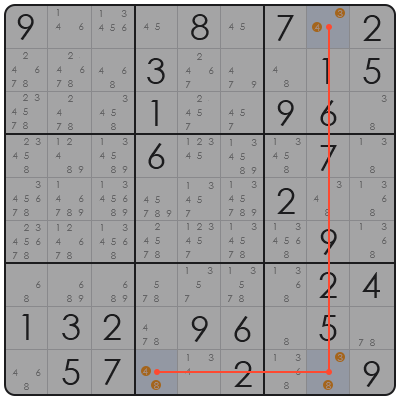
Learning how to play Sudoku as a beginner involves engaging with a captivating logic-based, number-placement puzzle that has garnered global appeal. This timeless challenge requires no arithmetic skills, focusing instead on deductive reasoning and pattern recognition within a structured 9×9 grid. Its accessibility makes it an ideal entry point for individuals seeking to sharpen their cognitive abilities through recreational mathematics. The significance of Sudoku extends beyond mere entertainment; it serves as a powerful mental exercise. Regular engagement with these puzzles has been linked to improved concentration, memory, and analytical skills. From a cognitive framework perspective, it trains the brain to systematically process information and identify constraints, fostering a structured approach to problem-solving. For many newcomers, the initial visual complexity of the Sudoku grid can appear daunting. This article aims to demystify the process, addressing the primary problem of how to transition from intimidation to confident problem-solving. By breaking down the core mechanics and offering actionable strategies, we provide a clear pathway for anyone to master the fundamentals of Sudoku.
Core Mechanics: Deconstructing the Sudoku Grid
Sudoku is fundamentally a logic-based number-placement puzzle played on a 9×9 grid, which is further subdivided into nine 3×3 smaller grids, commonly referred to as “blocks” or “regions.” Each of these 81 cells must eventually contain a single digit from 1 to 9.
Based on structural analysis, the primary and immutable rule of Sudoku dictates that each digit (1-9) must appear exactly once in each of the following three types of sections: every row (horizontal line), every column (vertical line), and every one of the nine 3×3 blocks. This triple-constraint system is the bedrock upon which all Sudoku solving strategies are built.
From a framework perspective, a beginner Sudoku puzzle initiates the player with a predetermined set of numbers, known as “givens,” placed in certain cells. These givens act as the initial data points and critical constraints that guide the solver towards the unique solution, preventing ambiguity and ensuring a single correct outcome.
Understanding this foundational grid structure and its interwoven constraint system is the indispensable first step in learning how to play Sudoku as a beginner. Grasping these simple rules allows players to begin recognizing the patterns and possibilities within the puzzle.
Fundamental Strategies: The Art of Deduction for Beginners
Learning how to play Sudoku as a beginner effectively hinges upon mastering basic deductive techniques that enable systematic elimination of possibilities and the confident placement of numbers. These core strategies form the foundation for solving any Sudoku puzzle.
**Step 1: Single Candidate (Naked Singles).** The most straightforward method involves identifying cells where, based on the numbers already present in its row, column, and 3×3 block, only one specific digit can logically be placed. For instance, if a cell’s row, column, and block contain all digits from 1-9 except for a ‘7’, then that cell *must* be a ‘7’. This is often the first logical placement for new players.
**Step 2: Cross-Hatching (Scanning).** In practical application, this technique involves systematically scanning rows and columns for a particular number (e.g., ‘5’) to determine its placement within a specific 3×3 block. If ‘5’s in adjacent rows and columns restrict its presence to only one available cell within a target 3×3 block, then the ‘5’ must occupy that cell. This method is highly effective for quickly filling in many initial numbers.
**Step 3: Block Completion.** When a 3×3 block has only a few empty cells remaining and most of its numbers (1-9) are already placed, focus on completing that block. By applying the single candidate and cross-hatching logic specifically within the confines of that block, the missing numbers can often be placed with relative ease, leveraging the higher density of information in a smaller area.
**Step 4: Pencil Marking (Candidate Notation).** For cells where direct placement isn’t immediately obvious, professional strategy dictates jotting down all possible candidate numbers in small print within each empty cell. This systematic notation, known as pencil marking, creates a visual aid crucial for identifying more complex patterns and ensuring no logical possibilities are overlooked as the puzzle progresses.
Progressing Beyond Basic Placements: Intermediate Deductions
As beginners gain confidence in how to play Sudoku, they naturally progress to slightly more sophisticated deduction techniques. These methods often build upon the foundational scanning and single-candidate principles, requiring a more nuanced interpretation of the grid’s constraints.
In practical application, identifying “Naked Pairs” involves locating two cells within the same row, column, or 3×3 block that share identical pairs of candidate numbers (e.g., both cells only have ‘{2,5}’ as possibilities) and no other candidates. Once identified, ‘2’ and ‘5’ *must* occupy those two cells, meaning these digits can be eliminated as candidates from all other cells within that shared row, column, or block.
Similarly, “Hidden Pairs” occur when two specific numbers are the *only* candidates for two distinct cells within a row, column, or block, even if those cells also contain other possible candidates. This implies that those two numbers *must* reside in those two cells, allowing any other candidates in those two specific cells to be safely eliminated.
From a framework perspective, these methods illustrate the iterative and interconnected nature of Sudoku solving. Each successful placement or elimination, whether basic or intermediate, provides new data points and altered constraints that inform subsequent deductions, progressively narrowing down the possibilities until the unique solution is revealed.
Common Pitfalls and Professional Solutions for Sudoku Beginners
Based on structural analysis, beginners often encounter specific hurdles when learning how to play Sudoku, leading to frustration and, at times, incorrect solutions. Recognizing and strategically addressing these common pitfalls is paramount for consistent progress and enjoyment.
**Pitfall 1: Rushing or Guessing.** A very frequent mistake is attempting to guess numbers when feeling stuck, rather than relying strictly on pure logic. This almost invariably introduces errors that propagate throughout the puzzle, making it unsolvable. The professional solution involves patience and discipline; if a number’s placement isn’t logically certain, leave the cell empty and shift focus to other areas where deductions are clearer. Thoroughly re-scanning rows, columns, and blocks for missed opportunities is a critical habit.
**Pitfall 2: Disorganized Pencil Marking or No Marking.** Another prevalent issue is either neglecting to use pencil marks at all or making them inconsistently, leading to missed candidates or overlooked constraints. From a framework perspective, a structured approach to pencil marking—where every possible candidate for every empty cell is noted—is the advised professional solution. This methodical notation prevents oversight, clarifies potential placements, and simplifies the identification of more advanced patterns.
**Pitfall 3: Forgetting the Triple Constraint.** Focusing exclusively on row and column constraints while neglecting the 3×3 blocks, or vice-versa, represents a significant oversight. In practical application, always remember that each number must appear exactly once in its row, once in its column, *and* once in its 3×3 block. A holistic scan, consistently checking all three constraints for every potential number and cell, ensures all available logical pathways are explored and maximises deduction opportunities.
Strategic Comparisons: Sudoku vs. Other Logic Puzzles
When considering how to play Sudoku for beginners, it’s particularly insightful to compare its foundational logic with other popular number-placement and logic puzzles. This comparative analysis highlights Sudoku’s unique appeal and its advantageous learning curve for new players.
**Kakuro:** While also utilizing numbers and grid structures, Kakuro introduces an arithmetic component, requiring sums in ‘clues’ to be met by numbers within designated cells. From a complexity perspective, Kakuro is generally considered more challenging for beginners due to the dual requirement of both sum logic and placement constraints, contrasting with Sudoku’s simpler, direct single-digit placement rules. Sudoku’s efficiency in problem-solving stems from direct constraint checking, whereas Kakuro demands combinatorial thinking for sums.
**KenKen:** KenKen further combines arithmetic operations (addition, subtraction, multiplication, division) within ‘cages’ on a Sudoku-like grid, alongside the core Sudoku constraints for rows and columns. The additional layer of arithmetic significantly increases the initial cognitive load and complexity compared to Sudoku’s pure number-placement logic, making Sudoku considerably more accessible for initial learning. The ‘cost’ or impact of an error in KenKen is also higher due to cascading arithmetic implications across cells.
From a framework perspective, Sudoku’s strength as a beginner’s puzzle lies in its singular, easily graspable rule set, which focuses purely on the presence and absence of numbers within defined zones. This simplicity allows new players to quickly build a foundational understanding of deductive reasoning without the added layers of arithmetic or more complex spatial relationships found in its counterparts, making it an excellent starting point for logic puzzle enthusiasts.
Frequently Asked Questions for Aspiring Sudoku Players
As new players embark on their journey of learning how to play Sudoku, several common questions frequently arise. Addressing these provides immediate clarity and reinforces foundational understanding, crucial for sustained engagement.
**Q: What is the fastest way to learn Sudoku?** A: The fastest way to grasp Sudoku is through consistent practice with ‘easy’ puzzles, focusing intently on ‘scanning’ (cross-hatching) and ‘single candidate’ techniques. Prioritize methodical logic over speed initially; accuracy builds confidence.
**Q: Do I need to be good at math to play Sudoku?** A: Absolutely not. Sudoku does not require any mathematical calculations, only logical deduction based on the numbers 1 through 9. It is a pure logic puzzle, devoid of arithmetic demands.
**Q: What if I get completely stuck on a Sudoku puzzle?** A: If stuck, take a break, then re-examine every row, column, and 3×3 block meticulously. Ensure all possible pencil marks are updated. Often, a ‘single candidate’ or simple ‘cross-hatching’ opportunity was simply overlooked.
**Q: Are there different difficulty levels in Sudoku?** A: Yes, Sudoku puzzles are typically graded from ‘easy’ to ‘expert’. The difficulty is determined by the number of initial ‘givens’ and the complexity of the logical deductions required to reach the solution. Beginners should always start with ‘easy’ puzzles.
**Q: Can playing Sudoku genuinely improve my logic skills?** A: Without a doubt. Sudoku is an exceptional exercise for enhancing logical reasoning, fostering pattern recognition, and significantly boosting systematic problem-solving abilities through its structured deductive thinking process.
In conclusion, learning how to play Sudoku as a beginner is an accessible yet profoundly rewarding journey into the realm of logical deduction. It offers a structured and engaging pathway to develop critical thinking, cultivate patience, and refine systematic problem-solving skills, entirely irrespective of prior mathematical aptitude. From a forward-looking industry perspective, particularly in cognitive training and accessible mental exercise, Sudoku remains a timeless and invaluable tool. Its strategic value lies not merely in solving a puzzle, but in honing the analytical mind for tackling a spectrum of more complex logical challenges, establishing a robust foundation for intellectual growth.