

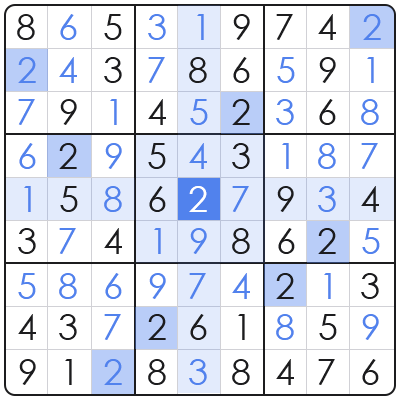
The question of ‘how many possible solutions are there to a Sudoku puzzle’ delves into the fascinating realm of combinatorial mathematics and computational theory. At its core, a standard 9×9 Sudoku puzzle requires the placement of digits 1 through 9 into a grid such that each digit appears exactly once in each row, each column, and each of the nine 3×3 subgrids. This seemingly simple rule set generates a surprisingly vast, yet finite, solution space that has captivated mathematicians and computer scientists for decades. Understanding this numerical landscape is critical not just for academic curiosity, but also for practical applications in areas like algorithm design for puzzle generation and solving, and for illustrating the complexities inherent in constraint satisfaction problems. The sheer scale of possibilities underscores the need for sophisticated computational methods to enumerate and verify these solutions, pushing the boundaries of what was once considered a purely recreational pursuit into a significant area of study within computational mathematics. The primary problem this analysis solves is providing a definitive answer to the total count of valid Sudoku grids, differentiating between raw permutations and structurally unique solutions. By precisely quantifying the solution space, we gain insights into the inherent complexity of the puzzle, informing both theoretical frameworks and optimized practical implementations. This deep dive moves beyond casual estimation to present the rigorously derived figures that define the true scope of Sudoku’s combinatorial possibilities.
Unpacking the Combinatorial Foundation of Sudoku Solutions
Based on structural analysis, the number of possible solutions to a Sudoku puzzle is a value determined by the principles of combinatorics and rigorous computational enumeration. The fundamental mechanics of a 9×9 Sudoku grid dictate that each cell must be filled with a digit from 1 to 9, subject to three strict constraints: every row must contain all digits 1-9 exactly once, every column must contain all digits 1-9 exactly once, and every 3×3 subgrid (or ‘block’) must contain all digits 1-9 exactly once. This interlocking set of rules creates a complex search space.
Initially, one might consider the number of ways to fill the first row (9! permutations), but propagating these choices through the remaining 80 cells while adhering to all constraints quickly becomes intractable for manual calculation. Early estimates varied wildly, highlighting the profound difficulty in systematically accounting for all valid configurations. It was only through the advent of powerful computing and the development of optimized backtracking algorithms that an exact count could be achieved. The exhaustive search space makes it an NP-complete problem for a general N x N grid.
The most widely accepted and verified figure for the total number of valid 9×9 Sudoku grids, where every cell is filled and all rules are satisfied, is a staggering 6,670,903,752,021,072,936,960. This number was first accurately calculated by Felgenhauer and Jarvis in 2005. It represents every conceivable way to construct a completed Sudoku grid. A crucial distinction must be made for the number of ‘essentially different’ solutions, which accounts for symmetries such as rotations, reflections, and permutations of the digits themselves, reducing the count to 5,472,730,538. These two figures represent different lenses through which to view the solution space, both critical for a comprehensive understanding.
Systematic Approach to Enumerate Sudoku Solutions
From a framework perspective, enumerating Sudoku solutions rigorously demands a systematic computational approach, primarily leveraging backtracking algorithms. This process involves a recursive search that attempts to fill the 9×9 grid cell by cell, validating each placement against the Sudoku rules.
The first step involves defining the constraint set explicitly: each row, column, and 3×3 block must contain unique digits from 1 to 9. A backtracking algorithm then proceeds by selecting an empty cell and trying to place a valid digit (1-9). If a digit can be placed without violating any rule, the algorithm recursively moves to the next empty cell. If no valid digit can be placed in the current cell, or if a recursive call returns false, the algorithm ‘backtracks,’ removing the last placed digit and trying a different one.
A key to efficient enumeration is pruning the search space. This means that as soon as a partial grid violates a Sudoku rule, that entire branch of the search tree is immediately terminated, avoiding countless invalid configurations. For calculating ‘essentially different’ solutions, an additional layer of complexity is introduced: symmetry reduction. This involves identifying and eliminating grids that are merely rotations, reflections, or digit permutations of an already counted solution. Sophisticated canonicalization techniques are employed to map symmetric variants to a single representative form, ensuring each distinct structural solution is counted only once. Computational validation is paramount, often involving independent verifications by multiple research teams to confirm the accuracy of these immense counts.
Comparative Analysis of Constraint Satisfaction Problems
In practical application, understanding how many possible solutions there are to a Sudoku puzzle benefits from comparison with other well-known constraint satisfaction problems. Sudoku’s structure, while unique, shares algorithmic parallels with various combinatorial challenges. Below, we compare Sudoku with the N-Queens Problem and Latin Squares, using dimensions relevant to computational mathematics.
| Feature | Sudoku (9×9) | N-Queens Problem (N=8) | Latin Squares (Order 9) |
|————————–|———————————————————|——————————————————-|————————————————————|
| **Computational Complexity** | High (NP-Complete for general N x N) | Moderate (NP-Complete for general N) | Moderate (Well-studied, polynomial for construction) |
| **Solution Density** | Billions of unique solutions (6.67 x 10^21 total grids) | ~92 solutions for N=8, varies for N | Vast (5.35 x 10^42 for N=9, for normalized squares) |
| **Constraint Rigidity** | Strict (row, col, 3×3 block uniqueness) | Strict (row, col, diagonal uniqueness) | Strict (row, col uniqueness) |
| **Problem Scope** | Digit placement in a partitioned grid | Non-attacking piece placement on a board | Element placement in a grid |
This comparative analysis highlights that while each problem involves placing elements into a grid under specific constraints, the nature and density of solutions, as well as the computational effort required for enumeration, vary significantly. Sudoku’s additional 3×3 block constraint makes its solution space particularly complex, leading to a massive number of valid configurations that nonetheless remain finite and enumerable through advanced algorithmic techniques. This contextualization underscores Sudoku’s position as a robust benchmark in computational combinatorics.
Common Pitfalls & Professional Solutions in Enumeration
From a framework perspective, attempting to enumerate the number of possible solutions to a Sudoku puzzle presents several common pitfalls that can lead to incorrect or incomplete results. One frequent mistake is confusing the total number of ‘valid grids’ with the number of ‘essentially different solutions.’ The first counts every distinct arrangement of digits, whereas the second accounts for symmetries, such as rotations, reflections, and permutations of the digits themselves. The solution is to clearly define the scope of the enumeration: if structural uniqueness is paramount, symmetry-breaking techniques must be rigorously applied; if every unique cell-by-cell arrangement is needed, these techniques are omitted, leading to the much larger number.
Another pitfall involves underestimating the computational resources and algorithmic sophistication required for exhaustive enumeration. In practical application, a naive brute-force approach is computationally infeasible given the 6.67 x 10^21 valid grids. Professional advice dictates employing highly optimized backtracking algorithms, often enhanced with advanced pruning heuristics and efficient data structures to track available digits and violated constraints. Distributed computing frameworks or specialized high-performance computing clusters are often necessary to manage the immense computational load and verify results within a reasonable timeframe, especially for checking the larger number.
A third common error is the incorrect application or omission of symmetry operations when calculating essentially different solutions. Based on structural analysis, if symmetries like permutations of rows/columns within bands/stacks, rotations, reflections, or even permutations of the digits themselves are not handled exhaustively and without overlap, the count of ‘unique’ solutions will be inaccurate. The solution involves developing a canonicalization function that transforms any symmetric variant of a grid into a single, consistent representative form (e.g., the lexicographically smallest arrangement), ensuring that each truly distinct pattern is counted precisely once. Rigorous mathematical proof and software testing are crucial to validate these complex symmetry-breaking procedures.
Frequently Asked Questions About Sudoku Solutions
Q: What is the exact number of possible completed Sudoku grids?
A: The exact number of valid 9×9 Sudoku grids, where digits 1-9 are placed adhering to all rules, is 6,670,903,752,021,072,936,960. This colossal figure highlights the vast combinatorial space.
Q: How many unique Sudoku patterns are there after accounting for symmetries?
A: Accounting for symmetries like rotations, reflections, and digit permutations, there are 5,472,730,538 “essentially different” Sudoku grids. This number represents the truly distinct structural solutions.
Q: Why is it difficult to calculate the total number of Sudoku solutions?
A: The difficulty arises from the intertwined constraints across rows, columns, and 3×3 blocks. Simple combinatorial formulas don’t apply directly, necessitating complex computational enumeration methods like backtracking with sophisticated pruning.
Q: Does the number of initial clues affect the number of possible solutions?
A: Yes, crucially. The figures discussed are for *completed* grids. A puzzle with initial clues will have either zero, one, or multiple solutions depending on the clue configuration, aiming for a single unique solution in a well-posed puzzle.
Q: Are all Sudoku puzzles solvable?
A: No, not all puzzles are solvable. A poorly constructed puzzle might have no valid solutions or multiple solutions. A well-designed Sudoku puzzle has exactly one unique solution, ensuring a definitive challenge.
The definitive quantification of ‘how many possible solutions are there to a Sudoku puzzle’ stands as a testament to the power of computational mathematics in unraveling complex combinatorial problems. The twin figures—6,670,903,752,021,072,936,960 total valid grids and 5,472,730,538 essentially different solutions—not only satisfy an enduring curiosity but also provide invaluable benchmarks for algorithm design, especially in constraint programming and artificial intelligence. These numbers underscore the profound complexity that can emerge from a simple set of rules and a finite grid, illustrating principles of combinatorial explosion and the elegance of systematic enumeration with rigorous symmetry breaking.