

## How to Get Started with Sudoku: A Comprehensive Guide
### Understanding Sudoku
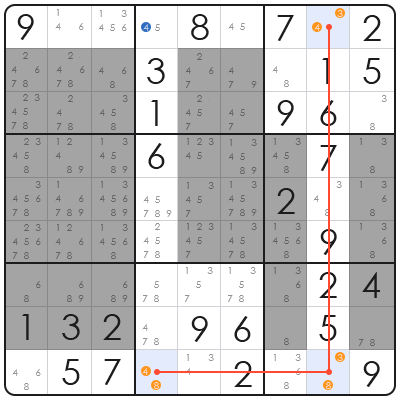
Sudoku is a popular puzzle game that has captured the interest of puzzle enthusiasts worldwide. It’s a number-placement puzzle that requires players to fill a 9×9 grid with digits so that each column, each row, and each of the nine 3×3 subgrids that compose the grid contain all of the digits from 1 to 9. The objective is to fill in the blanks without repeating any numbers.
#### What You Need
Before diving into the world of Sudoku, here’s what you’ll need:
– A Sudoku puzzle to solve.
– A pen or pencil and paper to jot down potential solutions.
– Patience and a logical mind.
### Step-by-Step Guide
#### Step 1: Familiarize Yourself with the Grid
The Sudoku grid is divided into nine 3×3 subgrids, each containing nine cells. The rows and columns are also numbered, which helps in identifying the placement of numbers.
#### Step 2: Identify Rows, Columns, and Subgrids
To start solving, identify which rows, columns, and subgrids are involved in each clue. This will help you understand the potential placement of numbers.
#### Step 3: Solve the Easy Clues
Begin by filling in the numbers that are already determined. Look for numbers that are only possible in certain cells within a row, column, or subgrid.
#### Step 4: Eliminate Possibilities
As you solve more numbers, eliminate possibilities for the remaining blanks. For example, if a number can only go in one cell within a row, column, or subgrid, cross out all other cells in that row, column, or subgrid where the number could potentially go.
#### Step 5: Use Strategies
There are various strategies to solve Sudoku puzzles, such as:
– Single candidate: A number can only fit in one cell within a row, column, or subgrid.
– Single solution: If only one number can fit in a cell, place it there.
– Pairs/triples: Two or three numbers can fit in a row, column, or subgrid. Identify the common cells where these numbers can go and eliminate other possibilities.
– X-Wing: When two rows or columns share two numbers, and these numbers can only go in two cells within those rows or columns, you’ve found an X-Wing.
#### Step 6: Continue Filling in the Blanks
Repeat steps 4 and 5 until all cells are filled in, ensuring that each row, column, and subgrid contains the numbers 1 to 9 without repetition.
### Frequently Asked Questions (FAQ)
**Q: How do I start a Sudoku puzzle?**
A: Begin by filling in the numbers that are already determined. Then, identify which rows, columns, and subgrids are involved in each clue and start solving.
**Q: What are some strategies to solve Sudoku?**
A: There are various strategies, such as single candidate, single solution, pairs/triples, X-Wing, and more. Experiment with these strategies to find which ones work best for you.
**Q: Can I use a calculator to solve Sudoku?**
A: While it’s technically possible to use a calculator, it’s not recommended. Sudoku is meant to be solved using logical reasoning and strategies, so using a calculator can hinder your development of these skills.
**Q: How long does it take to solve a Sudoku puzzle?**
A: The time it takes to solve a Sudoku puzzle can vary depending on the difficulty level. Easy puzzles can be solved in a few minutes, while difficult puzzles may take hours or even days.
**Q: Can I use a Sudoku solver online?**
A: Yes, you can use online Sudoku solvers to solve puzzles or to check your answers. However, keep in mind that the goal is to improve your puzzle-solving skills, so it’s best to try solving puzzles on your own first.
By following these steps and FAQs, you’ll be well on your way to becoming a Sudoku master. Happy solving!